Kirjojen hintavertailu. Mukana 12 083 983 kirjaa ja 12 kauppaa.

Kirjahaku

Etsi kirjoja tekijän nimen, kirjan nimen tai ISBN:n perusteella.

6 kirjaa tekijältä Rupert Wegerif

Dialogic Education and Technology

Dialogic Education and Technology

Rupert Wegerif

Springer-Verlag New York Inc.
2007
sidottu
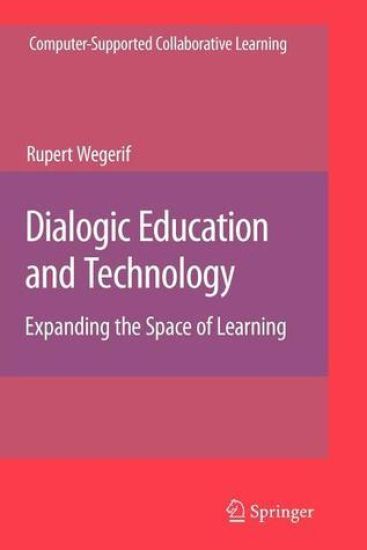
Dialogic Education and Technology is about using new technology to draw people into the kind of dialogues which take them beyond themselves into learning, thinking and creativity. The program of research reported in this book reveals key characteristics of learning dialogues and demonstrates ways in which computers and networks can deepen, enrich and expand such dialogues. A dialogic perspective is developed drawing upon recent work in communications theory, psychology, computer science and philosophy. This perspective foregrounds the creative space opened up by authentic dialogues. Whereas studies of computer-supported collaborative learning have tended to see dialogue as a means to the end of knowledge construction the dialogic perspective taken by this book sees dialogue as an end in itself - in fact moving learners into the space of dialogue is described as the core aim of education. The central argument of the book is that there is a convergence between this dialogic perspective in education and the affordances of new information and communications technology. A genuinely dialogic perspective is relatively new to the field of educational technology and there is a considerable amount of interest in this topic amongst researchers who wish to see what extra insights, if any, a dialogical approach can offer them. "This is an exciting book that synthesizes, clarifies and extends mounting discussions of dialogical thinking related to computer-supported education [...]. It is not only a delightful personal statement, but provokes thought on central issues of CSCL and enters into challenging dialog with the relevant alternative approaches. As a result of reading this book, I am convinced that we urgently need to open new online spaces for people to understandingly interact with different perspectives and creatively generate new insight and respect for difference." -Gerry StahlExecutive Editor of the International Journal of Computer Supported Collaborative Learning This book offers a set of lenses which give deep insight into education and the use of technologies for learning. The moves between empirical studies, theoretical reflections and discussion of the design of learning environments make the book very thought provoking. Ideas are not just treated as ideas but they become transformed into principles for design. Wegerif is convincing that the use of technology for the creation, maintaining and development of dialogical spaces has the potential for transforming and expanding educational experiences in a way which offers a needed vision of learning for the future. -Sten LudvigsenDirector of the InterMedia Centre for design, communication and learning University of Oslo
Dialogic: Education for the Internet Age
Dialogic: Education for the Internet Age argues that despite rapid advances in communications technology, most teaching still relies on traditional approaches to education, built upon the logic of print, and dependent on the notion that there is a single true representation of reality. In practice, the use of the Internet disrupts this traditional logic of education by offering an experience of knowledge as participatory and multiple. This new logic of education is dialogic and characterises education as learning to learn, think and thrive in the context of working with multiple perspectives and ultimate uncertainty. The book builds upon the simple contrast between observing dialogue from an outside point of view, and participating in a dialogue from the inside, before pinpointing an essential feature of dialogic: the gap or difference between voices in dialogue which is understood as an irreducible source of meaning. Each chapter of the book applies this dialogic thinking to a specific challenge facing education, re-thinking the challenge and revealing a new theory of education.Areas covered in the book include: dialogical learning and cognition dialogical learning and emotional intelligence educational technology, dialogic ‘spaces’ and consciousness global dialogue and global citizenship dialogic theories of science and maths educationThe challenge identified in Wegerif’s text is the growing need to develop a new understanding of education that holds the potential to transform educational policy and pedagogy in order to meet the realities of the digital age. Dialogic: Education for the Internet Age draws upon the latest research in dialogic theory, creativity and technology, and is essential reading for advanced students and researchers in educational psychology, technology and policy.
Dialogic: Education for the Internet Age
Dialogic: Education for the Internet Age argues that despite rapid advances in communications technology, most teaching still relies on traditional approaches to education, built upon the logic of print, and dependent on the notion that there is a single true representation of reality. In practice, the use of the Internet disrupts this traditional logic of education by offering an experience of knowledge as participatory and multiple. This new logic of education is dialogic and characterises education as learning to learn, think and thrive in the context of working with multiple perspectives and ultimate uncertainty. The book builds upon the simple contrast between observing dialogue from an outside point of view, and participating in a dialogue from the inside, before pinpointing an essential feature of dialogic: the gap or difference between voices in dialogue which is understood as an irreducible source of meaning. Each chapter of the book applies this dialogic thinking to a specific challenge facing education, re-thinking the challenge and revealing a new theory of education.Areas covered in the book include: dialogical learning and cognition dialogical learning and emotional intelligence educational technology, dialogic ‘spaces’ and consciousness global dialogue and global citizenship dialogic theories of science and maths educationThe challenge identified in Wegerif’s text is the growing need to develop a new understanding of education that holds the potential to transform educational policy and pedagogy in order to meet the realities of the digital age. Dialogic: Education for the Internet Age draws upon the latest research in dialogic theory, creativity and technology, and is essential reading for advanced students and researchers in educational psychology, technology and policy.
Rethinking Educational Theory

Rethinking Educational Theory

Rupert Wegerif

EDWARD ELGAR PUBLISHING LTD
2026
nidottu
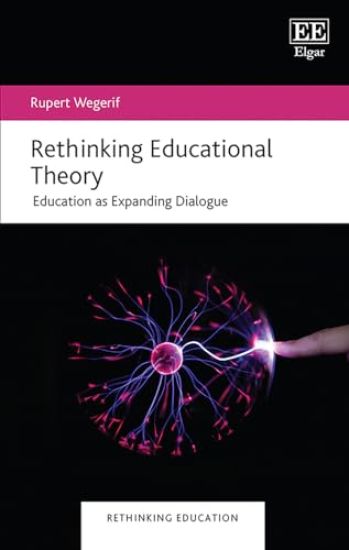
This book offers a coherent theory of education, education as widening and deepening dialogic space, that addresses the fundamental educational questions: What should we teach? How should we teach it? And, of course, why should we teach it? This dialogic theory, and the educational practice bound up with it, responds to the challenges of the Anthropocene and the rise of artificial intelligence (AI) by supporting education for collective intelligence and global citizenship. The key to effectively preparing students for the future, Wegerif argues, lies in framing education as the expansion of dialogue. The author illustrates how dialogue can enable students to move from procedural to conceptual understandings of a subject. Employing extensive practical examples and guidance, chapters outline how to redesign education programmes to promote those moral and intellectual virtues that are essential to dialogue. The book also includes cutting-edge advice on how AI can be used by teachers and students to enhance general thinking skills by enhancing dialogue. Providing both theoretical and practical insights, this book is an essential resource for students and scholars of education, as well as teachers at all levels of education. It is also a valuable read for educational technologists and policy-makers seeking to make informed design and policy decisions.
Dialogic Education and Technology

Dialogic Education and Technology

Rupert Wegerif

Springer-Verlag New York Inc.
2010
nidottu
Dialogic Education and Technology is about using new technology to draw people into the kind of dialogues which take them beyond themselves into learning, thinking and creativity. The program of research reported in this book reveals key characteristics of learning dialogues and demonstrates ways in which computers and networks can deepen, enrich and expand such dialogues. A dialogic perspective is developed drawing upon recent work in communications theory, psychology, computer science and philosophy. This perspective foregrounds the creative space opened up by authentic dialogues. Whereas studies of computer-supported collaborative learning have tended to see dialogue as a means to the end of knowledge construction the dialogic perspective taken by this book sees dialogue as an end in itself - in fact moving learners into the space of dialogue is described as the core aim of education. The central argument of the book is that there is a convergence between this dialogic perspective in education and the affordances of new information and communications technology. A genuinely dialogic perspective is relatively new to the field of educational technology and there is a considerable amount of interest in this topic amongst researchers who wish to see what extra insights, if any, a dialogical approach can offer them. "This is an exciting book that synthesizes, clarifies and extends mounting discussions of dialogical thinking related to computer-supported education [...]. It is not only a delightful personal statement, but provokes thought on central issues of CSCL and enters into challenging dialog with the relevant alternative approaches. As a result of reading this book, I am convinced that we urgently need to open new online spaces for people to understandingly interact with different perspectives and creatively generate new insight and respect for difference." -Gerry StahlExecutive Editor of the International Journal of Computer Supported Collaborative Learning This book offers a set of lenses which give deep insight into education and the use of technologies for learning. The moves between empirical studies, theoretical reflections and discussion of the design of learning environments make the book very thought provoking. Ideas are not just treated as ideas but they become transformed into principles for design. Wegerif is convincing that the use of technology for the creation, maintaining and development of dialogical spaces has the potential for transforming and expanding educational experiences in a way which offers a needed vision of learning for the future. -Sten LudvigsenDirector of the InterMedia Centre for design, communication and learning University of Oslo
Rethinking Educational Theory

Rethinking Educational Theory

Rupert Wegerif

EDWARD ELGAR PUBLISHING LTD
2025
sidottu
This book offers a coherent theory of education, education as widening and deepening dialogic space, that addresses the fundamental educational questions: What should we teach? How should we teach it? And, of course, why should we teach it? This dialogic theory, and the educational practice bound up with it, responds to the challenges of the Anthropocene and the rise of artificial intelligence (AI) by supporting education for collective intelligence and global citizenship.The key to effectively preparing students for the future, Wegerif argues, lies in framing education as the expansion of dialogue. The author illustrates how dialogue can enable students to move from procedural to conceptual understandings of a subject. Employing extensive practical examples and guidance, chapters outline how to redesign education programmes to promote those moral and intellectual virtues that are essential to dialogue. The book also includes cutting-edge advice on how AI can be used by teachers and students to enhance general thinking skills by enhancing dialogue.Providing both theoretical and practical insights, this book is an essential resource for students and scholars of education, as well as teachers at all levels of education. It is also a valuable read for educational technologists and policy-makers seeking to make informed design and policy decisions.