Kirjojen hintavertailu. Mukana 12 016 292 kirjaa ja 12 kauppaa.

Kirjahaku

Etsi kirjoja tekijän nimen, kirjan nimen tai ISBN:n perusteella.

4 kirjaa tekijältä Russell Bishop

From Self-Talk to Soul-Talk

From Self-Talk to Soul-Talk

Russell Bishop

Conscious Living
2022
pokkari
What does it mean to lead a Soul-Centered Life? According to renowned coach, mentor, and bestselling author Russell Bishop, leading a Soul-Centered Life refers to a method of listening to your inner voice-to proactively consulting with your True Self for counsel about the decisions in front of you and creating inspiring self-talk. Russell's brilliant approach, as explored in this prescriptive book, can mean the difference between a good life and a great life. Through a wealth of tips, meditations, affirmations, and exercises, Bishop guides you on an uplifting journey that will lead you to experience heightened awareness and determine what you truly want, instead of simply settling for the status quo.
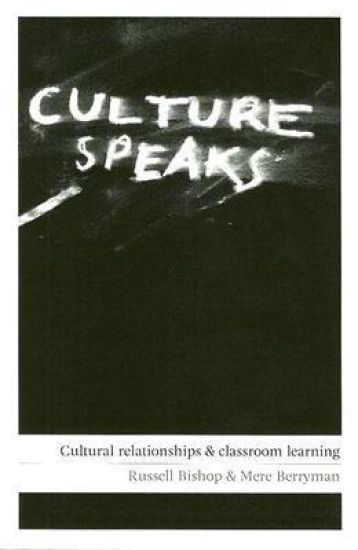
Culture Speaks

Culture Speaks

Russell Bishop

Huia Publishers
2007
nidottu
This book focuses on what it is like to be a young Maori person in a New Zealand secondary school classroom today. It presents and discusses narratives drawn from the voices of Maori secondary students, their whanau, principals and teachers. Whether you are a student, a parent, a principal or a teacher, this book will help you to examine your own explanations for the educational achievement of Maori students, and begin to develop effective responses to the challenges it raises. The book proposes strategies for teachers to increase their effectiveness in the teaching of students from Maori and Pacific origins.
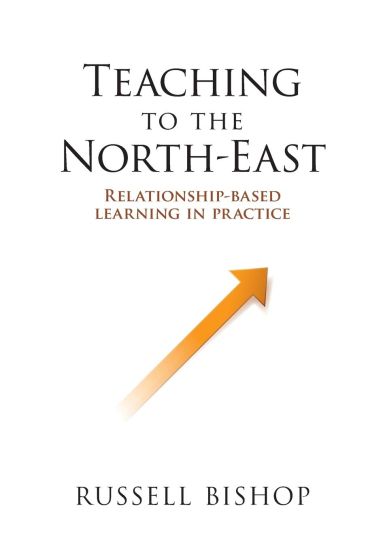
Teaching to the North-East

Teaching to the North-East

Russell Bishop

Nzcer Press
2019
pokkari
Teaching to the North-East responds to the marginalisation of particular groups of students with a way of teaching intended to increase equity in the education system.One way this marginalisation happens is when the special qualities students bring to the classroom are treated as deficiencies. This consigns Indigenous, migrant, refugee, faith- based students, students with learning difficulties, and students of difference to educational "failure".Russell Bishop sets out how schools and teachers can respond to diverse groups of students and develop teaching practices that promote learning for everyone. In this approach, students' prior knowledge, language and ways of making sense of the world are used to inform teaching practices rather than being seen as barriers to learning.Teaching to the North-East puts relationships at the centre of learning, and advocates for a relational pedagogy. Russell Bishop builds on his theoretical research in Indigenous Education to describe effective teaching in an extended family-like context that is both culturally responsive and sustaining. Teachers who foster caring and learning relationships within their classrooms interact with students in ways that allow them to see themselves as successful learners. North-East teachers then monitor the impact of these relationships and interactions on students' progress and modify their practices accordingly so that further progress is ensured and sustained. School leaders can support teaching to the North-East with relational leadership, allowing their teachers to thrive.Together, North-East teaching and leadership is Relationship-based Learning, a form of culturally-responsive pedagogy that is responsive to and inclusive of all learners, especially those currently marginalised.
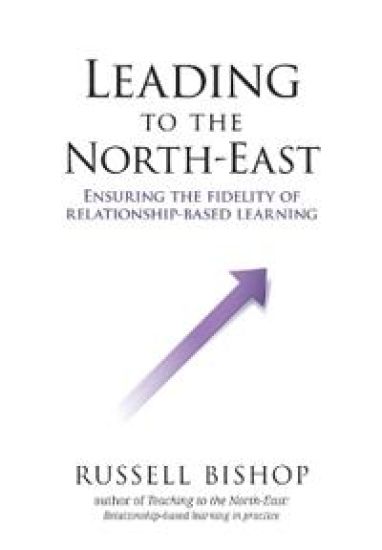
Leading to the North-East

Leading to the North-East

Russell Bishop

New Zealand Council for Educational Research (NZCER) Press
2023
pokkari
n his 2019 book, Teaching to the North-East: Relationship-based learning in practice Professor Bishop identified how Māori and other marginalised students-such as the children of migrant, refugee, and faith-based groups and neuro- and gender-diverse children-can benefit from a North-East relationship-based pedagogy. Now in Leading to the North-East, he demonstrates how North-East leaders ensure teachers are able to implement and sustain the North-East relationship-based pedagogy with fidelity. This is done by: setting goals for equity, excellence, and cultural sustainability; implementing a pedagogic approach that ensures these goals are realised; implementing in-school support systems that ensures the pedagogy is implemented with fidelity over time; and taking ownership of the approach by planning, resourcing, and reviewing teaching and school-wide leadership practices to ensure support systems work as intended, over time. The book includes three case studies that demonstrate how this process of reform was able to successfully raise Māori student achievements to match that of their non-Māori peers, enable Māori students to do so "as Māori", and benefit other marginalised students.