Kirjojen hintavertailu. Mukana 12 355 316 kirjaa ja 12 kauppaa.

Kirjahaku

Etsi kirjoja tekijän nimen, kirjan nimen tai ISBN:n perusteella.

12 kirjaa tekijältä Russell M. Lawson

The American Plutarch

The American Plutarch

Russell M. Lawson

Praeger Publishers Inc
1998
sidottu
Creating an unconventional portrait of the life and thought of an Enlightenment historian and scientist, this study focuses upon Jeremy Belknap's letters, journals, and essays, which provide a clear sense of how a dialogue with the past can yield an appreciation of life and acceptance of self. Author of the three volume History of New Hampshire and the two volume American Biography, Jeremy Belknap (1744-1798) was the American Plutarch because he used the past to learn more about his own life and the lives of others. He experienced the past vicariously through his imagination and experientially through his journeys throughout New England in search of clues to the explanation of the natural and human past of America. The book is built around Belknap's engaging correspondence with his friend Ebenezer Hazard, as well as Belknap's own travel journals of his expeditions to upstate New York and throughout New Hampshire. His journey to the White Mountains of New Hampshire in 1784 was the climax of his active inquiry into the past. Far from a dry, historiographical account, this study provides a fluid and descriptive narrative of Belknap, his journeys, and his times. This is a unique portrayal of human nature in general and 18th century society in particular.
The Land between the Rivers

The Land between the Rivers

Russell M. Lawson

The University of Michigan Press
2004
sidottu
An adventure story from the wilds of early America, The Land between the Rivers recreates the journeys of the English botanist Thomas Nuttall, one of American history's most well-traveled scientists. During the early nineteenth century, Nuttall explored the waters, valleys, plains, and mountains of the Great Lakes, Ohio River, Mississippi River, as well as the Missouri, Arkansas, Red, and Canadian river valleys of the former Louisiana Territory.In this fascinating account of Nuttall's travels through the wilderness of the middle west, author Russell Lawson-using Nuttall's own journal-captures the sense of excitement of the early wanderer. As much a delight for the mind as the senses, The Land between the Rivers details the unremitting weather and rugged geography of uncharted lands within the Louisiana Territory. A sense of discovery pervades the narrative as Nuttall's odyssey builds to its climax in the prairie wilderness of what is now Oklahoma. Sickened by "ague"-in his case, malaria-Nuttall at times was barely able to go on; yet he continued to search for and catalog plants and animals.The Land between the Rivers expands our knowledge of the work of one of the country's earliest botanists. We also learn a great deal about the early explorers, the inhabitants of the unsettled land, and about the land and culture of the times.
Frontier Naturalist

Frontier Naturalist

Russell M. Lawson

University of New Mexico Press
2012
sidottu
This is a true story of discovery and discoverers in what was the northern frontier region of Mexico in the years before the Mexican War. In 1826, when the story begins, the region was claimed by both Mexico and the United States. Neither country knew much about the lands crossed by such rivers as the Guadalupe, Brazos, Nueces, Trinity, and Rio Grande. Jean Louis Berlandier, a French naturalist, was part of a team sent out by the Mexican Boundary Commission to explore the area. His role was to collect specimens of flora and fauna and to record detailed observations of the landscapes and peoples through which the exploring party travelled. His observations, including sketches and paintings of plants, landmarks, and American Indians, were the first compendium of scientific observations of the region to be collected and eventually published. Here, historian Russell Lawson tells the story of this multinational expedition, using Berlandier’s copious records as a way of conveying his view of the natural environment. Lawson’s narrative allows us to peer over Berlandier’s shoulder as he travelled and recorded his experiences. Berlandier and Lawson show us an America that no longer exists.
Servants and Servitude in Colonial America

Servants and Servitude in Colonial America

Russell M. Lawson

Praeger Publishers Inc
2018
sidottu
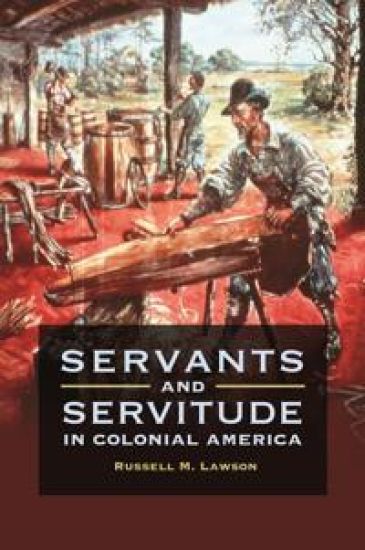
The dispossessed people of Colonial America included thousands of servants who either voluntarily or involuntarily ended up serving as agricultural, domestic, skilled, and unskilled laborers in the northern, middle, and southern British American colonies as well as British Caribbean colonies.Thousands of people arrived in the British-American colonies as indentured servants, transported felons, and kidnapped children forced into bound labor. Others already in America, such as Indians, freedmen, and poor whites, placed themselves into the service of others for food, clothing, shelter, and security; poverty in colonial America was relentless, and servitude was the voluntary and involuntary means by which the poor adapted, or tried to adapt, to miserable conditions. From the 1600s to the 1700s, Blacks, Indians, Europeans, Englishmen, children, and adults alike were indentured, apprenticed, transported as felons, kidnapped, or served as redemptioners.Though servitude was more multiracial and multicultural than slavery, involving people from numerous racial and ethnic backgrounds, far fewer books have been written about it. This fascinating new study of servitude in colonial America provides the first complete overview of the varied lives of the dispossessed in 17th- and 18th-century America, examining colonial American servitude in all of its forms.
Science in the Ancient World

Science in the Ancient World

Russell M. Lawson

BLOOMSBURY PUBLISHING PLC
2021
sidottu
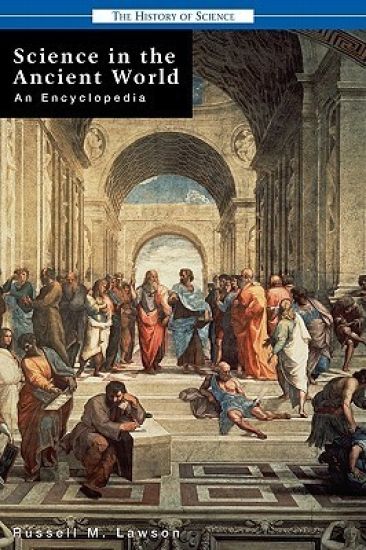
Science in the Ancient World presents a worldwide history of science, from prehistoric times through the medieval period. It covers Europe, Africa, Asia, and the Americas and includes topics ranging from alchemy and astrology to psychology and physics.This work spans prehistory to 1500 CE, examining thousands of years of history in four world regions: Asia, Africa, Europe, and the Americas. Highlights of this period include the onset of civilization and science in Mesopotamia and Egypt, the accomplishments of the ancient Greeks between 700 BCE and 100 CE, the adaptation of Greek science by the Romans, the spread of Greek science during the Hellenistic Age, the expansion of Islamic power and commensurate scientific knowledge, and the development of science and philosophy in ancient China and India.Focusing on the history of the science that blossomed in the above regions, scientific disciplines covered include alchemy, astronomy, astrology, agriculture, architecture, biology, botany, chemistry, engineering, exploration, geography, hydraulics, institutions of science, marine science, mathematics, medicine, meteorology, military science, myth and religion, philosophy, philosophy of science, psychology, physics, and social sciences. In all of these fields, theory and application are explored, as are leading individuals and schools of thought, centers of intellectual activity, and notable accomplishments and inventions.
The Isles of Shoals in the Age of Sail: A Brief History

The Isles of Shoals in the Age of Sail: A Brief History

Russell M. Lawson

History Press Library Editions
2007
sidottu
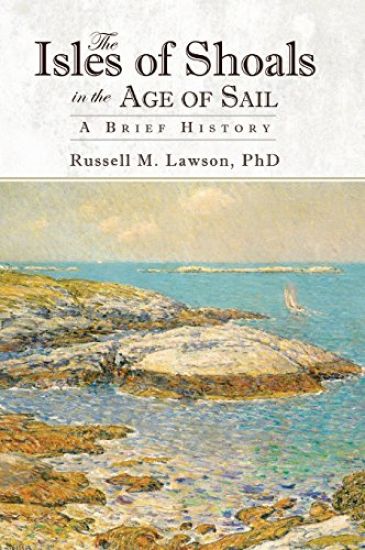
Off the picturesque shoreline of New Hampshire and Maine lie eight islands collectively known as the Isles of Shoals. Since the famous English explorer John Smith first set foot on them in 1614, the Isles of Shoals have experienced numerous changes. The once thriving fishing communities suffered many hard years before and after the American Revolution. Since the 1800s, the Isles of Shoals have been revived as a place where travelers, artists and writers can find inspiration and relaxation. The austere beauty of the rocky shores has influenced such notable figures as Nathaniel Hawthorne, Childe Hassam, Sarah Orne Jewett and the poet laureate of the islands, Celia Laighton Thaxter, as well as lesser-known fishers and fishwives, sailors and visitors of the past and present.In this volume, Russell M. Lawson has evoked the fascinating history of the islands, from their discovery to the end of the nineteenth century. It is a must-read for all "Shoalers" who, like the hardy mariners and inspired artists of the past, follow the call of the sea to the Isles of Shoals.
Passaconaway’s Realm

Passaconaway’s Realm

Russell M. Lawson

Hardscrabble Books
2004
nidottu
Now that New Hampshire's dominant White Mountain peak can be climbed relatively easily in a long day, or more comfortably ascended by car or cog railway, it is easy to forget that it was once considered by Native Americans and most European settlers to be too sacred and formidable to attempt. In fact, mountain climbing was relatively rare until recent times, making the fifteen ascents of Mount Washington between 1632 and 1804 all the more remarkable. Passaconaway's Realm is a concise, historically and scientifically correct, and very dramatic story of Mount Washington's earliest climbs and the men who made them in pursuit of botanical specimens; meteorologic, geographic, and geological data; and personal adventure.Incorporating sources that have never been utilized, Russell M. Lawson highlights the interaction of the wilderness landscape and the native peoples with such British-American newcomers and invaders as Walter Neale, Darby Field, John Josselyn, Captain Wells, Robert Rogers, Nicholas Austin, Governor John Wentworth, Jeremy Belknap, and Manasseh Cutler. He focuses on rustic frontiersman Captain John Evans, a founder of Fryeburg, Maine, an axe-man and hunter, but also the wilderness guide for the men of science during the 1784 Belknap-Cutler expedition. Lawson describes in close and intriguing detail the personal relations and aspirations, the logistics and difficulties, and the scientific aspirations and outcomes of this key early ascent.
The Sea Mark

The Sea Mark

Russell M. Lawson

Dartmouth College Press
2015
sidottu
By age thirty-four Captain John Smith was already a well-known adventurer and explorer. He had fought as a mercenary in the religious wars of Europe and had won renown for fighting the Turks. He was most famous as the leader of the Virginia Colony at Jamestown, where he had wrangled with the powerful Powhatan and secured the help of Pocahontas. By 1614 he was seeking new adventures. He found them on the 7,000 miles of jagged coastline of what was variously called Norumbega, North Virginia, or Cannada, but which Smith named New England. This land had been previously explored by the English, but while they had made observations and maps and interacted with the native inhabitants, Smith found that "the Coast is . . . even as a Coast unknowne and undiscovered." The maps of the region, such as they were, were inaccurate. On a long, painstaking excursion along the coast in a shallop, accompanied by sailors and the Indian guide Squanto, Smith took careful compass readings and made ocean soundings. His Description of New England, published in 1616, which included a detailed map, became the standard for many years, the one used by such subsequent voyagers as the Pilgrims when they came to Plymouth in 1620. The Sea Mark is the first narrative history of Smith's voyage of exploration, and it recounts Smith's last years when, desperate to return to New England to start a commercial fishery, he languished in Britain, unable to persuade his backers to exploit the bounty he had seen there.
Science in the Ancient World

Science in the Ancient World

Russell M. Lawson

ABC-CLIO
2004
sidottu
The first A–Z resource to catalog the achievements and legacy of more than four millennia of scientific thought in the ancient world of the Mediterranean and the Near East, providing a complete overview of the physical, chemical, life, medical, and social sciences of the classical world. Many are familiar with such wonders as steam power and the discovery that the planets revolve around the Sun. The fact that such phenomena were known to the ancient Greeks more than 2,000 years ago is less well known. Now, Science in the Ancient World fills this gap by covering all the major scientific developments during 4,000 years of ancient history. Over 200 A–Z entries explore the origins of science, from astronomy and mathematics to medicine and chemistry. Giants like Aristotle and Plato are examined, together with more obscure figures like Nearchus, explorer of the Indian Ocean, and Hero, discoverer of steam power. Emphasis is placed on the diversity of ancient science, from the achievements of the Mesopotamians to the science of the Romans. The philosophies behind ancient science are explored, from the Epicurean pursuit of happiness to the asceticism of the Stoics. This comprehensive survey brings to the modern reader a long lost age of scientific discovery.
The Piscataqua Valley in the Age of Sail: A Brief History
In this complex and dynamic history, Russell M. Lawson navigates the story of the Piscataqua Valley from Martin Pring in 1603, through the turbulent Indian wars of colonial days, around the volatile American Revolution and into the smooth sailing of the nineteenth-century shipbuilding industry. In Dover, Durham, Exeter and the entire valley, Piscataqua played a major role in the foundation of the United States, all the while surrounded by the river's natural splendor.
Poverty in America

Poverty in America

Russell M. Lawson; Benjamin A. Lawson

Greenwood Press
2008
sidottu
How has the U.S. dealt, throughout its long history, with one of the worlds oldest problems? Although poverty has always been part of the human experience, societal reactions and responses to it have been as varied as the condition has been static. Poverty in America has its own turbulent history of causes, effects, and remedies, from debtor's prison to the War on Poverty, from Social Darwinism to food stamps. This in-depth encyclopedia covers the entire history of American poverty from every angle—historical, social, cultural, political, spiritual, and literary. How has poverty been defined in America? What has been done to prevent it? How have minority groups been affected? How has the church reacted? And what, if anything, can be done to eliminate it? Poverty in America covers these issues in vivid detail, from the colonial period to the Industrial Revolution to the global economy of the 21st century. Impactful primary document excerpts from key periods throughout American history are also included, providing firsthand accounts from all sides of the issue. A chronology of events and an extensive bibliography round out this fascinating work.