Kirjojen hintavertailu. Mukana 11 699 587 kirjaa ja 12 kauppaa.

Kirjahaku

Etsi kirjoja tekijän nimen, kirjan nimen tai ISBN:n perusteella.

4 kirjaa tekijältä Russell Rickford

We Are an African People

We Are an African People

Russell Rickford

Oxford University Press Inc
2019
nidottu
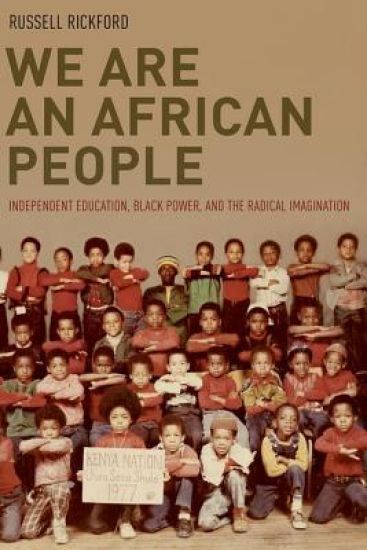
During the height of the Black Power movement of the late 1960s and 1970s, dozens of Pan African nationalist private schools, from preschools to post-secondary ventures, appeared in urban settings across the United States. The small, independent enterprises were often accused of teaching hate and were routinely harassed by authorities. Yet these institutions served as critical mechanisms for transmitting black consciousness. Founded by activist-intellectuals and other radicalized veterans of the civil rights movement, the schools strove not simply to bolster the academic skills and self-esteem of inner-city African-American youth but also to decolonize minds and foster a vigorous and regenerative sense of African identity. In We Are An African People, historian Russell Rickford traces the intellectual lives of these autonomous black institutions, established dedicated to pursuing the self-determination that the integrationist civil rights movement had failed to provide. Influenced by Third World theorists and anticolonial campaigns, organizers of the schools saw formal education as a means of creating a vanguard of young activists devoted to the struggle for black political sovereignty throughout the world. Most of the institutions were short-lived, and they offered only modest numbers of children a genuine alternative to substandard, inner-city public schools. Yet their stories reveal much about Pan Africanism as a social and intellectual movement and as a key part of an indigenous black nationalism. Rickford uses this largely forgotten movement to explore a particularly fertile period of political, cultural, and social revitalization that strove to revolutionize African American life and envision an alternate society. Reframing the post-civil rights era as a period of innovative organizing, he depicts the prelude to the modern Afrocentric movement and contributes to the ongoing conversation about urban educational reform, race, and identity.
We Are an African People

We Are an African People

Russell Rickford

Oxford University Press Inc
2016
sidottu
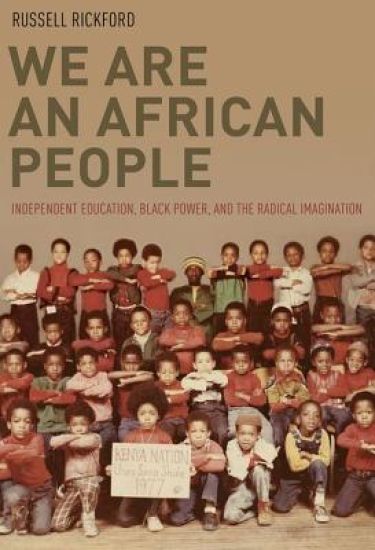
By 1970, more than 60 "Pan African nationalist" schools, from preschools to post-secondary ventures, had appeared in urban settings across the United States. The small, independent enterprises were often accused of teaching hate and were routinely harassed by authorities. Yet these institutions served as critical mechanisms for transmitting black consciousness. Founded by activist-intellectuals, the schools strove not simply to bolster the academic skills and self-esteem of inner-city African-American youth but also to decolonize minds and embody the principles of self-determination and African identity. In this book, based on his Bancroft Award-winning dissertation, historian Russell Rickford traces the brief lives of these autonomous black institutions created to claim some of the self-determination that the integrationist civil rights movement had failed to provide. Influenced by Third World theorists and anticolonial movements, organizers of the schools saw formal education as a means of creating a vanguard of young activists devoted to the struggle for black political sovereignty throughout the world. Most of the schools were short-lived, but their stories have much to tell us about Pan Africanism as a social and intellectual movement and as a key part of an indigenous black nationalism. A former journalist at the Philadelphia Inquirer, Rickford uses a virtually unknown movement to explore black nationhood and a particularly fertile period of political, cultural, and social revitalization that envisioned an alternate society.
A Proxy Africa

A Proxy Africa

Russell Rickford

THE UNIVERSITY OF NORTH CAROLINA PRESS
2026
sidottu
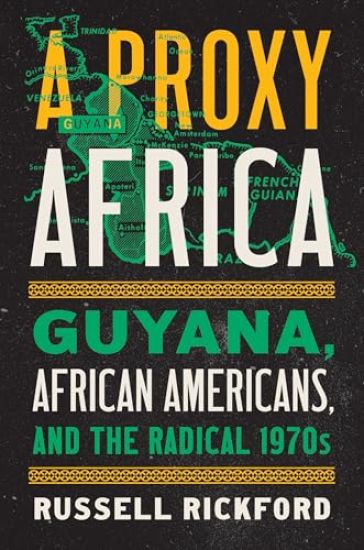
Nestled between Brazil, Venezuela, and Suriname, Guyana is the third-smallest sovereign state in mainland South America, and one of its youngest. Originally a Dutch colony, Guyana remained under British rule from the late eighteenth century until gaining independence in 1966 and becoming a republic in 1970. Apart from the 1978 mass murder-suicide of cult leader Jim Jones’s followers in Jonestown, Guyana has been mostly peripheral to mainstream geopolitics. Yet for a generation of Black revolutionaries from around the world, Guyana was a vibrant site of pan-African activism. The country was particularly attractive to veterans of the US civil rights movement who sought alternative places to construct flourishing postcolonial, pan-African nation-states. In this first, comprehensive history of Guyana’s core role in anticolonial, Black internationalist movements in the 1960s and 1970s, historian Russell Rickford traces the history of African Americans who traveled to the country to work with, learn from, and teach Guyanese politicians, activists, and other international figures in the long fight for Black freedom. With encouragement from Prime Minister Forbes Burnham, they eagerly accepted the invitation to move to Guyana to establish new cooperative settlements. Rickford compellingly narrates Guyana’s allure and promise for Black Americans, along with the limitations they faced when ideology clashed with lived realities—especially political ones—once there.
A Proxy Africa

A Proxy Africa

Russell Rickford

THE UNIVERSITY OF NORTH CAROLINA PRESS
2026
pokkari
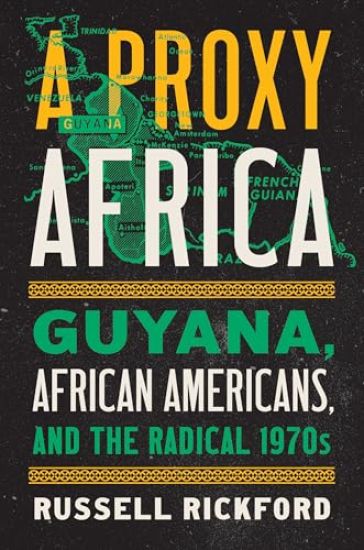
Nestled between Brazil, Venezuela, and Suriname, Guyana is the third-smallest sovereign state in mainland South America, and one of its youngest. Originally a Dutch colony, Guyana remained under British rule from the late eighteenth century until gaining independence in 1966 and becoming a republic in 1970. Apart from the 1978 mass murder-suicide of cult leader Jim Jones’s followers in Jonestown, Guyana has been mostly peripheral to mainstream geopolitics. Yet for a generation of Black revolutionaries from around the world, Guyana was a vibrant site of pan-African activism. The country was particularly attractive to veterans of the US civil rights movement who sought alternative places to construct flourishing postcolonial, pan-African nation-states. In this first, comprehensive history of Guyana’s core role in anticolonial, Black internationalist movements in the 1960s and 1970s, historian Russell Rickford traces the history of African Americans who traveled to the country to work with, learn from, and teach Guyanese politicians, activists, and other international figures in the long fight for Black freedom. With encouragement from Prime Minister Forbes Burnham, they eagerly accepted the invitation to move to Guyana to establish new cooperative settlements. Rickford compellingly narrates Guyana’s allure and promise for Black Americans, along with the limitations they faced when ideology clashed with lived realities—especially political ones—once there.