Kirjojen hintavertailu. Mukana 12 016 292 kirjaa ja 12 kauppaa.

Kirjahaku

Etsi kirjoja tekijän nimen, kirjan nimen tai ISBN:n perusteella.

37 kirjaa tekijältä Rutger Bregman

Humankind: A Hopeful History

Humankind: A Hopeful History

Rutger Bregman

Back Bay Books
2021
nidottu
AN INSTANT NEW YORK TIMES BESTSELLER The "lively" (The New Yorker), "convincing" (Forbes), and "riveting pick-me-up we all need right now" (People) that proves humanity thrives in a crisis and that our innate kindness and cooperation have been the greatest factors in our long-term success as a species. If there is one belief that has united the left and the right, psychologists and philosophers, ancient thinkers and modern ones, it is the tacit assumption that humans are bad. It's a notion that drives newspaper headlines and guides the laws that shape our lives. From Machiavelli to Hobbes, Freud to Pinker, the roots of this belief have sunk deep into Western thought. Human beings, we're taught, are by nature selfish and governed primarily by self-interest. But what if it isn't true? International bestseller Rutger Bregman provides new perspective on the past 200,000 years of human history, setting out to prove that we are hardwired for kindness, geared toward cooperation rather than competition, and more inclined to trust rather than distrust one another. In fact this instinct has a firm evolutionary basis going back to the beginning of Homo sapiens. From the real-life Lord of the Flies to the solidarity in the aftermath of the Blitz, the hidden flaws in the Stanford prison experiment to the true story of twin brothers on opposite sides who helped Mandela end apartheid, Bregman shows us that believing in human generosity and collaboration isn't merely optimistic--it's realistic. Moreover, it has huge implications for how society functions. When we think the worst of people, it brings out the worst in our politics and economics. But if we believe in the reality of humanity's kindness and altruism, it will form the foundation for achieving true change in society, a case that Bregman makes convincingly with his signature wit, refreshing frankness, and memorable storytelling. "The Sapiens of 2020." --The Guardian "Humankind made me see humanity from a fresh perspective." --Yuval Noah Harari, author of the #1 bestseller Sapiens Longlisted for the 2021 Andrew Carnegie Medal for Excellence in Nonfiction One of the Washington Post's 50 Notable Nonfiction Works in 2020
Humankind: A Hopeful History

Humankind: A Hopeful History

Rutger Bregman

Little Brown and Company
2020
sidottu
AN INSTANT NEW YORK TIMES BESTSELLER The "lively" (The New Yorker), "convincing" (Forbes), and "riveting pick-me-up we all need right now" (People) that proves humanity thrives in a crisis and that our innate kindness and cooperation have been the greatest factors in our long-term success as a species. If there is one belief that has united the left and the right, psychologists and philosophers, ancient thinkers and modern ones, it is the tacit assumption that humans are bad. It's a notion that drives newspaper headlines and guides the laws that shape our lives. From Machiavelli to Hobbes, Freud to Pinker, the roots of this belief have sunk deep into Western thought. Human beings, we're taught, are by nature selfish and governed primarily by self-interest. But what if it isn't true? International bestseller Rutger Bregman provides new perspective on the past 200,000 years of human history, setting out to prove that we are hardwired for kindness, geared toward cooperation rather than competition, and more inclined to trust rather than distrust one another. In fact this instinct has a firm evolutionary basis going back to the beginning of Homo sapiens. From the real-life Lord of the Flies to the solidarity in the aftermath of the Blitz, the hidden flaws in the Stanford prison experiment to the true story of twin brothers on opposite sides who helped Mandela end apartheid, Bregman shows us that believing in human generosity and collaboration isn't merely optimistic--it's realistic. Moreover, it has huge implications for how society functions. When we think the worst of people, it brings out the worst in our politics and economics. But if we believe in the reality of humanity's kindness and altruism, it will form the foundation for achieving true change in society, a case that Bregman makes convincingly with his signature wit, refreshing frankness, and memorable storytelling. "The Sapiens of 2020." --The Guardian "Humankind made me see humanity from a fresh perspective." --Yuval Noah Harari, author of the #1 bestseller Sapiens Longlisted for the 2021 Andrew Carnegie Medal for Excellence in Nonfiction One of the Washington Post's 50 Notable Nonfiction Works in 2020
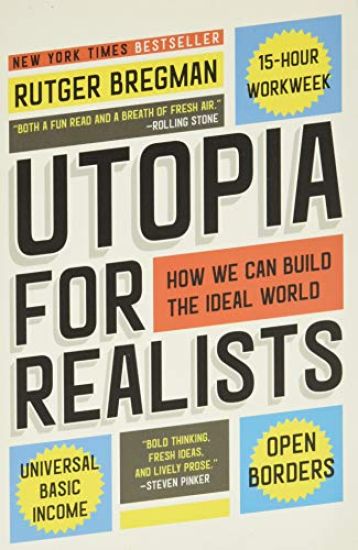
Utopia for Realists: How We Can Build the Ideal World
Universal basic income. A 15-hour workweek. Open borders. Does it sound too good to be true? One of Europe's leading young thinkers shows how we can build an ideal world today. A more politically radical Malcolm Gladwell. -- New York Times After working all day at jobs we often dislike, we buy things we don't need. Rutger Bregman, a Dutch historian, reminds us it needn't be this way -- and in some places it isn't. Rutger Bregman's TED Talk about universal basic income seemed impossibly radical when he delivered it in 2014. A quarter of a million views later, the subject of that video is being seriously considered by leading economists and government leaders the world over. It's just one of the many utopian ideas that Bregman proves is possible today. Utopia for Realists is one of those rare books that takes you by surprise and challenges what you think can happen. From a Canadian city that once completely eradicated poverty, to Richard Nixon's near implementation of a basic income for millions of Americans, Bregman takes us on a journey through history, and beyond the traditional left-right divides, as he champions ideas whose time have come. Every progressive milestone of civilization -- from the end of slavery to the beginning of democracy -- was once considered a utopian fantasy. Bregman's book, both challenging and bracing, demonstrates that new utopian ideas, like the elimination of poverty and the creation of the fifteen-hour workweek, can become a reality in our lifetime. Being unrealistic and unreasonable can in fact make the impossible inevitable, and it is the only way to build the ideal world.
Moral Ambition: Stop Wasting Your Talent and Start Making a Difference
INTERNATIONAL BESTSELLER From the author of the New York Times bestsellers Humankind and Utopia for Realists--"a more politically radical Malcolm Gladwell" (The New York Times)--comes a bold manifesto daring us to harness our talents and transform our idealism into action, all with the goal of making the world a wildly better place. A career consists of 2,000 workweeks, and how you spend that time is one of the most important decisions of your life. Still, millions of people are stuck in in mind-numbing, pointless, or just plain harmful jobs. There's an antidote to this waste of talent, and it's called moral ambition. Moral ambition is the will to be among the best, but with different measures of success. Not a fancy title, fat salary, or corner office, but a career dedicated to the best solutions to the world's biggest problems-- whether that means tackling climate change, making pandemics history or fighting Big Tobacco. In Moral Ambition, internationally bestselling author Rutger Bregman reveals how our conventional definitions of success are harming us and the planet, and shows how we can shift the focus from personal gain to societal benefit. In the process, he explains, we will join a growing movement of pioneers who are already living out this ethos. They're the builders, the problem-solvers, the doers who have chosen a path less traveled. A guidebook to finding that path for ourselves, Moral Ambition reminds us that the real measure of success lies not in what we accumulate, but in what we contribute, and shows how we, too, can build a legacy that truly matters.
Utopia for Realists

Utopia for Realists

Rutger Bregman

Bloomsbury Publishing Ltd.
2018
pokkari
We live in a time of unprecedented upheaval, with questions about the future, society, work, happiness, family and money, and yet no political party of the right or left is providing us with answers. Rutger Bregman, a bestselling Dutch historian, explains that it needn't be this way.Bregman shows that we can construct a society with visionary ideas that are, in fact, wholly implementable. Every milestone of civilization - from the end of slavery to the beginning of democracy - was once considered a utopian fantasy. New utopian ideas such as universal basic income and a 15-hour work week can become reality in our lifetime.This guide to a revolutionary yet achievable utopia is supported by multiple studies, lively anecdotes and numerous success stories. From a Canadian city that once completely eradicated poverty, to Richard Nixon's near implementation of a basic income for millions of Americans, Bregman takes us on a journey through history, beyond the traditional left-right divides, as he introduces ideas whose time has come.
Humankind

Humankind

Rutger Bregman

Bloomsbury Publishing PLC
2021
nidottu
THE INTERNATIONAL BESTSELLERA Guardian, Daily Telegraph, New Statesman and Daily Express Book of the Year'Hugely, highly and happily recommended' Stephen Fry'You should read Humankind. You'll learn a lot (I did) and you'll have good reason to feel better about the human race' Tim Harford'Made me see humanity from a fresh perspective' Yuval Noah Harari It's a belief that unites the left and right, psychologists and philosophers, writers and historians. It drives the headlines that surround us and the laws that touch our lives. From Machiavelli to Hobbes, Freud to Dawkins, the roots of this belief have sunk deep into Western thought. >Human beings, we're taught, are by nature selfish and governed by self-interest.Humankind makes a new argument: that it is realistic, as well as revolutionary, to assume that people are good. By thinking the worst of others, we bring out the worst in our politics and economics too.In this major book, internationally bestselling author Rutger Bregman takes some of the world's most famous studies and events and reframes them, providing a new perspective on the last 200,000 years of human history. From the real-life Lord of the Flies to the Blitz, a Siberian fox farm to an infamous New York murder, Stanley Milgram's Yale shock machine to the Stanford prison experiment, Bregman shows how believing in human kindness and altruism can be a new way to think - and act as the foundation for achieving true change in our society.It is time for a new view of human nature.
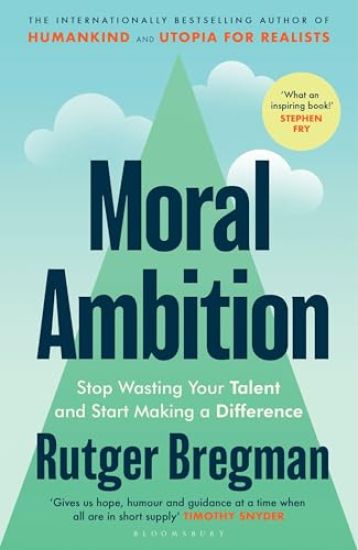
Moral Ambition

Moral Ambition

Rutger Bregman

BLOOMSBURY PUBLISHING PLC
2025
sidottu
THE INSTANT SUNDAY TIMES BESTSELLER‘Gives us hope, humour and guidance at a time when all are in short supply’ TIMOTHY SNYDER‘The rare read that might actually help you become a better person’ ADAM GRANTTHE ANTIDOTE TO APATHY FROM THE INTERNATIONALLY BESTSELLING AUTHOR RUTGER BREGMANEvery day we’re bombarded with methods, mantras and life hacks that promise us wellness and prosperity – while time and talent remain some of our most squandered resources. The average full-time worker will spend 80,000 hours at their job: are you making the most of them? Do you truly believe in what you do, day in, day out? What if you want to do something more with your limited time on the planet?Internationally bestselling author Rutger Bregman shows us that with moral ambition – the will to make the world a wildly better place – we can be both idealistic and successful, and change the world along the way. Uncovering the qualities that made the great change-makers of history so effective, he shows how we too can lend our talents to the biggest challenges of our time, from climate change to inequality to the next pandemic. With moral ambition, we can do more than be on the right side of history: we can make history itself.This book won’t make your life easier, but it should make it more meaningful. The question is: what will you do with it?
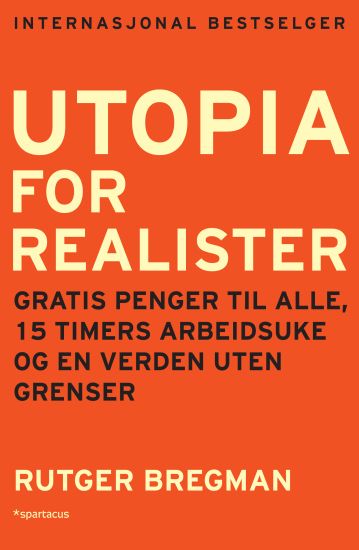
Utopia for realister

Utopia for realister

Rutger Bregman

Spartacus
2017
sidottu
Alle milepæler i sivilisasjonen - fra avskaffelse av slaveriet til innføring av demokratiet - ble på et tidspunkt regnet som utopiske fantasier. Vår generasjon har kanskje ikke lenger visjoner for fremtiden, vi tror ikke på fremskrittet på samme måte som før, men slik trenger det ikke være. Når tradisjonell venstre- og høyrepolitikk ikke har svar på vår tids store utfordringer, er det på tide å tenke nytt, skriver historiker Rutger Bregman. I boken presenterer han tre grunnleggende ideer - om borgerlønn, 15 timers arbeidsuke og åpne grenser. Hver av disse utopiene underbygges av forskning og eksempler, som blant annet viser at folk heller vil ha mer fritid og forbruke mindre i stedet for høyere lønn. Bregman og flere med ham, hevder også at det er bedre å gi folk gratis penger enn bistand for å løfte dem ut av fattigdom. Og det store spørsmålet i vår tid - hva skal vi leve av når arbeidsplassene blir overtatt av maskiner?
Utopia for realister

Utopia for realister

Rutger Bregman

Spartacus
2018
pokkari
Alle milepæler i vår sivilisasjon - fra avskaffelse av slaveriet til innføring av demokratiet - ble på et tidspunkt regnet som utopiske fantasier. Hvilke visjoner har vi for samfunnet nå når sosialismen er parkert og konvensjonell kapitalisme mangler svar på utfordringene? I sin internasjonale bestselger presenterer Rutger Bregman tre grunnleggende ideer - om borgerlønn, 15 timers arbeidsuke og åpne grenser. Hver av disse utopiene underbygges av forskning og eksempler, som blant annet viser at folk heller vil ha mer fritid og forbruke mindre enn å få høyere lønn. Bregman hevder også at det er bedre å gi folk gratis penger enn byråkratisert bistand for å løfte dem ut av fattigdom. «Utopia for realister» gir nye svar på et av vår tids store spørsmål: Hva skal vi leve av når arbeidsplassene blir overtatt av maskiner?
Folk flest er gode: en ny fortelling om menneskenaturen
En storslagen fortelling som viser at mennesket er bedre enn sitt rykte. Menneskene er dyr, sa kongene. Syndere, sa prestene. Egoister, sa både økonomene og biologene. I flere århundrer har vestlig kultur tatt utgangspunkt i at mennesket er fordervet. Og når vi antar at folk flest er onde, gjør vi også dårlige politiske og økonomiske valg. Men hva om vi hele tiden har tatt feil? I denne boka samler Rutger Bregman nyere forskning innen psykologi, økonomi, biologi og arkeologi. Han tar oss med på en reise gjennom historien og gir nye svar på gamle spørsmål. Hvorfor var det akkurat vår art som erobret verden? Hvordan forklarer vi våre største ugjerninger? Og har vi innerst inne en tilbøyelighet til det gode eller det onde? I en bok som er blitt kalt både øyeåpnende og revolusjonerende, tegner Bregman et positivt bilde av våre iboende egenskaper. «Folk flest er gode» omskriver ikke bare historien, den kaster også et nytt, mer håpefullt lys på fremtiden.
Utopia for realister

Utopia for realister

Rutger Bregman

Peoples Press
2017
nidottu
Vi lever i en tid med store omvæltninger og stor usikkerhed. Teknologiske fremskridt har gjort os rigere end nogensinde, men udviklingen er efterhånden så langt fremme, at store dele af arbejdsmarkedet kan erstattes af automatiseret arbejdskraft i form af robotter. Men hvilken betydning vil det få for vores arbejdsliv, familie, lykke og økonomi i fremtiden? Ingen partier hverken til højre eller venstre synes at have svaret. Vi har brug for nye svar i en ny tid. Rutger Bregman er en ny generations talsmand og en outsider i politik og har ikke part i verserende højre-venstre konflikter. Bregmans vision er hveken rød eller blå, men realistisk! Midlerne er gratis penge til alle, en femten timers arbejdsuge og en verden uden grænser. Rutger Bregman (f. 1988) er hollandsk historiker og journalist og er tilknyttet det innovative journalistisk kollektiv De Correspondent, hvorigennem Utopia for realister blev crowed funded og udgivet, først på hollandsk og siden på engelsk.
Det gode menneske

Det gode menneske

Rutger Bregman

Peoples Press
2021
sidottu
Overbevisningen om, at mennesket er grundlæggende egoistisk og styret af egne interesser, har domineret vestlig tankegang fra Machiavelli til Hobbes og fra Freud til Dawkins. Den forener venstrefløjen og højrefløjen, psykologer og filosoffer og gennemsyrer de overskrifter, vi læser og de love, der regulerer vores liv. ”Det gode menneske” argumenterer for det modsatte – at folk er grundlæggende gode. At menneskets intuitive tilskyndelse til at samarbejde frem for at konkurrere og udvise tillid frem for mistillid er tæt forbundet med evolutionen og går helt tilbage til Homo Sapiens’ oprindelse. Og at det er, når vi tænker det værste om andre, at vi bringer det værste frem i vores politik og vores økonomi. Den internationale bestsellerforfatter Rutger Bregman tager fat i nogle af verdens mest kendte studier og begivenheder, som for eksempel virkelighedens ”Fluernes herre” og the Blitz, en sibirisk rævefarm og en berygtet morder i New York, det berømte ”stød-eksperiment” på Yale og Stanfords fængselseksperiment, og kaster et nyt lys på dem. Han bibringer os et nyt perspektiv på de sidste 200.000 år af menneskehedens historie og viser, hvordan en tro på menneskelig godhed og altruisme kan blive en ny måde at opfatte verden på – og et fundament til at opnå virkelige forandringer i vores samfund. ”Det gode menneske udfordrede mig og fik mig til at se menneskeheden i et nyt lys.” – Yuval Noah Harari