Kirjahaku
Etsi kirjoja tekijän nimen, kirjan nimen tai ISBN:n perusteella.
8 kirjaa tekijältä Ruth H Finnegan
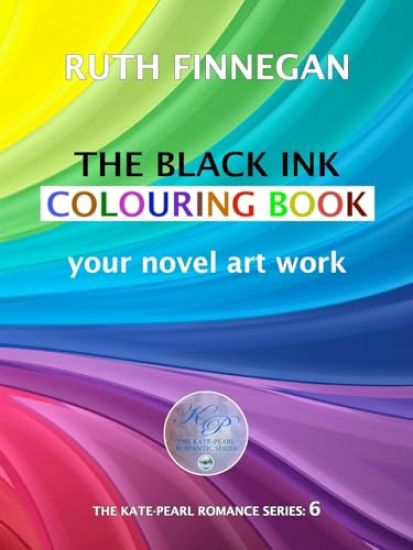
YOUR NOVEL ART BOOKThis book is a companion to the novel The Black Inked Pearl, a version of the age-old ever-repeating myth of a girl rejecting her lover only to find he is the only one she wants. It is also a colouring book with images for You to colour in using Your imagination. See the two examples.The background colour image is by the silk-artist Rachel Backshall. She has also illustrated other Ruth Finnegan books including: Oh Kate Your first counting book, The Magic Adventure, Kris and Kate build a boat, and Pearl of the seas. Inside the book are other images from her original silk paintings, converted to black and white.COLOUR SECRETS: Did you know?As children, many of us were given a paint box of, maybe, five colours. As we got older the box had more colours. But we may not have been curious enough to ask questions like: What are these colours? How are they made? How did they start and what (if anything) do they mean? Some might say that colours are only a trick of the light or of the way our eyes see, not really of any independent existence. But to us as people, as artists, they are real enough, something with which we engage every day. So, though there is of course much to know about the physical constituents of colour lets leave that aside to look at what is important for us as human beings living our lives in this world: the active uses and meanings of colours and how we engage with them. Read all about colour in this book.AWARD WINNING AUTHOR: Ruth Finnegan has won many accolades including a Readers Favourite 2024 SILVER AWARD and a Literary Titan Gold Award. These are bestowed on books that are found to be perfect in their delivery of original content, utilizing fresh themes to convey innovative ideas, and which deftly use elegant prose to transform words into expertly written literature.
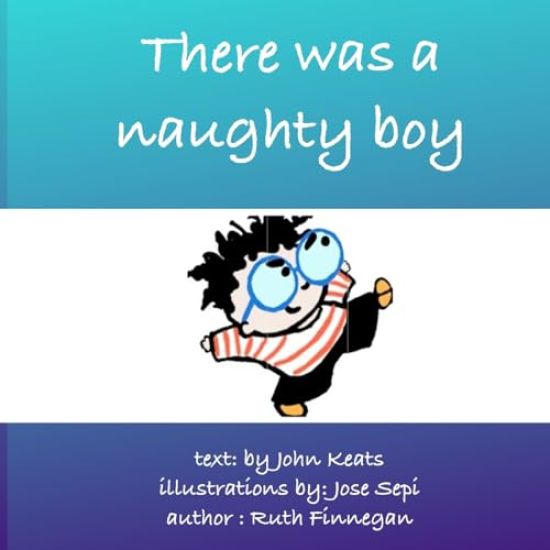
The text is inspired by John Keats the poet. Comic illustrations by Jose Sepi. The famous nineteenth-century poet John Keats wrote this poem (There was a naughty boy) to his sister while he was on holiday in Scotland - probably laughing at himself and his (normally very serious) way of writing.The famous nineteenth-century poet John Keats wrote this poem. He wrote the poem when he was on holiday in Scotland. He sent it home to his sister Fanny in a letter to entertain her while he was away. He referred to this playful, self-mocking poem as a 'song of myself'. What aspects of his life does he make fun of? Try out different ways of speaking the poem to make it as entertaining as possible for his sister. Think of a school trip or holiday you have been on and write a poem in the same style with lots of short lines and lively rhymes that describe some of the things you saw and experienced on your trip. Make your poem entertaining for someone who wasn't there.The verses accompanied by cartoon illustrations in this book are of the most famous part of the full poem and the full version is also included.
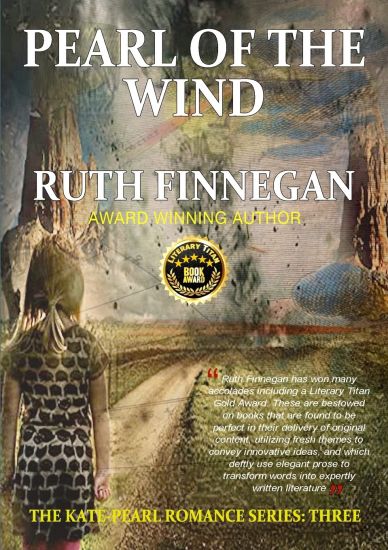
A myth is for centuries, maybe forever. It may spawn a thousand tales but in essence remain the same. The oft-told myth of the young girl rejecting her love in fear, then seeking him through all space, recycles again and again across the world and over the centuries. So it is with this tale. It is at root the same tale as in the earlier Kate-Pearl stories The Black Inked Pearl and its prequel Voyage of Pearl of the Seas, as well as in the later story told by the sea, The Helix Pearl. But this time it is from a different perspective - that of our call to the fleeting flighting breathing air, the soul, the fluttering butterfly-psyche.More, the style is the same. Again, you will find - but need not precisely identify - plentiful literary allusions (a process more fully explored in my Listen to this: the astounding ups and downs of quotation marks); most are just hints, but passages in double quote marks are direct quotations; other poems and the like are from Kate's own imagination transmitted here through her earthly interlocutor Ruth.As Ruth I found these allusions unavoidable rather than arising from deliberate conscious choice. Some of them swam up from texts learned long ago, by heart, at my Quaker school, others from the long steeped-in literature and mythology of the ancient world, my university study, above all from Homer, poet of poets, who returns again and again. For him too perhaps - here as throughout our lives, air-born metaphors emerge from the sounding airwaves of his mind. The story's origin in dreams - that is, in the magical space between sleeping and waking - means that some episodes are elusive. To me too. I can only say that I wrote them as I heard and felt them in their (to me unexpected and unsought) dreaming mode. I found that I had no choice but to write them down the next day, as accurately as I could, in faith that a meaning was there, intended. Perhaps you will detect it better than I.Till it was written down I never forgot. But once there on the page I had no memory of anything but the overall story and, above all, the feel. I suggest that, as with poetry or epic, you might like to read it the same way - for the overall themes and feeling - and the sound - not forever worrying about the literal detail.The book was written in three magical days on a sea journey, looking out on the enchantment of clouds, sunrise and sunset, a time for the liminal in-between mystical place of dream. Since then I have added some small revisions and elucidations, but the basic story is unchanged.No doubt there are still (I am only human) some 'mis-writes' and infelicities: anyway, who in this human world of ours can agree on the best style? I would be glad, however, if you could note that some, hopefully all, of the at-first-sight wrong spellings, grammar or punctuation, and the scattering of unusual words, are not typos but there for the sake of the sound and the rhythm, essential features in this dream-steeped narrative. It is set out as prose and until I read it aloud that is how I might have described it and allowed my computer to treat it. But in fact I suspect that my unthinking unconscious, my feeling-imagination, knew better all along and had already flown the text into pulse-beaten wing-ed words.I think if you too read it aloud and pause to feel the sounding words and the rhythms, you too might wonder if much of it is more of poetry than of prose, and, like all poems, echo-ridden and soaked in repetition (actually I should have known this all along, for I had found the same thing in turn with all the earlier Kate-Pearl stories too; perhaps, do you think, with poetry you have to discover it afresh each time?)So when in doubt think of this as mostly a kind of poetry, and if you will be so kind, speak it aloud.
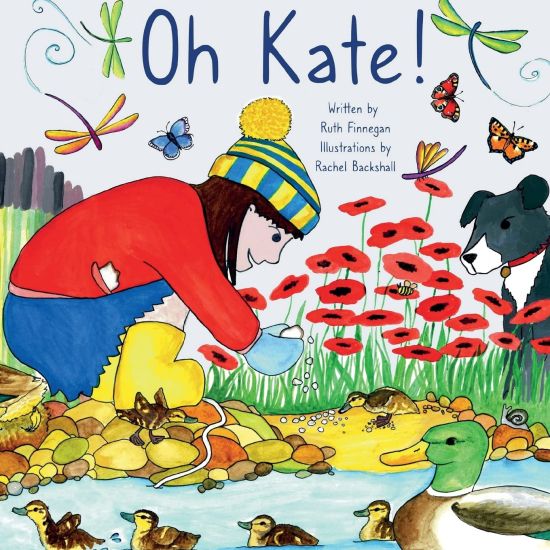
Join Kate on a journey around her, from home into the park, walking her dog. She has to cross a road on a 'zebra' crossing with her mum. There are many different ways to go in the park and thye firsdt thing she comes across are the squirrels. She plays in the leaves and jumps into the puddles, splash, splosh, and then checks out the frogs in the small pond. There are small ducks to feed and dragonflies to play with too. Kate searches high and low for the butterflies she knows must be hiding somewhere. Count from one to ten as you turn pages and count objects in the picture. She does find the butterflies and there are a few bees buzzing around as well.The book is small enough for little hands, has bright glossy colours, is easy to read and has lots of things to see and spot. The colourful illustrations by Rachel burst out of each page and how they interact with numbers and counting makes this book perfect for learning. Additionally the reader will learn more about some of the animals around us everyday and in our local parks.Highly recomended for 2-6 year olds, parents and carers will enjoy a positive experience of playing and learning with their child.