Kirjojen hintavertailu. Mukana 11 947 140 kirjaa ja 12 kauppaa.

Kirjahaku

Etsi kirjoja tekijän nimen, kirjan nimen tai ISBN:n perusteella.

5 kirjaa tekijältä Ruth Mack

Literary Historicity

Literary Historicity

Ruth Mack

Stanford University Press
2008
sidottu
Literary Historicity explores how eighteenth-century British writers considered the past as an aspect of experience. Mack moves between close examinations of literature, historiography, and recent philosophical writing on history, offering a new view of eighteenth-century philosophies of history in Britain. Such philosophies, she argues, could be important literarily without being focused, as has been assumed, on questions of fact and fiction. Eighteenth-century writers—like many twentieth-century philosophers—often used literary form not in order to exhibit a work's fictional status but in order to consider what the relation between the past and present might be. Literary Historicity portrays a British Enlightenment that both embraces the possibility of historical experience and interrogates the terms for such experience, one deeply engaged with historical consciousness not as an inevitability of the modern world, but as something to be understood within it.
Literary Historicity

Literary Historicity

Ruth Mack

Stanford University Press
2010
pokkari
Literary Historicity explores how eighteenth-century British writers considered the past as an aspect of experience. Mack moves between close examinations of literature, historiography, and recent philosophical writing on history, offering a new view of eighteenth-century philosophies of history in Britain. Such philosophies, she argues, could be important literarily without being focused, as has been assumed, on questions of fact and fiction. Eighteenth-century writers—like many twentieth-century philosophers—often used literary form not in order to exhibit a work's fictional status but in order to consider what the relation between the past and present might be. Literary Historicity portrays a British Enlightenment that both embraces the possibility of historical experience and interrogates the terms for such experience, one deeply engaged with historical consciousness not as an inevitability of the modern world, but as something to be understood within it.
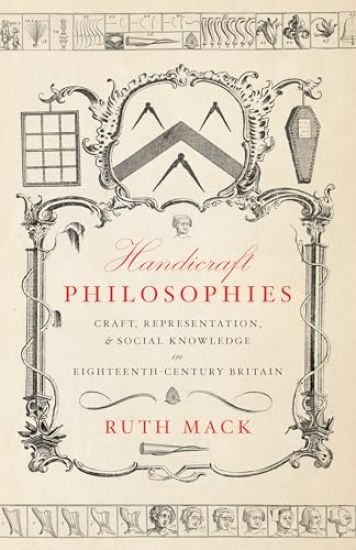
Handicraft Philosophies

Handicraft Philosophies

Ruth Mack

STANFORD UNIVERSITY PRESS
2025
sidottu
The term "Enlightenment" still carries its tie to a grand philosophical tradition that in Britain moves through Bacon, Locke, and Hume. But the literature and philosophy of the Enlightenment was full of practical knowledge associated with the body and with craft. This book is an account of the eighteenth-century thinkers from across social classes who turned to the body to formulate new ways of knowing natural and social worlds—what Ruth Mack calls handicraft philosophies. The writers discussed in this book include a formerly enslaved man, Olaudah Equiano, and a washerwoman, Mary Collier, as well as gentlemen Joseph Banks and James Boswell, and the artist William Hogarth. In their efforts to communicate embodied ways of knowing, they bring together theory and practice; they set aside objectivity and relish the practical ways of knowing that are traditionally associated with lower classes and less-than-privileged bodies. Mack focuses on how such knowledge proved especially helpful for understanding "society" as a new object of enquiry in the Enlightenment, laying the groundwork for the emergence of anthropological and sociological thought. Complicating the intellectual history of Enlightenment Britain amidst the rise of popular science and imperial expansion, Handicraft Philosophies is a new account of the thinkers who configured "philosophy" as a practice open to all.
Handicraft Philosophies

Handicraft Philosophies

Ruth Mack

STANFORD UNIVERSITY PRESS
2025
pokkari
The term "Enlightenment" still carries its tie to a grand philosophical tradition that in Britain moves through Bacon, Locke, and Hume. But the literature and philosophy of the Enlightenment was full of practical knowledge associated with the body and with craft. This book is an account of the eighteenth-century thinkers from across social classes who turned to the body to formulate new ways of knowing natural and social worlds—what Ruth Mack calls handicraft philosophies. The writers discussed in this book include a formerly enslaved man, Olaudah Equiano, and a washerwoman, Mary Collier, as well as gentlemen Joseph Banks and James Boswell, and the artist William Hogarth. In their efforts to communicate embodied ways of knowing, they bring together theory and practice; they set aside objectivity and relish the practical ways of knowing that are traditionally associated with lower classes and less-than-privileged bodies. Mack focuses on how such knowledge proved especially helpful for understanding "society" as a new object of enquiry in the Enlightenment, laying the groundwork for the emergence of anthropological and sociological thought. Complicating the intellectual history of Enlightenment Britain amidst the rise of popular science and imperial expansion, Handicraft Philosophies is a new account of the thinkers who configured "philosophy" as a practice open to all.
Children Do Not Fly

Children Do Not Fly

Ruth Mack

Christian Faith Publishing
2025
pokkari
In the sight of God, precious they all are, no matter from where they come, whether near or far. Innocent and unknowing, vulnerable too--in many ways, God made them the same. He knew just what to do. We need to cover them in prayer and keep a watchful eye. Some are very bold and brave; many things they will try. Often they don't know the dangers ahead to face. Without much thought, trying this and that, in fear there is no trace.The little ones, the children, are of whom I speak. We must love, teach, and protect them each day of the week. So here's a short story to guide children along the way. Teaching them to be safe in this world, we should teach something new each day.Remember your young and carefree days? No worries, just fun (play, run, climb, jump, roll, tumble, and dive). Who thought about getting hurt? That only happened to "the other guy." Worry-free we were, always trying something new. We challenged each other to see just what each could do.Now we watch our children do what we had done. How do we keep them safe while letting them have fun?This is a colorful book of safety for the adventurous child, encouraging their imagination and teaching reality all the while.