Kirjojen hintavertailu. Mukana 11 717 486 kirjaa ja 12 kauppaa.

Kirjahaku

Etsi kirjoja tekijän nimen, kirjan nimen tai ISBN:n perusteella.

3 kirjaa tekijältä Ruth Maxey

South Asian Atlantic Literature, 1970-2010

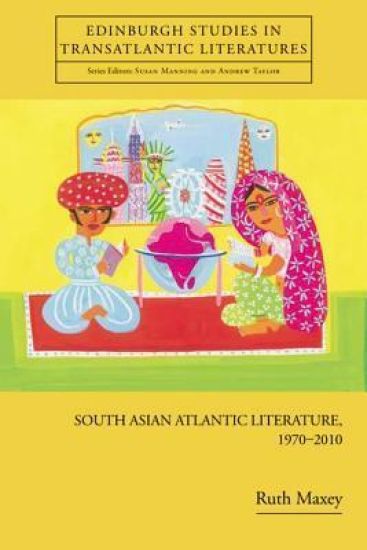
South Asian Atlantic Literature, 1970-2010

Ruth Maxey

Edinburgh University Press
2011
sidottu
This book is a sustained attempt to chart and interpret a wide range of recent South Asian diasporic writing from Britain and America in specifically transatlantic terms. This body of literature has grown substantially since the 1970s, receiving not only critical acclaim but also widespread popular interest, and its favoured themes have also found expression in cinematic works. Yet scholars have largely overlooked the transatlantic development of South Asian writing over the past three decades. Maxey's book fill this gap in transatlantic studies by offering fresh readings of canonical writers and texts, while bringing to light lesser-known authors and ideas. Tracing a literary lineage for works from different genres, it identifies key trends in recent South Asian American and British Asian literature by considering the favoured formal and aesthetic modes of major writers and by relating their work to different historical developments, sexual politics, the marketplace and issues of literary value. The book thus engages with longer-established debates as well as intervening in new ways in Atlantic Studies and in such fields as postcolonial literary studies and Asian American cultural studies. Key Features: * A book-length study of recent South Asian diasporic literature in transatlantic terms * Examines a wide range of canonical and under-researched writers * Investigates key themes, the majority of which remain under-explored * Identifies major formal and aesthetic trends and positions works within their wider intellectual and commercial context
Understanding Bharati Mukherjee

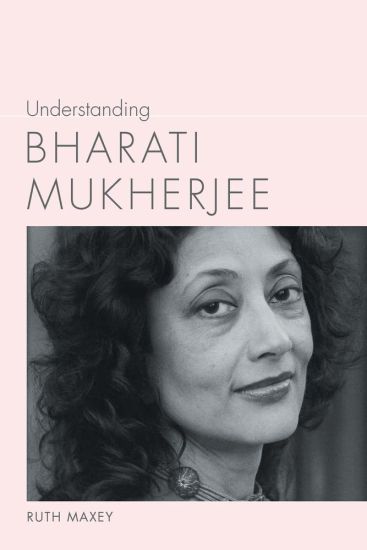
Understanding Bharati Mukherjee

Ruth Maxey

University of South Carolina Press
2019
sidottu
Bharati Mukherjee was the first major South Asian American writer and the first naturalized American citizen to win the National Book Critics Circle Award. Born in Kolkata, India, she immigrated to the United States in 1961 and went on to publish eight novels, two short story collections, two long works of nonfiction, and numerous essays, book reviews, and newspaper articles. She was professor emerita in the Department of English at the University of California, Berkeley, until her death in 2017. In Understanding Bharati Mukherjee, Ruth Maxey discusses Mukherjee's influence on younger South Asian American women writers, such as Jhumpa Lahiri and Chitra Divakaruni. Mukherjee's powerful writing also enjoyed popular appeal, with some novels achieving best-seller status and international acclaim; her 1989 novel Jasmine was translated into multiple Languages. One of the earliest writers to feature South Asian Americans in literary form, Mukherjee reflected upon the influence of non-European immigrants to the United States, following passage of the Immigration and Nationality Act of 1965, which abolished the quota system. Her vision of a globalized, interconnected world has been regarded as prophetic, and when Mukherjee died, diverse North American writers--Margaret Atwood, Joyce Carol Oates, Russell Banks, Michael Ondaatje, Ann Beattie, Amy Tan, and Richard Ford--came forward to praise her work and its importance. Understanding Bharati Mukherjee is the first book to examine this pioneering author's complete oeuvre and to identify its legacy. Maxey offers new insights into widely discussed texts and recuperates overlooked works, such as Mukherjee's first and last published short stories, her neglected nonfiction, and her many essays. Critically situating both well-known and under-discussed texts, this study analyzes the aesthetic and ideological Complexity of Mukherjee's writing, considering her sophisticated, erudite, multilayered use of intertextuality, especially her debt to cinema. Maxey argues that understanding the range of formal and stylistic strategies in play is crucial to grasping Mukherjee's work.
Understanding Bharati Mukherjee

Understanding Bharati Mukherjee

Ruth Maxey

UNIVERSITY OF SOUTH CAROLINA PRESS
2022
pokkari
2021 Choice Outstanding Academic TitleBharati Mukherjee was the first major South Asian American writer and the first naturalized American citizen to win the National Book Critics Circle Award. Born in Kolkata, India, she immigrated to the United States in 1961 and went on to publish eight novels, two short story collections, two long works of nonfiction, and numerous essays, book reviews, and newspaper articles. She was professor emerita in the Department of English at the University of California, Berkeley, until her death in 2017. In Understanding Bharati Mukherjee, Ruth Maxey discusses Mukherjee's influence on younger South Asian American women writers, such as Jhumpa Lahiri and Chitra Divakaruni. Mukherjee's powerful writing also enjoyed popular appeal, with some novels achieving best-seller status and international acclaim; her 1989 novel Jasmine was translated into multiple languages. One of the earliest writers to feature South Asian Americans in literary form, Mukherjee reflected upon the influence of non-European immigrants to the United States, following passage of the Immigration and Nationality Act of 1965, which abolished the quota system. Her vision of a globalized, interconnected world has been regarded as prophetic, and when Mukherjee died, diverse North American writers—Margaret Atwood, Joyce Carol Oates, Russell Banks, Michael Ondaatje, Ann Beattie, Amy Tan, and Richard Ford—came forward to praise her work and its importance. Understanding Bharati Mukherjee is the first book to examine this pioneering author's complete oeuvre and to identify its legacy. Maxey offers new insights into widely discussed texts and recuperates overlooked works, such as Mukherjee's first and last published short stories, her neglected nonfiction, and her many essays. Critically situating both well-known and under-discussed texts, this study analyzes the aesthetic and ideological complexity of Mukherjee's writing, considering her sophisticated, erudite, multilayered use of intertextuality, especially her debt to cinema. Maxey argues that understanding the range of formal and stylistic strategies in play is crucial to grasping Mukherjee's work.