Kirjahaku
Etsi kirjoja tekijän nimen, kirjan nimen tai ISBN:n perusteella.
15 kirjaa tekijältä Ruth Putnam



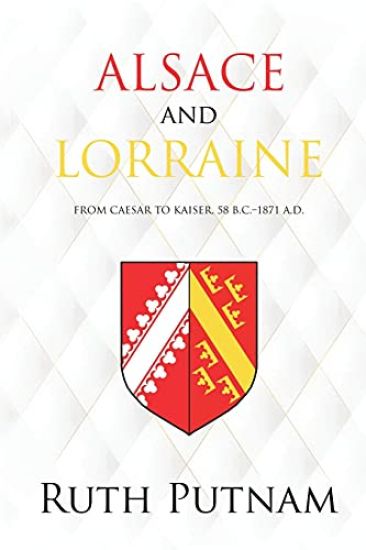
Alsace-Lorraine was ceded by France to Germany in 1871 after the Franco-German war, then retroceded to France in 1919 after the First World War. It was again ceded to Germany in 1940 during the Second World War and finally retroceded to France in 1945. Today, Alsace-Lorraine is a 5,067 square mile territory in France. However, as you'll find out, it did not use to be so. Before the wars and the back-and-forth ownership between France and Germany, Alsace-Lorraine was Alsace and Lorraine, two distinct territories with different customs, resources and characteristics.Most documented histories of Alsace-Lorraine reach back, but not to the very beginning. Ruth Putnam's does. She gives an in-depth history of Alsace and Lorraine all the way back to the time of Caesar, 58BC capturing their identities, politics and customs before they became bounties of war.You are about to learn the true history of Alsace-Lorraine.



Charles the Bold Last Duke of Burgundy 1433-1477
Ruth Putnam
Createspace Independent Publishing Platform
2016
nidottu

This superb history summarizes the major events and upheavals in the regions of Alsace and Lorraine, from ancient times to the late 19th century.Accompanied by maps and citing sources which date back through the ages, this history of the Alsace and Lorraine provinces is well-composed. At the time this account was published in 1914, the two regions had spent years in the geopolitical limelight; since parts of both were annexed by Germany in the 1870s, resentments had simmered in France about the annexation. As tensions rose in the years precluding World War One, the provinces became emblematic of rising discontentment between the European powers.Yet as Ruth Putnam demonstrates, the history of Alsace and Lorraine is long and storied, with the establishment of French and German cultural heritages in the regions a complex and nuanced matter. Their status was important as far back as Julius Caesar's conquest of Gaul; noting the Germanic tribes nearby and their continuous migrations, the Roman leader had to consider them as he sought to establish Rome's presence. Further contest between various monarchs and regional rulers occurred through the medieval era and after the Renaissance.