Kirjojen hintavertailu. Mukana 11 627 670 kirjaa ja 12 kauppaa.

Kirjahaku

Etsi kirjoja tekijän nimen, kirjan nimen tai ISBN:n perusteella.

4 kirjaa tekijältä Ryan Claycomb

Lives in Play

Lives in Play

Ryan Claycomb

The University of Michigan Press
2014
nidottu
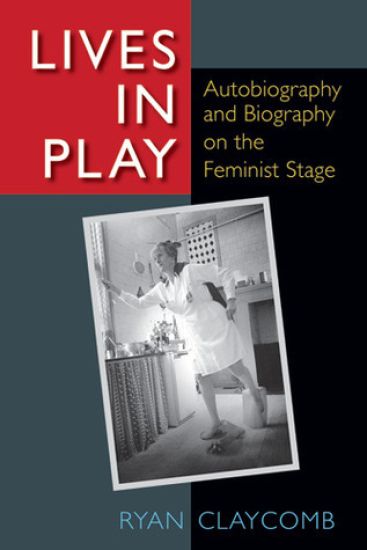
Lives in Play explores the centrality of life narratives to women’s drama and performance from the 1970s to the present moment. In the early days of second-wave feminism, the slogan was “The personal is the political.” These autobiographical and biographical “true stories” have the political impact of the real and have also helped a range of feminists tease out the more complicated aspects of gender, sex, and sexuality in a Western culture that now imagines itself as “postfeminist.” The book’s scope is broad, from performance artists like Karen Finley, Holly Hughes, and Bobby Baker to playwrights like Suzan-Lori Parks, Maria Irene Fornes, and Sarah Kane. The book links the narrative tactics and theatrical approaches of biography and autobiography and shows how theater artists use life writing strategies to advance women’s rights and remake women’s representations. Lives in Play will appeal to scholars in performance studies, women’s studies, and literature, including those in the growing field of auto/biography studies. “ A fresh perspective and wide-ranging analysis of changes in feminist theater for the past thirty years . . . a most welcome addition to the literature on theater, in particular scholarship on feminist practices.” —Choice “Helps sustain an important history by reviving works of feminist theater and performance and giving them a new and refreshing context and theorical underpinning . . . considering 1970s performance art alongside more conventional play production.” —Lesley Ferris, The Ohio State University
In the Lurch

In the Lurch

Ryan Claycomb

THE UNIVERSITY OF MICHIGAN PRESS
2023
nidottu
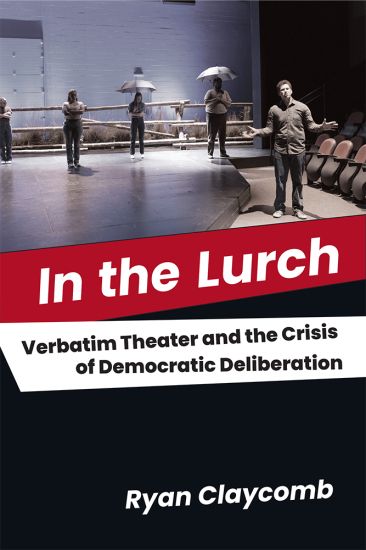
Some of theater’s most powerful works in the past thirty years fall into the category of "verbatim theater," socially engaged performances whose texts rely on word-for-word testimony. Performances such as Fires in the Mirror, The Laramie Project, and The Vagina Monologues have at their best demonstrated how to hold hard conversations about explosive subjects in a liberal democracy. But in this moment of what author Ryan Claycomb terms the “rightward lurch” of western democracies, does this idealized space of democratic deliberation remain effective? In the Lurch asks that question in a pointed and self-reflexive way, tracing the history of this branch of documentary theater with particular attention to the political outcomes and stances these performances seem to seek. But this is not just a disinterested history—Claycomb reflects on his own participation in that political fantasy, including earlier scholarly writing that articulated with breathless hopefulness the potential of verbatim theater, and on his own theatrical attendance, imbued with a belief that witnessing this idealized public sphere was a substitute for actual public participation. In the Lurch also recounts the bumpy path towards its completion, two years marked by presidential impeachments, an insurrection, a national reckoning with racism, and a global pandemic. At the heart of the book is a central question: is verbatim theater any longer an effective cultural response to what can look like the possible end of democracy?
In the Lurch

In the Lurch

Ryan Claycomb

THE UNIVERSITY OF MICHIGAN PRESS
2023
sidottu
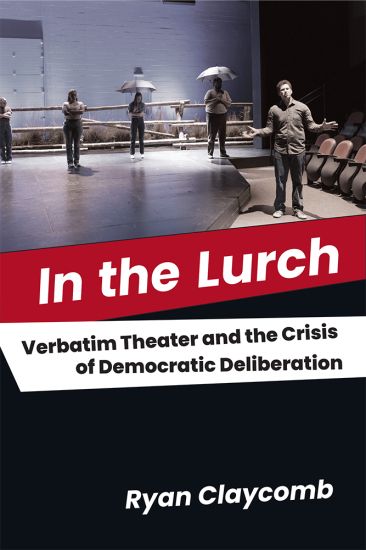
Some of theater’s most powerful works in the past thirty years fall into the category of "verbatim theater," socially engaged performances whose texts rely on word-for-word testimony. Performances such as Fires in the Mirror, The Laramie Project, and The Vagina Monologues have at their best demonstrated how to hold hard conversations about explosive subjects in a liberal democracy. But in this moment of what author Ryan Claycomb terms the “rightward lurch” of western democracies, does this idealized space of democratic deliberation remain effective? In the Lurch asks that question in a pointed and self-reflexive way, tracing the history of this branch of documentary theater with particular attention to the political outcomes and stances these performances seem to seek. But this is not just a disinterested history—Claycomb reflects on his own participation in that political fantasy, including earlier scholarly writing that articulated with breathless hopefulness the potential of verbatim theater, and on his own theatrical attendance, imbued with a belief that witnessing this idealized public sphere was a substitute for actual public participation. In the Lurch also recounts the bumpy path towards its completion, two years marked by presidential impeachments, an insurrection, a national reckoning with racism, and a global pandemic. At the heart of the book is a central question: is verbatim theater any longer an effective cultural response to what can look like the possible end of democracy?
Lives in Play

Lives in Play

Ryan Claycomb

The University of Michigan Press
2012
sidottu
Lives in Play explores the centrality of life narratives to women’s drama and performance from the 1970s to the present moment. In the early days of second-wave feminism, the slogan was “The personal is the political.” These autobiographical and biographical “true stories” have the political impact of the real and have also helped a range of feminists tease out the more complicated aspects of gender, sex, and sexuality in a Western culture that now imagines itself as “postfeminist.” The book’s scope is broad, from performance artists like Karen Finley, Holly Hughes, and Bobby Baker to playwrights like Suzan-Lori Parks, Maria Irene Fornes, and Sarah Kane. The book links the narrative tactics and theatrical approaches of biography and autobiography and shows how theater artists use life writing strategies to advance women’s rights and remake women’s representations. Lives in Play will appeal to scholars in performance studies, women’s studies, and literature, including those in the growing field of auto/biography studies. “ A fresh perspective and wide-ranging analysis of changes in feminist theater for the past thirty years . . . a most welcome addition to the literature on theater, in particular scholarship on feminist practices.” —Choice “Helps sustain an important history by reviving works of feminist theater and performance and giving them a new and refreshing context and theorical underpinning . . . considering 1970s performance art alongside more conventional play production.” —Lesley Ferris, The Ohio State University