Kirjojen hintavertailu. Mukana 12 016 292 kirjaa ja 12 kauppaa.

Kirjahaku

Etsi kirjoja tekijän nimen, kirjan nimen tai ISBN:n perusteella.

13 kirjaa tekijältä Ryan Gingeras

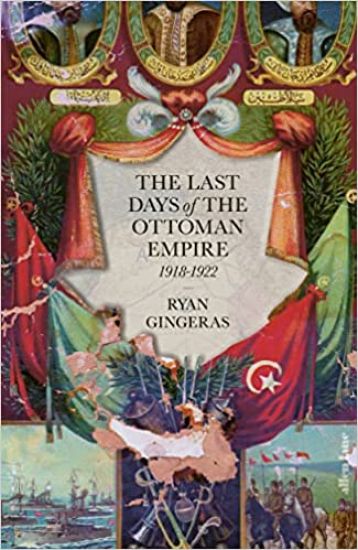
The Last Days of the Ottoman Empire

The Last Days of the Ottoman Empire

Ryan Gingeras

PENGUIN BOOKS LTD
2024
pokkari
'A tour de force of accessible scholarship' The Guardian'Impressive ... It is a complicated story that still reverberates, and Gingeras narrates it with lucid authority' New StatesmanThe Ottoman Empire had been one of the major facts in European history since the Middle Ages. Stretching from the Adriatic to the Indian Ocean, the Empire was both a great political entity and a religious one, with the Sultan ruling over the Holy Sites and, as Caliph, the successor to Mohammed.Yet the Empire's fateful decision to support Germany and Austria-Hungary in 1914 doomed it to disaster, breaking it up into a series of European colonies and what emerged as an independent Saudi Arabia.Ryan Gingeras's superb new book explains how these epochal events came about and shows how much we still live in the shadow of decisions taken so long ago. Would all of the Empire fall to marauding Allied armies, or could something be saved? In such an ethnically and religiously entangled region, what would be the price paid to create a cohesive and independent new state? The story of the creation of modern Turkey is an extraordinary, bitter epic, brilliantly told here.
Mustafa Kemal Atatürk

Mustafa Kemal Atatürk

Ryan Gingeras

Oxford University Press Inc
2015
nidottu
Part of The World in A Life series, this brief text provides insight into the life of Mustafa Kemal Atatürk. By the outbreak of World War II, the Republic of Turkey epitomized more than a state bound for better times; it aspired to represent the essence of modern politics in the twentieth century. To contemporaries of this period, Mustafa Kemal Atatürk-the country's first president-was both the muse and the architect of this radical transformation. By the time of his death in 1938, he was regularly compared alongside other luminary statesmen of the post-Versailles era. Outside of Turkey, his name was synonymous with bold leadership and ambitious reform. Atatürk's reputation as a man both progressive and iconoclastic greatly augmented his already lofty status as Turkey's premier general and war hero. Yet there were some aspects of his life presidency that tempered contemporary admiration for Mustafa Kemal. His acclaim and celebrity came with the understanding that he was a dictator with little patience for liberal democracy. Atatürk's inability to brook compromise and tolerate opposition engendered acts of violence and oppression that resulted in the deaths of large numbers of his fellow citizens. As a whole, the legacies of both his achievements and flaws as a leader remain critical to any understanding of modern-day Turkey. We live in a global age where big concepts like "globalization" often tempt us to forget the personal side of the past. The titles in The World in A Life series aim to revive these meaningful lives. Each one shows us what it was like to live on a world historical stage. Brief, inexpensive, and thematic, each book can be read in a week, fit within a wide range of curricula, and shed insight into a particular place or time. Four to six short primary sources at the end of each volume sharpen the reader's view of an individual's impact on world history.
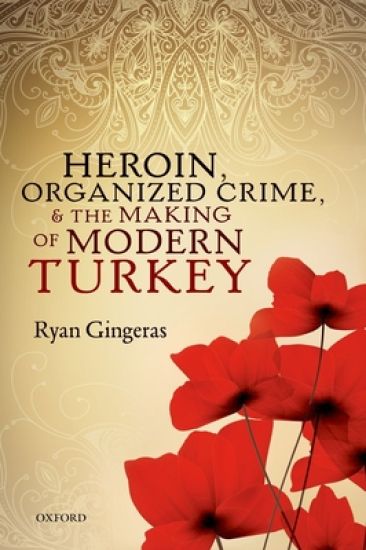
Heroin, Organized Crime, and the Making of Modern Turkey
Heroin, Organized Crime, and the Making of Modern Turkey explores the history of organized crime in Turkey and the roles which gangs and gangsters have played in the making of the Turkish state and Turkish politics. Turkey's underworld, which has been at the heart of several devastating scandals over the last several decades, is strongly tied to the country's long history of opium production and heroin trafficking. As an industry at the centre of the Ottoman Empire's long transition into the modern Turkish Republic, as important as the silk road had been in earlier centuries, the modern rise of the opium and heroin trade helped to solidify and complicate long-standing relationships between state officials and criminal syndicates. Such relationships produced not only ongoing patterns of corruption, but helped fuel and enable repeated acts of state violence. Drawing upon new archival sources from the United States and Turkey, including declassified documents from the Prime Minister's Archives of the Republic of Turkey and the Central Intelligence Agency, Heroin, Organized Crime, and the Making of Modern Turkey provides a critical window into how a handful of criminal syndicates played supporting roles in the making of national security politics in the contemporary Turkey. The rise of the 'Turkish mafia', from its origins in the late Ottoman period to its role in the 'deep state' revealed by the so-called Susurluk and Ergenekon scandals, is a story that mirrors troubling elements in the republic's establishment and emphasizes the transnational and comparative significance of narcotics and gangs in the country's past.
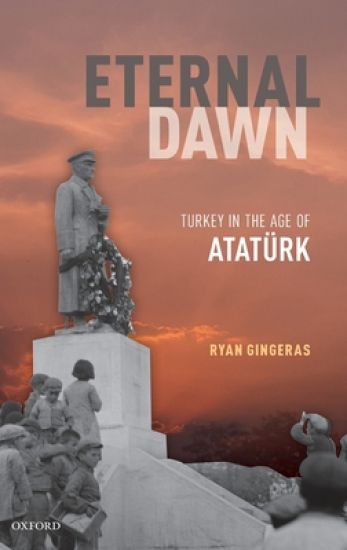
Eternal Dawn

Eternal Dawn

Ryan Gingeras

Oxford University Press
2019
sidottu
Amid the tensions and uncertainties that plagued the globe before the Second World War, the Republic of Turkey appeared to many as a unique and constructive model for how a state was to be reformed and governed in the modern era. For many interwar observers, Turkey was a country that seemed to have radically transformed itself into a nation that was united, strong, and progressive, one that was unburdened by its past. A general consensus held that Turkey's founding president, Mustafa Kemal Atatürk, was the chief architect and engineer of this feat, a belief that placed him among the greatest reforming statesmen in world history. This general perception of Atatürk and his revolutionary rule has largely endured to this day. As a study grounded in largely untapped archival and scholarly sources, Eternal Dawn presents a definitive look inside the development and evolution of Atatürk's Turkey. Rather than presenting the country's founding and transformation as an extension of Mustafa Kemal's life and achievements, scholar Ryan Gingeras presents Turkey's early years as the culmination of a variety of social and political forces dating back to the late Ottoman Empire. Eternal Dawn presses beyond the reigning mythology that still envelops this period and challenges many of the standing assumptions about the limits, successes, and consequences of the reforms that comprised Mustafa Kemal's revolution. Through a detailed survey of social and political conditions that defined life in the capital as well as Turkey's diverse provinces, Gingeras lays bare many of the harsh realities and bitter legacies incurred as a result of the republic's establishment and transformation. Atatürk's revolution, upon final analysis, destroyed as much as it built, and established precedents that both strengthen and torment the country to this day.
Heroin, Organized Crime, and the Making of Modern Turkey
Heroin, Organized Crime, and the Making of Modern Turkey explores the history of organized crime in Turkey and the roles which gangs and gangsters have played in the making of the Turkish state and Turkish politics. Turkey's underworld, which has been at the heart of several devastating scandals over the last several decades, is strongly tied to the country's long history of opium production and heroin trafficking. As an industry at the centre of the Ottoman Empire's long transition into the modern Turkish Republic, as important as the silk road had been in earlier centuries, the modern rise of the opium and heroin trade helped to solidify and complicate long-standing relationships between state officials and criminal syndicates. Such relationships produced not only ongoing patterns of corruption, but helped fuel and enable repeated acts of state violence. Drawing upon new archival sources from the United States and Turkey, including declassified documents from the Prime Minister's Archives of the Republic of Turkey and the Central Intelligence Agency, Heroin, Organized Crime, and the Making of Modern Turkey provides a critical window into how a handful of criminal syndicates played supporting roles in the making of national security politics in the contemporary Turkey. The rise of the 'Turkish mafia', from its origins in the late Ottoman period to its role in the 'deep state' revealed by the so-called Susurluk and Ergenekon scandals, is a story that mirrors troubling elements in the republic's establishment and emphasizes the transnational and comparative significance of narcotics and gangs in the country's past.
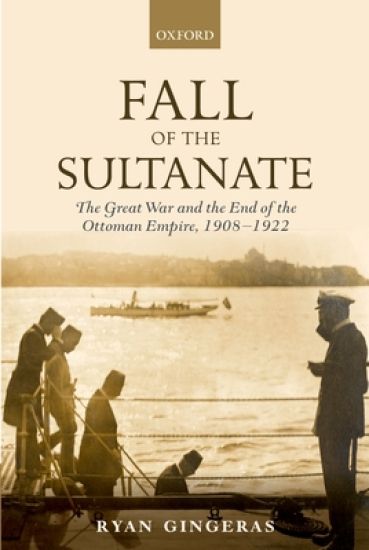
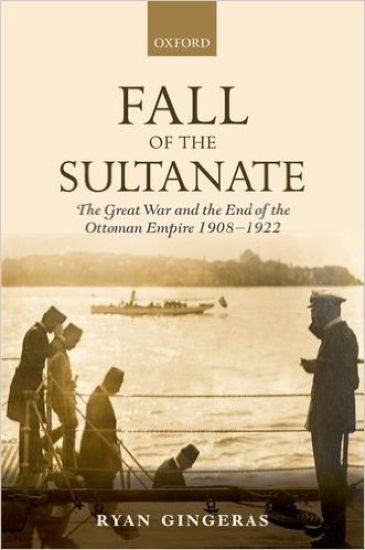
Fall of the Sultanate

Fall of the Sultanate

Ryan Gingeras

Oxford University Press
2019
nidottu
The collapse of the Ottoman Empire was by no means a singular event. After six hundred years of ruling over the peoples of North Africa, the Balkans and Middle East, the death throes of sultanate encompassed a series of wars, insurrections, and revolutions spanning the early twentieth century. This volume encompasses a full accounting of the political, economic, social, and international forces that brought about the passing of the Ottoman state. In surveying the many tragedies that transpired in the years between 1908 and 1922, Fall of the Sultanate explores the causes that eventually led so many to view the legacy of the Ottomans with loathing and resentment. The volume provides a retelling of this critical history as seen through the eyes of those who lived through the Ottoman collapse. Drawing upon a large gamut of sources in multiple languages, Ryan Gingeras strikes a critical balance in presenting and interpreting the most impactful experiences that shaped the lives of the empire's last generation. The story presented here takes into account the perspectives of the empire's diverse population as well as the leaders who piloted the state to its end. In surveying the personal, communal and national struggles that defined Italy's invasion of Libya, the Balkan War, the Great War, and the Turkish War of Independence, Fall of the Sultanate presents readers with a fresh and comprehensive exposition of how and why Ottoman imperial rule ended in bloodshed and disillusionment.
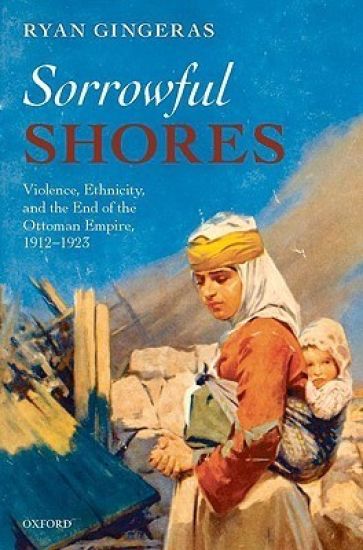
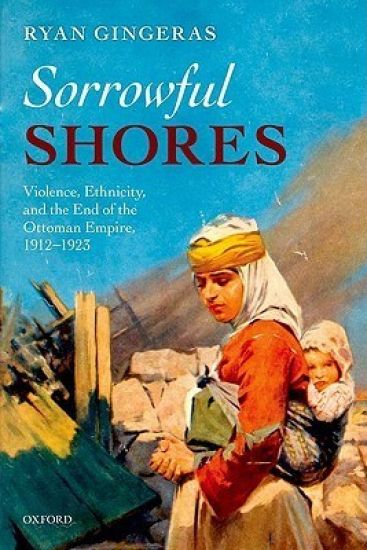
Sorrowful Shores

Sorrowful Shores

Ryan Gingeras

Oxford University Press
2009
sidottu
The Turkish Republic was formed out of immense bloodshed and carnage. During the decade leading up to the end of the Ottoman Empire and the ascendancy of Mustafa Kemal Atatürk, virtually every town and village throughout Anatolia was wracked by intercommunal violence. Sorrowful Shores presents a unique, on-the-ground history of these bloody years of social and political transformation. Challenging the determinism associated with nationalist interpretations of Turkish history between 1912 and 1923, Ryan Gingeras delves deeper into this period of transition between empire and nation-state. Looking closely at a corner of territory immediately south of the old Ottoman capital of Istanbul, he traces the evolution of various communities of native Christians and immigrant Muslims against the backdrop of the Balkan Wars, the First World War, the Armenian Genocide, the Turkish War of Independence, and the Greek occupation of the region. Drawing on new sources from the Ottoman archives, Gingeras demonstrates how violence was organised at the local level. Arguing against the prevailing view of the conflict as a war between monolithic ethnic groups driven by fanaticism and ancient hatreds, he reveals instead the culpability of several competing states in fanning successive waves of bloodshed.
Fall of the Sultanate

Fall of the Sultanate

Ryan Gingeras

Oxford University Press
2016
sidottu
The collapse of the Ottoman Empire was by no means a singular event. After six hundred years of ruling over the peoples of North Africa, the Balkans and Middle East, the death throes of sultanate encompassed a series of wars, insurrections, and revolutions spanning the early twentieth century. This volume encompasses a full accounting of the political, economic, social, and international forces that brought about the passing of the Ottoman state. In surveying the many tragedies that transpired in the years between 1908 and 1922, Fall of the Sultanate explores the causes that eventually led so many to view the legacy of the Ottomans with loathing and resentment. The volume provides a retelling of this critical history as seen through the eyes of those who lived through the Ottoman collapse. Drawing upon a large gamut of sources in multiple languages, Ryan Gingeras strikes a critical balance in presenting and interpreting the most impactful experiences that shaped the lives of the empire's last generation. The story presented here takes into account the perspectives of the empire's diverse population as well as the leaders who piloted the state to its end. In surveying the personal, communal and national struggles that defined Italy's invasion of Libya, the Balkan War, the Great War, and the Turkish War of Independence, Fall of the Sultanate presents readers with a fresh and comprehensive exposition of how and why Ottoman imperial rule ended in bloodshed and disillusionment.
Sorrowful Shores

Sorrowful Shores

Ryan Gingeras

Oxford University Press
2011
nidottu
The Turkish Republic was formed out of immense bloodshed and carnage. During the decade leading up to the end of the Ottoman Empire and the ascendancy of Mustafa Kemal Atatürk, virtually every town and village throughout Anatolia was wracked by intercommunal violence. Sorrowful Shores presents a unique, on-the-ground history of these bloody years of social and political transformation. Challenging the determinism associated with nationalist interpretations of Turkish history between 1912 and 1923, Ryan Gingeras delves deeper into this period of transition between empire and nation-state. Looking closely at a corner of territory immediately south of the old Ottoman capital of Istanbul, he traces the evolution of various communities of native Christians and immigrant Muslims against the backdrop of the Balkan Wars, the First World War, the Armenian Genocide, the Turkish War of Independence, and the Greek occupation of the region. Drawing on new sources from the Ottoman archives, Gingeras demonstrates how violence was organised at the local level. Arguing against the prevailing view of the conflict as a war between monolithic ethnic groups driven by fanaticism and ancient hatreds, he reveals instead the culpability of several competing states in fanning successive waves of bloodshed.
The Last Days of the Ottoman Empire

The Last Days of the Ottoman Empire

Ryan Gingeras

PENGUIN BOOKS LTD
2022
sidottu
'Impressive ... It is a complicated story that still reverberates, and Gingeras narrates it with lucid authority' New StatesmanThe story of the fall of the Ottoman Empire, published to coincide with the centenary of its dissolutionThe Ottoman Empire had been one of the major facts in European history since the Middle Ages. By 1914 it had been much reduced, but still remained after Russia the largest European state. Stretching from the Adriatic to the Indian Ocean, the Empire was both a great political entity and a religious one, with the Sultan ruling over the Holy Sites and, as Caliph, the successor to Mohammed.Yet the Empire's fateful decision to support Germany and Austria-Hungary in 1914, despite its successfully defending itself for much of the war, doomed it to disaster, breaking it up into a series of European colonies and what emerged as an independent Saudi Arabia.Ryan Gingeras's superb new book, published for the centenary of the last Sultan's departure into exile, explains how these epochal events came about and shows how much we still live in the shadow of decisions taken so long ago. Would all of the Empire fall to marauding Allied armies, or could something be saved? In such an ethnically and religiously entangled region, what would be the price paid to create a cohesive and independent new state? The story of the creation of modern Turkey is an extraordinary, bitter epic, brilliantly told here.
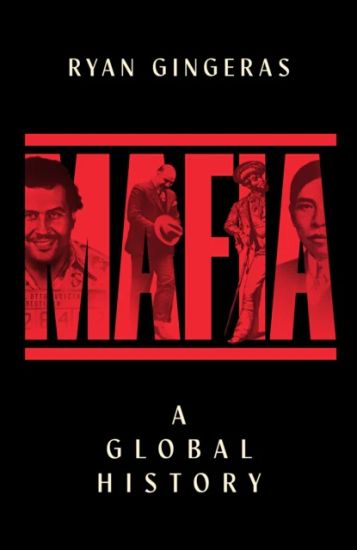
Mafia: A Global History

Mafia: A Global History

Ryan Gingeras

SIMON SCHUSTER LTD
2026
sidottu
Everybody knows they exist: the Cosa Nostra, the Medellin Cartel, New York’s Five Families, China’s tongs. This book asks the question: how have mafias helped define the modern world? While the narrative begins deep in the past, the bulk of the story takes place after 1800. It is during the following two hundred years that the political, economic and social forces most relevant to the development of mafias took shape. The critical chapters centre upon the decades between the end of the First World War and the close of the twentieth century. In these years we see the rise of those figures most synonymous with the idea of the mafia: Capone, Escobar, Du, Lansky, Mogilevich, El Chapo and the Krays to name a few. To understand these characters, and the gangs they led, Mafia will take readers on intimate tours of the locales that birthed their notoriety: Chicago, Sinaloa, Istanbul, Shanghai or the East End. In the spirit of Simon Sebag Montefiore’s recent treatment of great families, or Sven Beckert’s history of cotton, Mafia: A Global History explains how these organizations shape, as well as reflect, the construction of modern states, economies and societies that form our increasingly integrated world.
Mafia: A Global History

Mafia: A Global History

Ryan Gingeras

Avid Reader Press / Simon Schuster
2026
sidottu
A gripping and deeply researched exploration of the hidden influence of organized crime on the global economy that reveals the mafia as an uncredited architect of modern society. In Mafia: A Global History, Ryan Gingeras takes readers on a fascinating journey into the shadowy world of organized crime and its far-reaching impact on contemporary society. From backroom deals to global power plays, this compelling narrative spans two centuries, unraveling the complex ties between crime syndicates and law enforcement--and how these relationships have reshaped both sides in unexpected ways. Drawing on over a decade of in-depth research into the global drug trade, Gingeras profiles legendary figures like Capone, Escobar, El Chapo, and Mogilevich, bringing their stories to life while exposing how these mafias have tested the boundaries of state power. By challenging the law, these criminal networks force governments to adapt, leaving an indelible mark on governance, society, and the global economy. Gingeras identifies three key spheres of transformation: the legal limits tested by mafias, their economic activities reflecting the Western bloc's dominance in global trade, and their undeniable presence in pop culture. As crime syndicates continue to evolve in the 21st century, Gingeras highlights the alarming blurring of lines between gangsters, corporations, and political leaders--a trend that threatens to destabilize the global order. For true crime fans and history buffs alike, Mafia is a must-read. With echoes of Mark Bowden's Killing Pablo and Sam Quinones's Dreamland, Gingeras delivers a masterful blend of storytelling and meticulous analysis that will leave you questioning just how much of the world around us is shaped by those operating in the shadows.