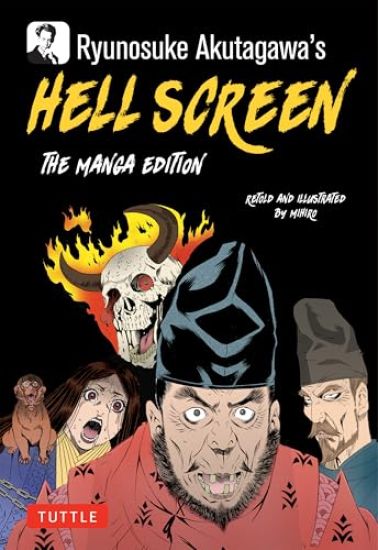
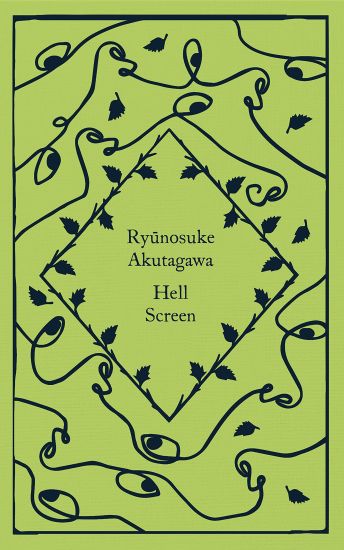
A chilling horror story of artistic obsession and the price of perfection, based on the classic tale by Ryunosuke Akutagawa!Hell Screen follows Yoshihide, a renowned but tormented artist who, despite his talent, is rude, lazy and avaricious. Known for his abrasive demeanor, Yoshihide's one light is the deep affection he harbors for his daughter, Yuzuki. When she enters the service of the powerful Lord Horikawa, tensions rise between the artist and the lord's court, especially after disturbing rumors of Yuzuki's treatment emerge.Tasked with painting a monumental screen depicting the torments of hell, Yoshihide's dedication takes a dark turn as he pushes the boundaries of morality in his quest for authenticity. As his obsession with capturing human suffering intensifies, the line between creation and cruelty blurs, leading to devastating consequences.Akutagawa's story is a masterful exploration of the intersection between art and madness, power and exploitation. Revered as one of Japan's greatest writers, Akutagawa's work continues to influence modern storytelling, with Hell Screen standing out as a haunting meditation on the sacrifices demanded by art.**Recommended for readers ages 16+ due to mature themes and graphic content.**
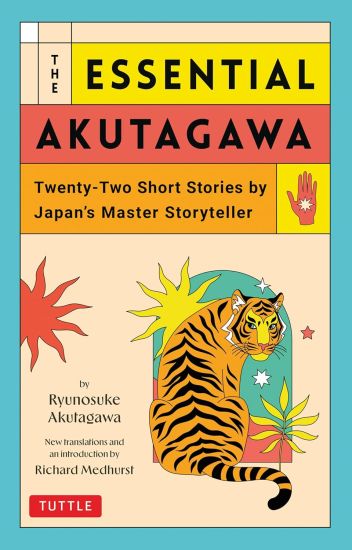
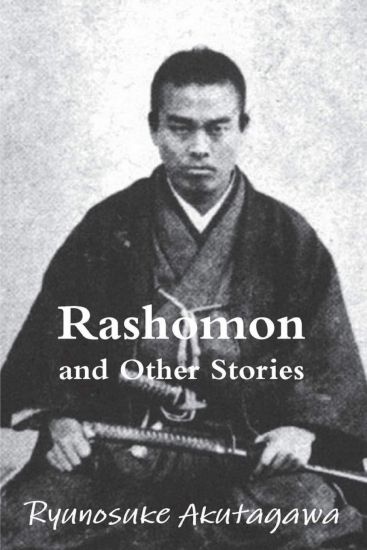
"Akutagawa displays an insightful and keenly creative intelligence in prose so lucid its sophistication is hardly visible." —Chris Power, The GuardianJapan's master storyteller Ryunosuke Akutagawa (1892 - 1927) wrote more than 150 short stories. Widely regarded as "the Father of the Japanese short story," he blended modern sensibilities with timeless themes to profound effect.This new anthology offers the most comprehensive collection of Akutagawa's work ever published in English. It features fresh translations of his most celebrated stories alongside many lesser-known and never-before-translated pieces:Rashomon: A destitute servant in old Kyoto faces a moral dilemma—starve or steal to surviveAn Odd Tale: A young woman is haunted by strange encounters with a station porter while her husband fights in World War IShadows: A merchant receives anonymous letters about his wife's infidelity—only to come face-to-face with his own doubleIn a Grove: Multiple, conflicting accounts of a samurai's death—this story inspired Kurosawa's legendary film RashomonHell Screen: A chilling tale of artistic obsession and its devastating cost, adapted from an ancient legendMomotaro: In this first-ever English translation, Akutagawa transforms a beloved folk hero into a biting satire of nationalism and warPlus 16 other major works by the Japanese master!An essential volume for every serious reader of Japanese literature—and a captivating introduction to one of the world's great literary voices.
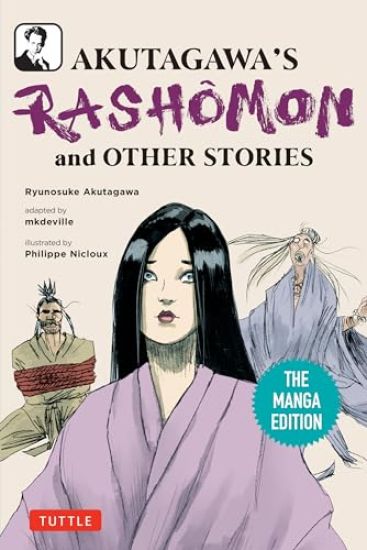
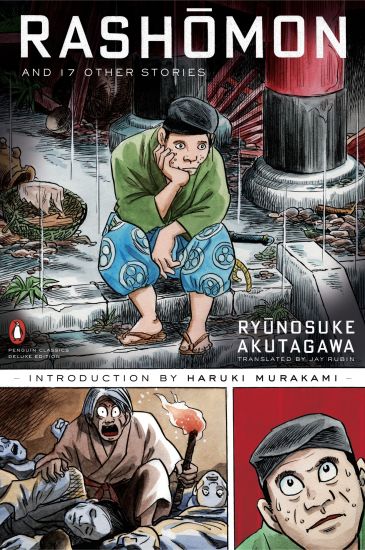
A famous samurai murder mystery finally brought to life in graphic novel form!A sword-swinging samurai, a corpse-robbing crone and a falsely accused trans man stand at the center of these four iconic tales, once the inspiration for a classic film, now turned into stunning graphic novellas.The stories in this volume by Ryunosuke Akutagawa — the renowned "father of the Japanese short story" are captured by manga masters mkdeville and Philippe Nicloux in these four action-packed adaptations:Rashomon: A houseless servant pits morality against survival in a post-apocalyptic world where thievery and the desecration of the dead are necessary for survivalIn a Grove: Conflicting statements and competing narratives call into question the notion of objective truth in a searing tale of rape and revengeOtomi's Virginity: Pride, honor and dignity are at stake when a young servant is confronted by an unexpected aggressor at her employer's abandoned houseThe Martyr: A pious Jesuit with a dark secret faces excommunication and death in 16th-century Japan, when Christianity was introduced and then banned by order of the ShogunStunning graphic adaptations by mkdeville and Philippe Nicloux turn these iconic tales into thrilling page-turners, following in the footsteps of the famous Kurosawa film.**Recommended for readers ages 16+ due to mature themes and graphic content**
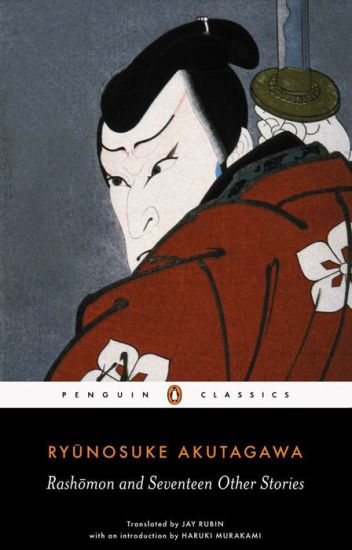
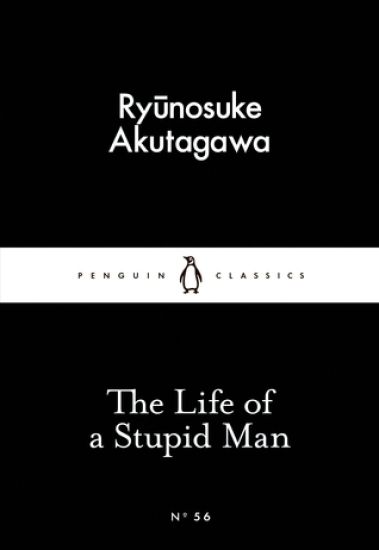
Ryünosuke Akutagawa (1892-1927) is one of Japan's foremost stylists - a modernist master whose short stories are marked by highly original imagery, cynicism, beauty and wild humour. 'Rashömon' and 'In a Bamboo Grove' inspired Kurosawa's magnificent film and depict a past in which morality is turned upside down, while tales such as 'The Nose', 'O-Gin' and 'Loyalty' paint a rich and imaginative picture of a medieval Japan peopled by Shoguns and priests, vagrants and peasants. And in later works such as 'Death Register', 'The Life of a Stupid Man' and 'Spinning Gears', Akutagawa drew from his own life to devastating effect, revealing his intense melancholy and terror of madness in exquisitely moving impressionistic stories.
'What is the life of a human being - a drop of dew, a flash of lightning? This is so sad, so sad.'Autobiographical stories from one of Japan's masters of modernist story-telling.Introducing Little Black Classics: 80 books for Penguin's 80th birthday. Little Black Classics celebrate the huge range and diversity of Penguin Classics, with books from around the world and across many centuries. They take us from a balloon ride over Victorian London to a garden of blossom in Japan, from Tierra del Fuego to 16th-century California and the Russian steppe. Here are stories lyrical and savage; poems epic and intimate; essays satirical and inspirational; and ideas that have shaped the lives of millions.Ryunosuke Akutagawa (1892-1927). Akutagawa's Rashomon and Seventeen Other Stories is also available in Penguin Classics.
Ryünosuke Akutagawa (1892-1927) is one of Japan’s foremost stylists - a modernist master whose short stories are marked by highly original imagery, cynicism, beauty and wild humour. ‘Rashömon’ and ‘In a Bamboo Grove’ inspired Kurosawa’s magnificent film and depict a past in which morality is turned upside down, while tales such as ‘The Nose’, ‘O-Gin’ and ‘Loyalty’ paint a rich and imaginative picture of a medieval Japan peopled by Shoguns and priests, vagrants and peasants. And in later works such as ‘Death Register’, ‘The Life of a Stupid Man’ and ‘Spinning Gears’, Akutagawa drew from his own life to devastating effect, revealing his intense melancholy and terror of madness in exquisitely moving impressionistic stories.
A collectible hardcover edition of the best stories by the father of the Japanese short story--including the two that inspired Kurosawa's classic samurai film about the subjectivity of truth--featuring an introduction by Haruki Murakami A Penguin Vitae Edition Ryūnosuke Akutagawa is one of Japan's foremost stylists--a modernist master whose short stories are marked by highly original imagery, cynicism, beauty, and wild humor. "Rashōmon" and "In a Bamboo Grove" inspired Akira Kurosawa's magnificent film and depict a past in which morality is turned upside down, while tales such as "The Nose," "O-Gin" and "Loyalty" paint a rich and imaginative picture of a medieval Japan peopled by Shoguns and priests, vagrants and peasants. And in later works such as "Death Register," "The Life of a Stupid Man," and "Spinning Gears," Akutagawa drew from his own life to devastating effect, revealing his intense melancholy and terror of madness in exquisitely moving impressionistic stories. Penguin Vitae--loosely translated as "Penguin of one's life"--is a deluxe hardcover series from Penguin Classics celebrating a dynamic and diverse landscape of classic fiction and nonfiction from seventy-five years of classics publishing. Penguin Vitae provides readers with beautifully designed classics that have shaped the course of their lives, and welcomes new readers to discover these literary gifts of personal inspiration, intellectual engagement, and creative originality.
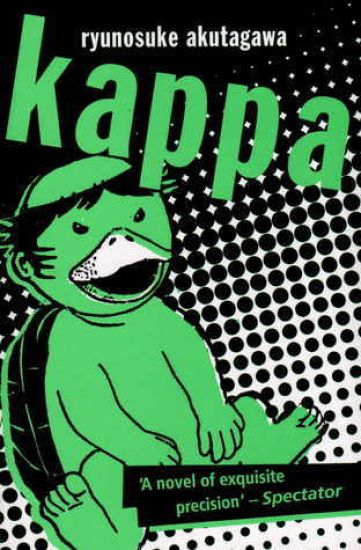
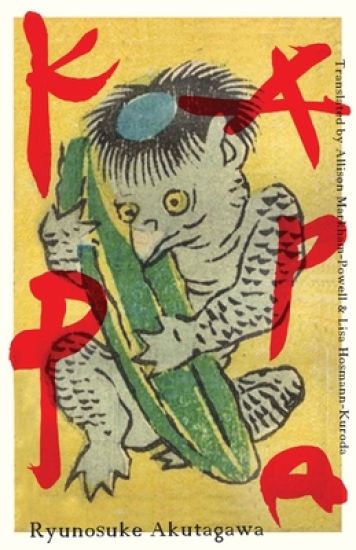
The Kappa is a creature from Japanese folklore described as a scaly, child-sized being with a face like a tiger and a sharp, pointed beak. In the hands of Ryunosuke Akutagawa, one man's journey to 'Kappaland' becomes the vehicle for a critique of Japanese life and customs in the tradition of Swift and Kafka.
The Kappa is a creature from Japanese folklore known for dragging unwary toddlers to their deaths in rivers: a scaly, child-sized creature, looking something like a frog, but with a sharp, pointed beak and an oval-shaped saucer on top of its head, which hardens with age. Akutagawa's Kappa is narrated by Patient No. 23, a madman in a lunatic asylum: he recounts how, while out hiking in Kamikochi, he spots a Kappa. He decides to chase it and, like Alice pursuing the White Rabbit, he tumbles down a hole, out of the human world and into the realm of the Kappas. There he is well looked after, in fact almost made a pet of: as a human, he is a novelty. He makes friends and spends his time learning about their world, exploring the seemingly ridiculous ways of the Kappa, but noting many--not always flattering--parallels to Japanese mores regarding morality, legal justice, economics, and sex. Alas, when the patient eventually returns to the human world, he becomes disgusted by humanity and, like Gulliver missing the Houyhnhnms, he begins to pine for his old friends the Kappas, rather as if he has been forced to take leave of Toad of Toad Hall...
Writing at the beginning of the twentieth century, Ryunosuke Akutagawa created disturbing stories out of Japan's cultural upheaval. Whether his fictions are set centuries past or close to the present, Akutagawa was a modernist, writing in polished, superbly nuanced prose subtly exposing human needs and flaws. "In a Grove," which was the basis for Kurosawa's classic film Rashomon, tells the chilling story of the killing of a samurai through the testimony of witnesses, including the spirit of the murdered man. The fable-like "Yam Gruel" is an account of desire and humiliation, but one in which the reader's sympathy is thoroughly unsettled. And in "The Martyr," a beloved orphan raised by Jesuit priests is exiled when he refuses to admit that he made a local girl pregnant. He regains their love and respect only at the price of his life. All six tales in the collection show Akutagawa as a master storyteller and an exciting voice of modern Japanese literature.
Ever since his death in 1927, Ryunosuke Akutagawa has been hailed as one of the greatest short story writers in world literature. Most famous for his story Rashomon and the Kurosawa movie it inspired, Akutagawa’s wide range of fiction is beautifully displayed in this newly reissued collection of his stories. With characteristic lyricism and great style, the stories here capture the strange world of Akutagawa, from the slow, gentle death of a haiku master (“Withered Fields”) to a vicious, marauding gang and their bloody fight with samurai (“The Robbers”), and the sly tale told from a dog’s perspective of his escape from home (“The Dog, Shiro”). Throughout these stories, Akutagawa captures the often confused spirit of a Japan undergoing great change and confronting modernity at the turn of the last century. But these stories remain timeless classics, and any reader, whether a fan of Akutagawa or someone discovering him for the first time, will find wonderful delight in these unusual stories. Previously published in a Liveright edition as Exotic Japanese Stories.
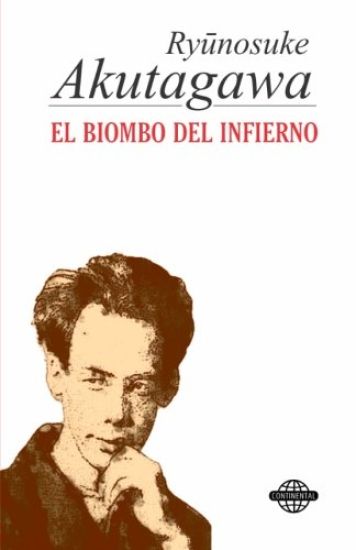
Ryunosuke Akutagawa (1892-1927) fue un escritor japon s perteneciente a la generaci n denominada "neo-realista" que surgi a finales de la Primera Guerra Mundial; sus obras, en su mayor a cuentos, reflejan su inter s por la vida del Jap n feudal. Es uno de los autores m s problem ticos, inquietantes, vers tiles y discutidos de nuestro siglo, no s lo bien conocido en Jap n, sino tambi n en Occidente, en donde hace ya bastante tiempo que muchas de sus obras han sido traducidas y presentadas al p blico.
En el budismo, el Infierno se denomina Naraka, Nirriti y Niraya. El Naraka existe en tres maneras: las ocho regiones del Infierno de las Llamas, las regiones del Infierno del Fr o y el infierno Solitario. Los cuadros que representan el Naraka eran ejecutados con el objeto de difundir el budismo, al extremo de que los sacerdotes los llevaban consigo para mostrar los horrores del Infierno y lograr las conversiones por medio del temor. Esto sucedi en Jap n, particularmente entre los siglos XII y XV. El biombo que se menciona en este relato representa las ocho regiones del Infierno de las Llamas. (N. del T.)
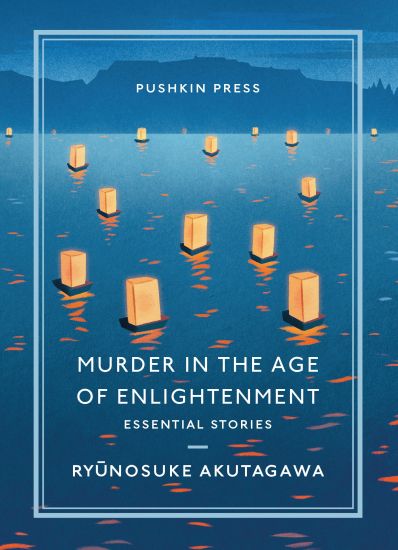
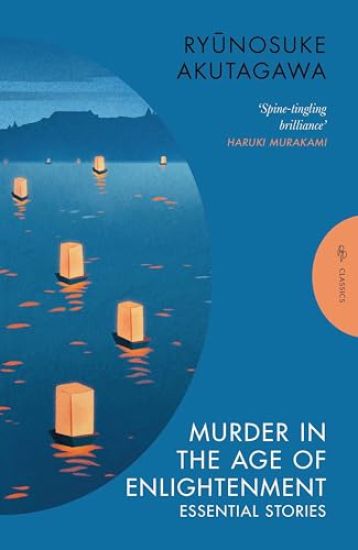
'One never tires of reading and re-reading his best works. Akutagawa was a born short-story writer' Haruki Murakami The stories in this fantastical, unconventional collection are subtly wrought depictions of the darkness of our desires. From an isolated bamboo grove, to a lantern festival in Tokyo, to the Emperor's court, they offer glimpses into moments of madness, murder, and obsession. Vividly translated by Bryan Karetnyk, they unfold in elegant, sometimes laconic, always gripping prose. Akutagawa's stories are characterised by their stylish originality; they are stories to be read again and again.
'One never tires of reading and re-reading his best works. Akutagawa was a born short-story writer' Haruki Murakami 'The quintessential writer of his era' David Peace These are short stories from an unparalleled icon of modern Japanese literature. Sublimely crafted and shot through with a fantastical sensibility, they offer dazzling glimpses into moments of madness, murder and obsession. A talented and spiteful painter is given over to depravity in pursuit of artistic brilliance. In the depths of hell, a robber spies a single spider's thread being lowered towards him. When a body is found in an isolated bamboo grove, a kaleidoscopic account of violence and desire begins to unfold. Vividly translated by Bryan Karetnyk, this mesmerising collection brings together a series of essential works from the master of the Japanese short story. Part of the Pushkin Press Classics series: timeless storytelling by icons of literature, hand-picked from around the globe. Translated by Bryan Karetnyk Ryunosuke Akutagawa was one of Japan's leading literary figures in the Taisho period. Regarded as the father of the Japanese short story, he produced over 150 in his short lifetime. Haunted by the fear that he would inherit his mother's madness, Akutagawa suffered from worsening mental health problems towards the end of his life and committed suicide aged 35 by taking an overdose of barbiturates.