Kirjojen hintavertailu. Mukana 12 390 323 kirjaa ja 12 kauppaa.

Kirjahaku

Etsi kirjoja tekijän nimen, kirjan nimen tai ISBN:n perusteella.

28 kirjaa tekijältä S. Chandrasekhar

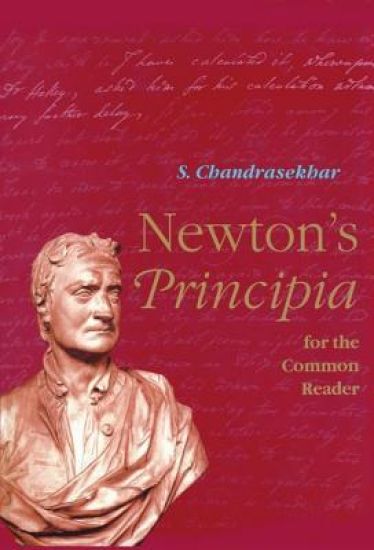
Newton's Principia for the Common Reader

Newton's Principia for the Common Reader

S. Chandrasekhar

Clarendon Press
1995
sidottu
Newton's Philosophiae Naturalis Principia Mathematica provides a coherent and deductive presentation of his discovery of the universal law of gravity. The Principia is, in fact, a model for all mathematical physics. Representing a decade's work from one of the world's most distinguished physicists, this major publication is, as far as is known, the first comprehensive analysis of Newton's Principia without recourse to secondary sources. Chandrasekhar analyses some 150 propositions which form a direct chain leading to Newton's formulation of his universal law of gravitation. In each case, Newton's proofs are arranged in a linear sequence of equations and arguments, avoiding the need to unravel the necessarily convoluted style of Newton's connected prose. In almost every case, a modern version of the proofs is given to bring into sharp focus the beauty, clarity, and breathtaking economy of Newton's methods. Chandrasehkar's work is an attempt by a distinguished practising scientist to read and comprehend the enormous intellectual achievement of the Principia. This book will stimulate great interest and debate among the scientific community, illuminating the brilliance of Newton's work under the steady gaze of Chandrasekhar's rare perception.
Newton's Principia for the Common Reader

Newton's Principia for the Common Reader

S. Chandrasekhar

Clarendon Press
2003
nidottu
Newton's Philosophiae Naturalis Principia Mathematica provides a coherent and deductive presentation of his discovery of the universal law of gravitation. It is very much more than a demonstration that 'to us it is enough that gravity really does exist and act according to the laws which we have explained and abundantly serves to account for all the motions of the celestial bodies and the sea'. It is important to us as a model of all mathematical physics. Representing a decade's work from a distinguished physicist, this is the first comprehensive analysis of Newton's Principia without recourse to secondary sources. Professor Chandrasekhar analyses some 150 propositions which form a direct chain leading to Newton's formulation of his universal law of gravitation. In each case, Newton's proofs are arranged in a linear sequence of equations and arguments, avoiding the need to unravel the necessarily convoluted style of Newton's connected prose. In almost every case, a modern version of the proofs is given to bring into sharp focus the beauty, clarity, and breath-taking economy of Newton's methods. Subrahmanyan Chandrasekhar is one of the most reknowned scientists of the twentieth century, whose career spanned over 60 years. Born in India, educated at the University of Cambridge in England, he served as Emeritus Morton D. Hull Distinguished Service Professor of Theoretical Astrophysics at the University of Chicago, where he has was based from 1937 until his death in 1996. His early research into the evolution of stars is now a cornerstone of modern astrophysics, and earned him the Nobel Prize for Physics in 1983. Later work into gravitational interactions between stars, the properties of fluids, magnetic fields, equilibrium ellipsoids, and black holes has earned him awards throughout the world, including the Gold Medal from the Royal Astronomical Society in London (1953), the National Medal of Science in the United States (1966), and the Copley Medal from the Royal Society (1984). His many publications include Radiative transfer (1950), Hydrodynamic and hydromagnetic stability (1961), and The mathematical theory of black holes (1983), each being praised for its breadth and clarity. Newton's Principia for the common reader is the result of Professor Chandrasekhar's profound admiration for a scientist whose work he believed is unsurpassed, and unsurpassable.
The Mathematical Theory of Black Holes

The Mathematical Theory of Black Holes

S. Chandrasekhar

Clarendon Press
1998
nidottu
Part of the reissued Oxford Classic Texts in the Physical Sciences series, this book was first published in 1983, and has swiftly become one of the great modern classics of relativity theory. It represents a personal testament to the work of the author, who spent several years writing and working-out the entire subject matter. The theory of black holes is the most simple and beautiful consequence of Einstein's relativity theory. At the time of writing there was no physical evidence for the existence of these objects, therefore all that Professor Chandrasekhar used for their construction were modern mathematical concepts of space and time. Since that time a growing body of evidence has pointed to the truth of Professor Chandrasekhar's findings, and the wisdom contained in this book has become fully evident.
Selected Papers

Selected Papers

S. Chandrasekhar

University of Chicago Press
1989
sidottu
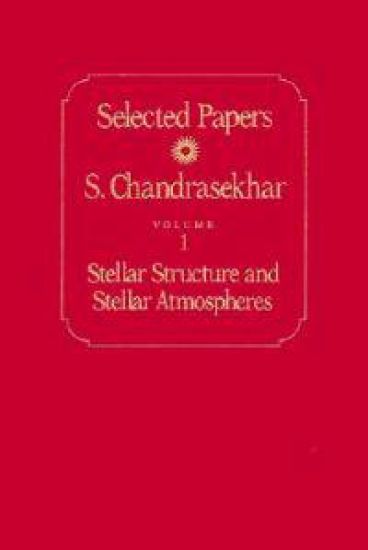
This is the first of six volumes collecting significant papers of the distinguished astrophysicist and Nobel laureate S. Chandrasekhar. His work is notable for its breadth as well as for its brilliance; his practice has been to change his focus from time to time to pursue new areas of research. The result has been a prolific career full of discoveries and insights, some of which are only now being fully appreciated. Chandrasekhar has selected papers that trace the development of his ideas and that present aspects of his work not fully covered in the books he has periodically published to summarize his research in each area. Volume 1, Stellar Structure and Stellar Atmospheres, covers primarily the period 1930-40 and includes early papers on the theory of white dwarfs. In the Preface, Chandrasekhar explains the criteria for selection and provides historical background. Each subsequent volume will include a foreword by an authority on the topics covered.
Selected Papers

Selected Papers

S. Chandrasekhar

University of Chicago Press
1989
nidottu
This is the first of six volumes collecting significant papers of the distinguished astrophysicist and Nobel laureate S. Chandrasekhar. His work is notable for its breadth as well as for its brilliance; his practice has been to change his focus from time to time to pursue new areas of research. The result has been a prolific career full of discoveries and insights, some of which are only now being fully appreciated. Chandrasekhar has selected papers that trace the development of his ideas and that present aspects of his work not fully covered in the books he has periodically published to summarize his research in each area. Volume 1, Stellar Structure and Stellar Atmospheres, covers primarily the period 1930-40 and includes early papers on the theory of white dwarfs. In the Preface, Chandrasekhar explains the criteria for selection and provides historical background. Each subsequent volume will include a foreword by an authority on the topics covered.
Selected Papers

Selected Papers

S. Chandrasekhar

University of Chicago Press
1989
nidottu
This is the third of six volumes collecting significant papers of the distinguished astrophysicist and Nobel laureate S. Chandrasekhar. His work is notable for its breadth as well as for its brilliance; his practice has been to change his focus from time to time to pursue new areas of research. The result has been a prolific career full of discoveries and insights, some of which are only now being fully appreciated. Chandrasekhar has selected papers that trace the development of his ideas and that present aspects of his work not fully covered in the books he has periodically published to summarize his research in each area. This volume is divided into four sections. The first, on dynamical friction and Brownian motion, includes papers written after Chandrasekhar published his 1942 monograph Principles of Stellar Dynamics. Also in this section is Stochastic Problems in Physics and Astronomy, one of the most cited papers in the physics literature, as well as papers written jointly with John von Neumann that have been given impetus to recent research. As Chandrasekhar notes, the papers in the second section, on statistical problems in astronomy, were influenced by Ambartsumian's analysis of brightness in the Milky Way. A third section on the statistical theory of turbulence addresses issues still unresolved in fluid dynamics, and the last section is devoted to hydromagnetic problems in astrophysics that are not discussed in Chandrasekhar's monographs.
Selected Papers

Selected Papers

S. Chandrasekhar

University of Chicago Press
1997
sidottu
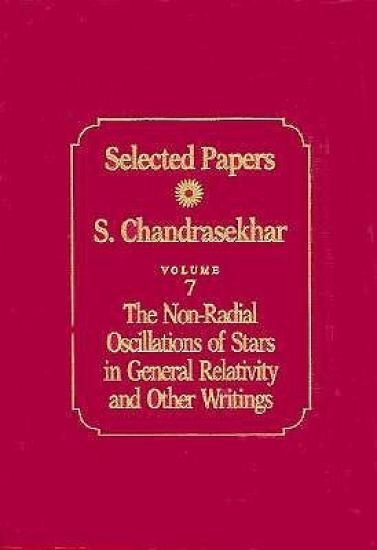
Conceived by Chandrasekhar as a supplement to his "Selected Papers", this volume begins with eight papers he wrote with Valeria Ferrari on the non-radial oscillations of stars. It then explores some of the themes addressed in "Truth and Beauty", with meditations on the aesthetics of science and the world it examines.
Chirality in Liquid Crystals

Chirality in Liquid Crystals

S. Chandrasekhar

Springer-Verlag New York Inc.
2000
sidottu
Objects that differ from their mirror images, such as the left and right hands, play an important role in physics at all lengths scales, from elementary particles to macroscopic systems. The handedness, or chirality, of molecules in liquid crystals has a remarkable influence on the macroscopic physical properties of these systems, including the appearance of new phases. Indeed, the majority of optical applications of liquid crystals is due to chiral structures, namely the thermochromic effect of cholesteric liquid crystals, the optical activity in twisted nematic liquid crystal displays, and the ferroelectric and antiferroelectric switching of smectic liquid crystals.This book describes the main aspects of chirality in liquid crystals, and points out some of the open questions of current research. The chapters, each by an expert in the field, review the highlights of the important topics and representative questions in the field of chiral liquid crystals.
Eddington

Eddington

S. Chandrasekhar

Cambridge University Press
2009
pokkari
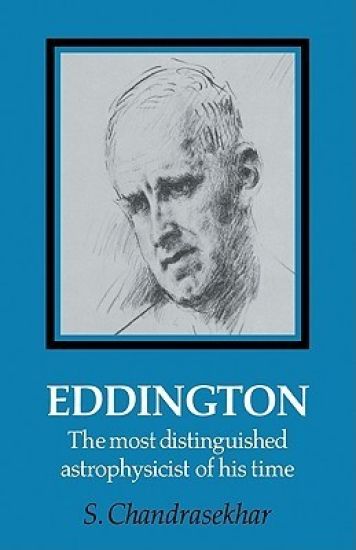
This book is based on two lectures given in Cambridge by Professor Chandrasckhar to mark the centenary of the birth of Arthur Stanley Eddington. The text describes Eddington's major contributions to astrophysics and to general relativity. The approach is not technical, although it will mainly be of interest to professionals in astronomy, applied mathematics and the history of modern astronomy.
Liquid Crystals

Liquid Crystals

S. Chandrasekhar

Cambridge University Press
1992
sidottu
This is a new and greatly revised edition of Professor Chandrasekhar’s classic book Liquid Crystals, first published in 1977. The subject of liquid crystals has grown into an exciting interdisciplinary research field with important practical applications. This book presents a systematic and self-contained treatment of the physics of the different types of thermotropic liquid crystals - the three classical types, nematic, cholesteric and smectic, and the newly discovered discotic type. Included is a description of the structures of these four main types and their polymorphic modifications, their thermodynamical, optical and mechanical properties and their behaviour under external fields. The basic principles underlying the major applications of liquid crystals in display technology and in thermography are also discussed. This book will be of great value to advanced students and researchers in condensed matter physics, chemical physics, materials science and technology with an interest in the physics, chemistry and applications of liquid crystals.
Liquid Crystals

Liquid Crystals

S. Chandrasekhar

Cambridge University Press
1992
pokkari
This is a new and greatly revised edition of Professor Chandrasekhar’s classic book Liquid Crystals, first published in 1977. The subject of liquid crystals has grown into an exciting interdisciplinary research field with important practical applications. This book presents a systematic and self-contained treatment of the physics of the different types of thermotropic liquid crystals - the three classical types, nematic, cholesteric and smectic, and the newly discovered discotic type. Included is a description of the structures of these four main types and their polymorphic modifications, their thermodynamical, optical and mechanical properties and their behaviour under external fields. The basic principles underlying the major applications of liquid crystals in display technology and in thermography are also discussed. This book will be of great value to advanced students and researchers in condensed matter physics, chemical physics, materials science and technology with an interest in the physics, chemistry and applications of liquid crystals.
Reproductive Physiology and Birth Control

Reproductive Physiology and Birth Control

S. Chandrasekhar

Transaction Publishers
2002
nidottu
"I say that this is a dirty, filthy book, and the test of it is that no human being would allow that book on his table, no decently educated English husband would allow even his wife to have ità." Such was the uncompromising pronouncement of Sir Hardinge Gifford, Her Majesty's Solicitor General, who in 1877 prosecuted Charles Bradlaugh and Annie Besant for publishing Dr. Charles Knowlton's Fruits of Philosophy.Knowlton's work was the first American medical handbook on contraception. It had become an incredibly popular book among Britons who believed the neo-Malthusian dictum that the only solution to poverty in Britain was a limit on the growth of its population. They saw effective birth control measures as a way to make such a limit practicable. In 1877, its publisher was hauled into court and pleaded guilty to printing obscene material. Bradlaugh and Besant tested the right of official harassment by bringing out an edition of the Fruits of Philosophy that bore an introduction explaining their motives. The pair was arrested and charged with violating the Obscene Publications Act of 1857.Their arrest, trial, conviction, and eventual acquittal constitute a landmark in the history of the world birth control movement. The enormous publicity accorded the principals and their cause brought the subject of family planning into the homes of nearly every Briton who read the newspapers' sensational coverage. What followed thereafter is telling: a dramatic, steady decline in the English birthrate. By their simple act of publishing Knowlton's short book, Bradlaugh and Besant helped establish England's pioneering role in the dissemination, democratization, and implementation of birth control information.Sripati Chandrasekhar is an internationally respected demographer and social scientist. He is a former minister of health and family planning in India and was vice-chancellor of Annamalai University in South India. He is the author of numerous books and articles on population and family planning.
Reproductive Physiology and Birth Control
"I say that this is a dirty, filthy book, and the test of it is that no human being would allow that book on his table, no decently educated English husband would allow even his wife to have ità." Such was the uncompromising pronouncement of Sir Hardinge Gifford, Her Majesty's Solicitor General, who in 1877 prosecuted Charles Bradlaugh and Annie Besant for publishing Dr. Charles Knowlton's Fruits of Philosophy.Knowlton's work was the first American medical handbook on contraception. It had become an incredibly popular book among Britons who believed the neo-Malthusian dictum that the only solution to poverty in Britain was a limit on the growth of its population. They saw effective birth control measures as a way to make such a limit practicable. In 1877, its publisher was hauled into court and pleaded guilty to printing obscene material. Bradlaugh and Besant tested the right of official harassment by bringing out an edition of the Fruits of Philosophy that bore an introduction explaining their motives. The pair was arrested and charged with violating the Obscene Publications Act of 1857.Their arrest, trial, conviction, and eventual acquittal constitute a landmark in the history of the world birth control movement. The enormous publicity accorded the principals and their cause brought the subject of family planning into the homes of nearly every Briton who read the newspapers' sensational coverage. What followed thereafter is telling: a dramatic, steady decline in the English birthrate. By their simple act of publishing Knowlton's short book, Bradlaugh and Besant helped establish England's pioneering role in the dissemination, democratization, and implementation of birth control information.Sripati Chandrasekhar is an internationally respected demographer and social scientist. He is a former minister of health and family planning in India and was vice-chancellor of Annamalai University in South India. He is the author of numerous books and articles on population and family planning.
Stochastic Problems in Physics and Astronomy: Reviews of Modern Physics, V15, No. 1
""Stochastic Problems In Physics And Astronomy: Reviews Of Modern Physics, V15, No. 1"" is a comprehensive review of the application of stochastic processes in various fields of physics and astronomy. Written by renowned physicist Subrahmanyan Chandrasekhar, the book covers topics such as random walks, diffusion processes, and Brownian motion. It also delves into the use of stochastic methods in the study of turbulence, plasma physics, and cosmology. The book is a valuable resource for researchers and students interested in the application of stochastic processes in physics and astronomy.Includes Diffraction Of X-Rays By Liquid Elements. Edited By J. W. Buchta, A. H. Compton, K. T. Compton, K. K. Darrow, E. C. Kemble And D. L. Webster.This scarce antiquarian book is a facsimile reprint of the old original and may contain some imperfections such as library marks and notations. Because we believe this work is culturally important, we have made it available as part of our commitment for protecting, preserving, and promoting the world's literature in affordable, high quality, modern editions, that are true to their original work.
Chirality in Liquid Crystals

Chirality in Liquid Crystals

S. Chandrasekhar

Springer-Verlag New York Inc.
2013
nidottu
Objects that differ from their mirror images, such as the left and right hands, play an important role in physics at all lengths scales, from elementary particles to macroscopic systems. The handedness, or chirality, of molecules in liquid crystals has a remarkable influence on the macroscopic physical properties of these systems, including the appearance of new phases. Indeed, the majority of optical applications of liquid crystals is due to chiral structures, namely the thermochromic effect of cholesteric liquid crystals, the optical activity in twisted nematic liquid crystal displays, and the ferroelectric and antiferroelectric switching of smectic liquid crystals.This book describes the main aspects of chirality in liquid crystals, and points out some of the open questions of current research. The chapters, each by an expert in the field, review the highlights of the important topics and representative questions in the field of chiral liquid crystals.