Kirjojen hintavertailu. Mukana 11 717 486 kirjaa ja 12 kauppaa.

Kirjahaku

Etsi kirjoja tekijän nimen, kirjan nimen tai ISBN:n perusteella.

33 kirjaa tekijältä S. T. Joshi

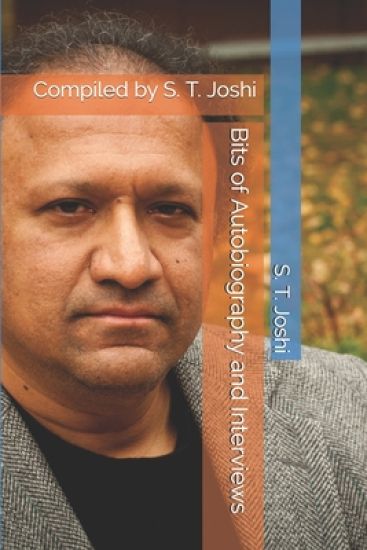
Bits of Autobiography and Interviews: Compiled by S. T. Joshi
During his more than four decades as a critic, editor, and reviewer in the field of weird fiction, S. T. Joshi has repeatedly been the subject of a wide range of interviews. As the leading authority on H. P. Lovecraft, Joshi has given dozens of interviews in which he recounts his work on this controversial author-restoring the texts of Lovecraft's works, assessing the major themes and motifs in his writings, gauging his wide influence on subsequent literature and on popular culture. In addition, Joshi's all-encompassing study of weird fiction has led to interviews on Ambrose Bierce, Arthur Machen, Lord Dunsany, and other leading writers. As an anthologist, Joshi has recounted his compilation of the Black Wings series and other volumes of weird fiction. Beyond this field, Joshi has made lasting contributions in the study of atheism, politics, and the work of H. L. Mencken. This volume reprints for the first time forty interviews that Joshi has given from 1989 to 2019. In addition, there are a handful of autobiographical essays in which Joshi tells of his early fascination with Lovecraft and his life as an atheist and critic. For anyone interested in the life and work of S. T. Joshi, this is an invaluable volume.
300 Books by S. T. Joshi: A Comprehensive Bibliography
For more than four decades, S. T. Joshi has been a prominent figure in the field of weird fiction-as author, editor, scholar, and reviewer. He is chiefly known for his work on H. P. Lovecraft, and he has prepared corrected and annotated editions of Lovecraft's fiction, poetry, essays, and letters, along with such critical and biographical studies as H. P. Lovecraft: The Decline of the West (1990) and I Am Providence: The Life and Times of H. P. Lovecraft (2010). Joshi has also written pioneering criticism of the entire range of weird fiction, in such books as The Weird Tale (1990) and Unutterable Horror: A History of Supernatural Fiction (2012). He has compiled editions of such leading authors of weird fiction as Lord Dunsany, Algernon Blackwood, Ambrose Bierce, and Arthur Machen. In addition, he has written some of the most incisive reviews in the field, as well as a small but choice array of detective and horror fiction. This compilation presents a full bibliography of Joshi's 300 books, along with lists of his articles, reviews, fiction, and poetry, along with an introduction that provides an overview of Joshi's work. This is the essential guide to one of the most prolific and influential authors in the field.
American Supernatural Tales

American Supernatural Tales

S. T. Joshi

Penguin Classics
2008
pokkari
As Stephen King will attest , the popularity of the occult in American literature has only grown since the days of Edgar Allan Poe. American Supernatural Tales celebrates the richness of this tradition with chilling contributions from some of the nation’s brightest literary lights, including Poe himself, H. P. Lovecraft, Shirley Jackson, Ray Bradbury, Nathaniel Hawthorne, and—of course— Stephen King. By turns phantasmagoric, spectral, and demonic, this is a frighteningly good addition to Penguin Classics.
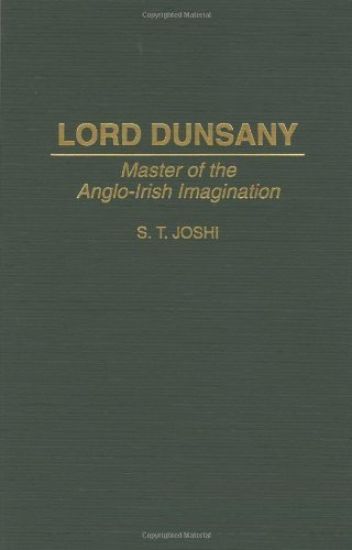
Lord Dunsany

Lord Dunsany

S. T. Joshi

Praeger Publishers Inc
1995
sidottu
The Irish writer Lord Dunsany (1878-1957) has suffered a regrettable decline in critical esteem. Although one of the most popular and critically acclaimed writers of the early 20th century, he seems to have fallen out of fashion with both the Irish critical community and with enthusiasts of fantasy literature. But Dunsany was one of the critical figures in modern fantasy, a significant influence on Tolkien, Le Guin, and other writers. His own work, written over a 50-year span and covering nearly every literary mode (short story, novel, play, essay, poem), is itself rich with meaning. In this, the first academic study of Dunsany's work, Joshi establishes that Dunsany has a remarkable grasp of the symbolic function of fantasy, and that he used fantasy, horror, and the supernatural as metaphors for his most deeply held convictions on life and society. His entire work is unified by a single overriding theme—the need for human reunification with the natural world—even though this theme takes on many different forms (e.g., scorn of industrialization, demonstration of the moral superiority of animals over human beings, rumination on the extinction of the human race). The course of Dunsany's long career—proceeding from early short stories and plays about the edge of the world to full-length novels to tales of comic fantasy (such as the popular Jorkens stories) to sensitive works about Ireland—reveals a writer constantly searching for new ways to express his central philosophic and aesthetic conceptions. Joshi's volume may best be described as an exercise in literary excavation—an attempt to unearth an unjustly forgotten writer and to show that his work is in need of further study and analysis.
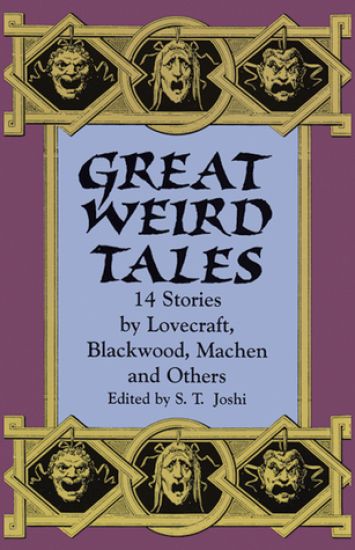
Great Weird Tales

Great Weird Tales

S. T. Joshi

Dover Publications Inc.
2011
nidottu
spellbinding tales, including "The Sin Eater," by Fiona McLeod, "The Eye Above the Mantel," by Frank Belknap Long, as well as renowned works by R. H. Barlow, Lord Dunsany, Arthur Machen, W. C. Morrow and eight other masters of the genre.
The Weird Tale

The Weird Tale

S. T. Joshi

Wildside Press
2003
pokkari
The leading critic of supernatural literature here examines the roots of the "weird tale" (as Lovecraft called it) through detailed examinations of five "founding fathers" of the genre: Arthur Machen, Lord Dunsany, Algernon Blackwood, M.R. James, and H.P. Lovecraft. The result is a thorough study of the art, craft, philosophy, and aesthetics of an enduring genre of fantastic literature.
The Weird Tale

The Weird Tale

S. T. Joshi

Wildside Press
2003
sidottu
The leading critic of supernatural literature here examines the roots of the "weird tale" (as Lovecraft called it) through detailed examinations of five "founding fathers" of the genre: Arthur Machen, Lord Dunsany, Algernon Blackwood, M.R. James, and H.P. Lovecraft. The result is a thorough study of the art, craft, philosophy, and aesthetics of an enduring genre of fantastic literature.
H.L. Mencken

H.L. Mencken

S. T. Joshi

Scarecrow Press
2009
sidottu
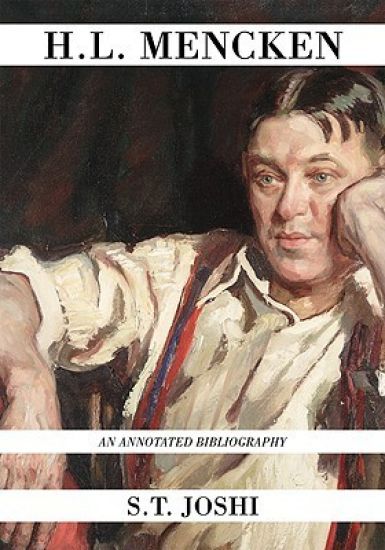
Baltimore native Henry Louis Mencken (1880-1956) was an essayist, literary critic, magazine editor, novelist, and journalist. Starting as a reporter for the Baltimore Morning Herald at the turn of the century, Mencken eventually became associated with the Baltimore Sun and his work for the newspaper spanned five decades. In H.L. Mencken: An Annotated Bibliography, S.T. Joshi provides the most exhaustive and comprehensive bibliography of the writings of H. L. Mencken ever assembled. It presents detailed information on his book publications from 1903 to the present, with a full list of editions and reprints. Most significantly, it presents for the first time a comprehensive annotated listing of his magazine and newspaper work (including more than 1,500 anonymous editorials for the Baltimore Sun, Baltimore Evening Sun, and other papers, which have never been listed in any previous bibliographies), a thorough index to his book reviews, and a full list of interviews Mencken gave during his lifetime. Word counts of nearly every item in the bibliography have been supplied, and the book has been thoroughly indexed by name, title, and periodical. Because every item has been annotated, scholars and students can, for the first time, gain an idea of the subject-matter of all Mencken's writings, especially his magazine and newspaper work. The indexes will allow users to locate any given item with ease. The chronological arrangement of each section allows users to understand the growth and development of Mencken's work, making this volume an invaluable resource.
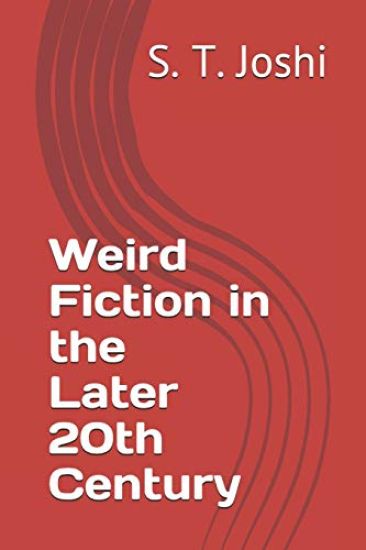
Weird Fiction in the Later 20th Century

Weird Fiction in the Later 20th Century

S. T. Joshi

Independently Published
2019
nidottu
The literature of horror and supernatural fiction experienced a tremendous revival in the final three decades of the 20th century, becoming a best-selling phenomenon for the first time since the Gothic novels of the later 18th and early 19th centuries. But the groundwork for this revival was laid by the powerful work for Shirley Jackson, whose novels and tales explored ghosts and haunted houses along with keen insights into human psychology. The British writer Ramsey Campbell revolutionized the field with the story collection Demons by Daylight (1973) and numerous other works. Best-selling writers such as William Peter Blatty, Stephen King, Clive Barker, and Anne Rice generally used standard horror themes in conventional ways, and their work is far excelled by such dynamic writers as T.E.D. Klein, Thomas Ligotti, and David J. Schow. In this pioneering study of weird fiction after the death of Lovecraft, S. T. Joshi provides perspicacious analyses of more than a dozen leading writers of weird fiction in the later 20th century, pungently exposing King and others as hacks and tyros while championing the aesthetically sincere work of lesser-known writers. The result is a landmark study that reshapes our view of the development of this popular literary genre.
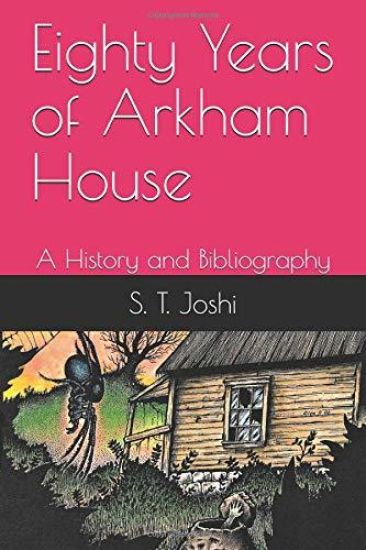
Eighty Years of Arkham House: A History and Bibliography
Arkham House, based in Sauk City, Wisconsin, is the most famous small press in the field of weird fiction. Since 1939, it has been a pioneering publisher of the work of H. P. Lovecraft, Clark Ashton Smith, Robert E. Howard, Ray Bradbury, Fritz Leiber, Ramsey Campbell, and many other titans of horror, fantasy, and supernatural fiction. In 1999, S. T. Joshi, a leading authority on weird fiction (and the author or editor of 6 Arkham House books), published Sixty Years of Arkham House. In this new and expanded edition, Joshi charts Arkham House's publications right down to the present day. In this definitive compilation, Joshi lists the entire contents of all Arkham House publications (as well as those of its sub-imprints, Mycroft & Moran and Stanton & Lee). He provides an illuminating history of the firm's eight decades of publishing, and also includes three rare essays by August Derleth-co-founder (with Donald Wandrei) of Arkham House-that discuss the status of the firm. In addition, there is a thorough index of names and titles. No devotee of Arkham House will want to be without this invaluable reference work.
The Angry Right

The Angry Right

S. T. Joshi

Prometheus Books
2006
sidottu
Since 1968, Republican presidents have occupied the White House far longer than Democratic presidents, and recently Republicans have controlled both houses of Congress as well. In spite of these electoral triumphs, leading spokespersons on the right continue to depict conservatives as an embattled minority. Lashing out at their liberal opponents, sharp-tongued partisan advocates like Rush Limbaugh, Ann Coulter, and Sean Hannity never tire of issuing jeremiads against what they perceive as the inexorable tide of liberal abuses that threatens to overwhelm the Republic. But if Republicans have won the battle at the voting booths, why is the right so angry? As S. T. Joshi reveals in this incisive profile of twelve leading conservatives, the rage at the heart of the right is fuelled by a gnawing sense that conservatives long ago lost the hearts and minds of the American people. Since the F.D.R. administration, conservatives have unsuccessfully opposed legislative and judicial reforms that today are considered so mainstream as to be "conservative." In effect, yesterday's liberalism is today's conservatism, and this has been the direction of social and political change since the age of the Flappers and the Model T. Examining the writings of such conservative icons as Russell Kirk, William F. Buckley Jr, Phyllis Schlafly, and nine others, Joshi uncovers statements that most people today would consider not just radical but outrageous: in the 1950s, Russell Kirk opposed Social Security because he said it was "un-Christian"; in the same decade, William F. Buckley Jr. argued against the desegregation of public schools on the grounds that it would be an infringement of states' rights (an argument also used a century earlier to defend slavery); and, in the 1970s, Phyllis Schlafly declared that women's liberation is a "disease" and a "homewrecker". Knowing that these positions are today indefensible, conservative spokespersons have little recourse but to engage in passionate invective that attempts to portray their opponents as extremists. Joshi characterises the aggrieved lament of conservatives as the last gasp of those who know their ideas will be confined to the dustbin of history.
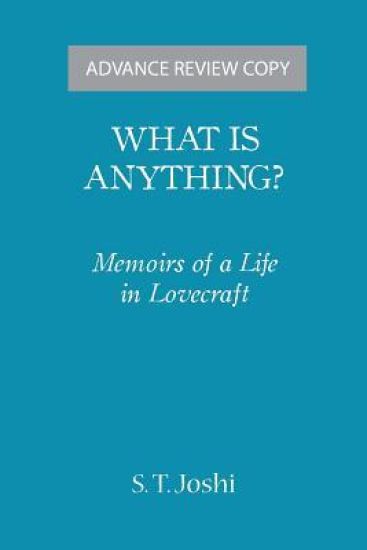
What Is Anything?: Memoirs of a Life in Lovecraft
For more than forty years, S. T. Joshi has been a presence in the weird fiction community. In this expansive and elegantly written memoir, Joshi reflects on the major facets of his life. Born in India in 1958, he came with his family to the United States in 1963, settling in the Midwest. He hit his stride in an Indiana high school, where he first read Lovecraft's books from the public library. He was accepted as an undergraduate at Brown University, where he not only learned Greek and Latin but explored the vast resources of the Lovecraft Collection at the John Hay Library. By 1982, Joshi was already recognized as a leading authority on Lovecraft, and his preparation of corrected texts of Lovecraft's fiction for Arkham House helped to launch a revolution in the study of the dreamer from Providence. In the decades that have followed, Joshi has expanded his range to cover the entire history of weird fiction, as well as such fields as atheism and left-wing politics. Among his nearly 400 books are bibliographies of leading weird writers, monographs, histories and biographies, and even a few works of fiction. What Is Anything? speaks frankly of Joshi's relations with friends and colleagues (among them Ramsey Campbell, T.E.D. Klein, Marc Michaud, Robert M. Price, and David E. Schultz), as well as his two wives. This memoir, enlivened with many photographs of Joshi and his friends and family, provides unprecedented insights into the worlds of Lovecraft scholarship and many other related subjects. For this paperback edition, Joshi has added a lively chapter covering the eventful years of 2018-22.
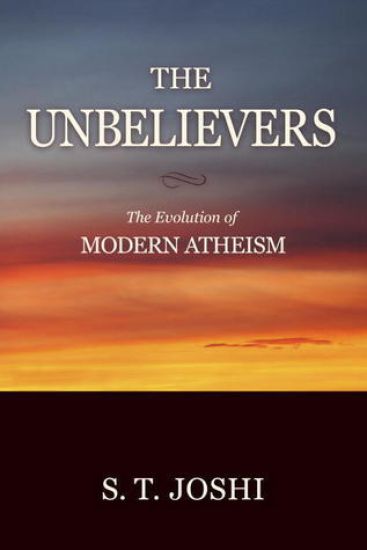
The Unbelievers

The Unbelievers

S. T. Joshi

Prometheus Books
2011
pokkari
Atheism, once a minority view, is now openly embraced by an increasing number of scientists, philosophers, politicians, and celebrities. How did this formerly closeted secular perspective gain its current prominence as a philosophically viable and challenging worldview? In this succinct history of modern atheism, a prolific author, editor, and scholar traces the development of atheist, agnostic, and secularist thought over the past century and a half. Beginning in the nineteenth century, when intellectuals first openly voiced skepticism about long-standing Christian beliefs, Joshi considers the impact of several leading thinkers: Thomas Henry Huxley ("Darwin's Bulldog"), Leslie Stephen, John Stuart Mill, Friedrich Nietzsche, and Mark Twain. Each of these writers, in different ways, made searing criticisms of such religious conceptions as the immortality of the soul, the doctrine of biblical inerrancy, and the existence of God, at a time when such notions were largely taken for granted. Next, the author examines prominent atheist thinkers of the early twentieth century: attorney Clarence Darrow, journalist H. L. Mencken, philosopher Bertrand Russell, and horror writer H. P. Lovecraft. Around the same time as Darrow and Mencken were involved in the celebrated Scopes trial in America, which resulted in a triumph for the theory of evolution, Bertrand Russell in England was becoming well known as a forthright atheist. And Lovecraft was championing atheism in his novels and tales. Turning to recent decades, the author considers the uproar caused by outspoken atheist Madalyn Murray O'Hair and the controversial 1962 "school prayer" Supreme Court decision. Finally, he evaluates the work of best-selling authors Gore Vidal, Richard Dawkins, Sam Harris, and Christopher Hitchens. In each case, he carefully dissects the views of the writers in question and points out both the strengths and fallacies or ambiguities in their arguments. This excellent intellectual history will be a welcome addition to the libraries of readers of both secular and religious orientations seeking a greater understanding of contemporary atheism.