Kirjojen hintavertailu. Mukana 11 342 296 kirjaa ja 12 kauppaa.

Kirjahaku

Etsi kirjoja tekijän nimen, kirjan nimen tai ISBN:n perusteella.

10 kirjaa tekijältä Sabine Hake

Popular Cinema of the Third Reich

Popular Cinema of the Third Reich

Sabine Hake

University of Texas Press
2002
pokkari
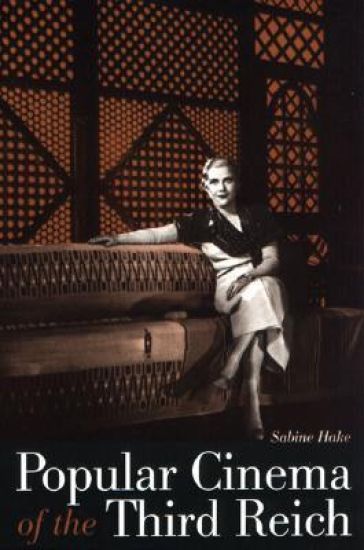
Too often dismissed as escapist entertainment or vilified as mass manipulation, popular cinema in the Third Reich was in fact sustained by well-established generic conventions, cultural traditions, aesthetic sensibilities, social practices, and a highly developed star system-not unlike its Hollywood counterpart in the 1930s. This pathfinding study contributes to the ongoing reassessment of Third Reich cinema by examining it as a social, cultural, economic, and political practice that often conflicted with, contradicted, and compromised the intentions of the Propaganda Ministry. Nevertheless, by providing the illusion of a public sphere presumably free of politics, popular cinema helped to sustain the Nazi regime, especially during the war years. Rather than examining Third Reich cinema through overdetermined categories such as propaganda, ideology, or fascist aesthetics, Sabine Hake concentrates on the constituent elements shared by most popular cinemas: famous stars, directors, and studios; movie audiences and exhibition practices; popular genres and new trends in set design; the reception of foreign films; the role of film criticism; and the representation of women. She pays special attention to the forced coordination of the industry in 1933, the changing demands on cinema during the war years, and the various ways of coming to terms with these filmic legacies after the war. Throughout, Hake's findings underscore the continuities among Weimar, Third Reich, and post-1945 West German cinema. They also emphasize the codevelopment of German and other national cinemas, especially the dominant Hollywood model.
Screen Nazis

Screen Nazis

Sabine Hake

University of Wisconsin Press
2012
nidottu
From the late 1930s to the early twenty-first century, European and American filmmakers have displayed an enduring fascination with Nazi leaders, rituals, and symbols, making scores of films from Confessions of a Nazi Spy (1939) and Watch on the Rhine (1943) through Des Teufels General (The Devil's General, 1955) and Pasqualino settebellezze (Seven Beauties, 1975), up to Der Untergang (Downfall, 2004), Inglourious Basterds Probing the emotional sources and effects of this fascination, Sabine Hake looks at the historical relationship between film and fascism and its far-reaching implications for mass culture, media society, and political life. In confronting the spectre and spectacle of fascist power, these films not only depict historical figures and events but also demand emotional responses from their audiences, infusing the abstract ideals of democracy, liberalism, and pluralism with new meaning and relevance. Hake underscores her argument with a comprehensive discussion of films, including perspectives on production history, film authorship, reception history, and questions of performance, spectatorship, and intertextuality. Chapters focus on the Hollywood anti-Nazi films of the 1940s, the West German anti-Nazi films of the 1950s, the East German anti-fascist films of the 1960s, the Italian 'Naziploitation' films of the 1970s, and issues related to fascist aesthetics, the ethics of resistance, and questions of historicisation in films of the 1980s-2000s from the United States and numerous European countries.
Topographies of Class

Topographies of Class

Sabine Hake

The University of Michigan Press
2008
nidottu
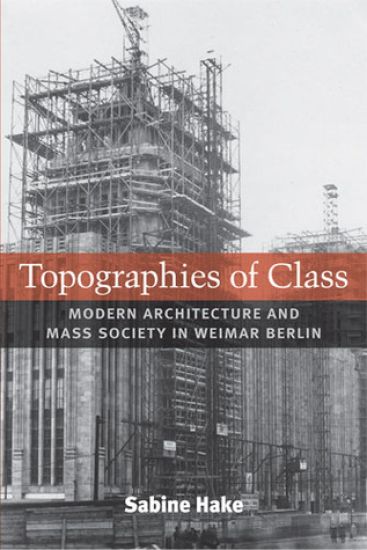
In Topographies of Class, Sabine Hake explores why Weimar Berlin has had such a powerful hold on the urban imagination. Approaching Weimar architectural culture from the perspective of mass discourse and class analysis, Hake examines the way in which architectural projects; debates; and representations in literature, photography, and film played a key role in establishing the terms under which contemporaries made sense of the rise of white-collar society.Focusing on the so-called stabilization period, Topographies of Class maps out complex relationships between modern architecture and mass society, from Martin Wagner's planning initiatives and Erich Mendelsohn's functionalist buildings, to the most famous Berlin texts of the period, Alfred Döblin's city novel Berlin Alexanderplatz (1929) and Walter Ruttmann's city film Berlin, Symphony of the Big City (1927). Hake draws on critical, philosophical, literary, photographic, and filmic texts to reconstruct the urban imagination at a key point in the history of German modernity, making this the first study---in English or German---to take an interdisciplinary approach to the rich architectural culture of Weimar Berlin.Sabine Hake is Professor and Texas Chair of German Literature and Culture at the University of Texas at Austin. She is the author of numerous books, including German National Cinema and Popular Cinema of the Third Reich.Cover art: Construction of the Karstadt Department Store at Hermannplatz, Berlin-Neukölln. Courtesy Bildarchiv Preeussischer Kulturbesitz / Art Resource, NY
Topographies of Class

Topographies of Class

Sabine Hake

The University of Michigan Press
2008
sidottu
In Topographies of Class, Sabine Hake explores why Weimar Berlin has had such a powerful hold on the urban imagination. Approaching Weimar architectural culture from the perspective of mass discourse and class analysis, Hake examines the way in which architectural projects; debates; and representations in literature, photography, and film played a key role in establishing the terms under which contemporaries made sense of the rise of white-collar society.Focusing on the so-called stabilization period, Topographies of Class maps out complex relationships between modern architecture and mass society, from Martin Wagner's planning initiatives and Erich Mendelsohn's functionalist buildings, to the most famous Berlin texts of the period, Alfred Döblin's city novel Berlin Alexanderplatz (1929) and Walter Ruttmann's city film Berlin, Symphony of the Big City (1927). Hake draws on critical, philosophical, literary, photographic, and filmic texts to reconstruct the urban imagination at a key point in the history of German modernity, making this the first study---in English or German---to take an interdisciplinary approach to the rich architectural culture of Weimar Berlin.Sabine Hake is Professor and Texas Chair of German Literature and Culture at the University of Texas at Austin. She is the author of numerous books, including German National Cinema and Popular Cinema of the Third Reich.Cover art: Construction of the Karstadt Department Store at Hermannplatz, Berlin-Neukölln. Courtesy Bildarchiv Preeussischer Kulturbesitz / Art Resource, NY
Passions and Deceptions

Passions and Deceptions

Sabine Hake

Princeton University Press
1992
pokkari
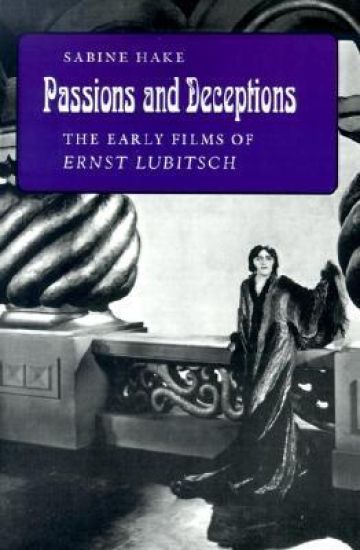
A collaborator with Warner Brothers and Paramount in the early days of sound film, the German film director Ernst Lubitsch (1892-1947) is famous for his sense of ironic detachment and for the eroticism he infused into such comedies as So This Is Paris and Trouble in Paradise. In a general introduction to his silent and early sound films (1914-1932) and in close readings of his comedies, Sabine Hake focuses on the visual strategies Lubitsch used to convey irony and analyzes his contribution to the rise of classical narrative cinema. Exploring Lubitsch's depiction of femininity and the influence of his early German films on his entire career, she argues that his comedies represent an important outlet for dealing with sexual and cultural differences. The readings cover The Oyster Princess, The Doll, The Mountain Cat, Passion, Deception, So This Is Paris, Monte Carlo, and Trouble in Paradise, which are interpreted as part of an underlying process of negotiation between different modes of representation, narration, and spectatorship--a process that comprises the conditions of production in two different national cinemas and the ongoing changes in film technology. Drawing attention to Lubitsch's previously neglected German films, this book presents the years until 1922 as the formative period in his career.
The Cinema's Third Machine

The Cinema's Third Machine

Sabine Hake

University of Nebraska Press
1993
sidottu
The improvements in the technology, artistry, and distribution of motion pictures coincided with the traumas of modern Germany. It is hardly to be wondered that filmmakers frequently turned their cameras on Germany's social and political problems that propagandists regularly sought to manipulate them, that entrepreneurs tried to exploit them, and that German thinkers brooded upon the relationship between German society, politics, and the films that represented them all. From these tangled motives a rich discourse on film emerged that paralleled or anticipated discourses in the other film centers of the world. The Cinema's Third Machine reproduces the diversity of perspectives and the intensity of controversies of early German film within the broad context of German social and political history, from the aesthetic rapture of the first years to the institutionalization of film by the national socialist state. Many texts have been rediscovered and are now presented to modern scholars for the first time. Hake treats all aspects of the medium: production, promotion, education, journalism, aesthetics, and political activism, following throughout the various forms criticism assumed.
The Proletarian Dream

The Proletarian Dream

Sabine Hake

De Gruyter
2017
sidottu
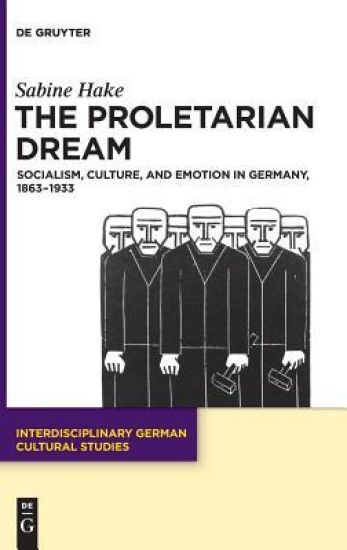
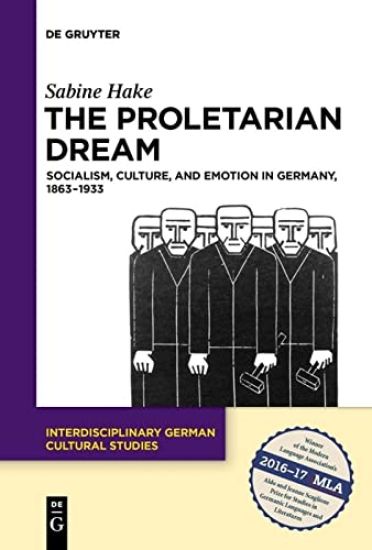
The proletariat never existed—but it had a profound effect on modern German culture and society. As the most radicalized part of the industrial working class, the proletariat embodied the critique of capitalism and the promise of socialism. But as a collective imaginary, the proletariat also inspired the fantasies, desires, and attachments necessary for transforming the working class into a historical subject and an emotional community. This book reconstructs this complicated and contradictory process through the countless treatises, essays, memoirs, novels, poems, songs, plays, paintings, photographs, and films produced in the name of the proletariat. The Proletarian Dream reads these forgotten archives as part of an elusive collective imaginary that modeled what it meant—and even more important, how it felt—to claim the name "proletarian" with pride, hope, and conviction. By emphasizing the formative role of the aesthetic, the eighteen case studies offer a new perspective on working-class culture as a oppositional culture. Such a new perspective is bound to shed new light on the politics of emotion during the main years of working-class mobilizations and as part of more recent populist movements and cultures of resentment. Aldo and Jeanne Scaglione Prize for Studies in Germanic Languages and Literatures 2018
The Proletarian Dream

The Proletarian Dream

Sabine Hake

De Gruyter
2018
isokokoinen pokkari
The proletariat never existed—but it had a profound effect on modern German culture and society. As the most radicalized part of the industrial working class, the proletariat embodied the critique of capitalism and the promise of socialism. But as a collective imaginary, the proletariat also inspired the fantasies, desires, and attachments necessary for transforming the working class into a historical subject and an emotional community. This book reconstructs this complicated and contradictory process through the countless treatises, essays, memoirs, novels, poems, songs, plays, paintings, photographs, and films produced in the name of the proletariat. The Proletarian Dream reads these forgotten archives as part of an elusive collective imaginary that modeled what it meant—and even more important, how it felt—to claim the name "proletarian" with pride, hope, and conviction. By emphasizing the formative role of the aesthetic, the eighteen case studies offer a new perspective on working-class culture as a oppositional culture. Such a new perspective is bound to shed new light on the politics of emotion during the main years of working-class mobilizations and as part of more recent populist movements and cultures of resentment. Aldo and Jeanne Scaglione Prize for Studies in Germanic Languages and Literatures 2018
The Nazi Worker

The Nazi Worker

Sabine Hake

De Gruyter
2023
sidottu
The Nazi Worker is the second in a three-volume project on the figure of the worker and, by extension, questions of class in twentieth-century German culture. It is based on extensive research in the archives and informed by recent debates on the politics of emotion, the end of class, and the future of work. In seven chapters, the book reconstructs the processes by which National Socialism appropriated aspects of working-class culture and socialist politics and translated class-based identifications into the racialized communitarianism of Volksgemeinschaft (folk community). Arbeitertum (workerdom), the operative term within these processes of appropriation, not only established a discursive framework for integrating proletarian legacies into the cult of the German worker. As a social imaginary, workerdom also modelled the work-related emotions (e.g., joy, pride) essential to the culture of work promoted by the German Labor Front. The contribution of images and stories in creating these new social imaginaries will be reconstructed through highly contextualized readings of the debates about workerdom, Nazi movement novels, worker’s poetry, workers’ sculpture, as well as industrial painting, photography, film, and design.
The Nazi Worker

The Nazi Worker

Sabine Hake

De Gruyter
2025
isokokoinen pokkari
The Nazi Worker is the second in a three-volume project on the figure of the worker and, by extension, questions of class in twentieth-century German culture. It is based on extensive research in the archives and informed by recent debates on the politics of emotion, the end of class, and the future of work. In seven chapters, the book reconstructs the processes by which National Socialism appropriated aspects of working-class culture and socialist politics and translated class-based identifications into the racialized communitarianism of Volksgemeinschaft (folk community). Arbeitertum (workerdom), the operative term within these processes of appropriation, not only established a discursive framework for integrating proletarian legacies into the cult of the German worker. As a social imaginary, workerdom also modelled the work-related emotions (e.g., joy, pride) essential to the culture of work promoted by the German Labor Front. The contribution of images and stories in creating these new social imaginaries will be reconstructed through highly contextualized readings of the debates about workerdom, Nazi movement novels, worker’s poetry, workers’ sculpture, as well as industrial painting, photography, film, and design.