
Kirjahaku
Etsi kirjoja tekijän nimen, kirjan nimen tai ISBN:n perusteella.
7 kirjaa tekijältä Sabrina P Ramet
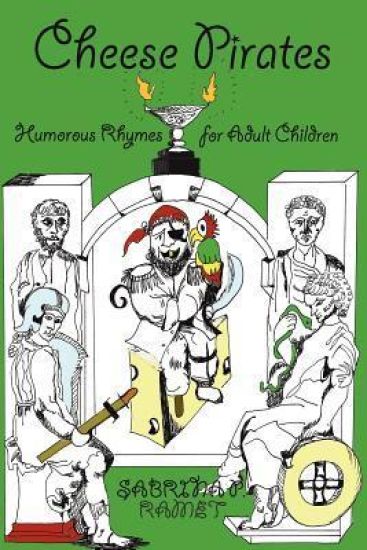
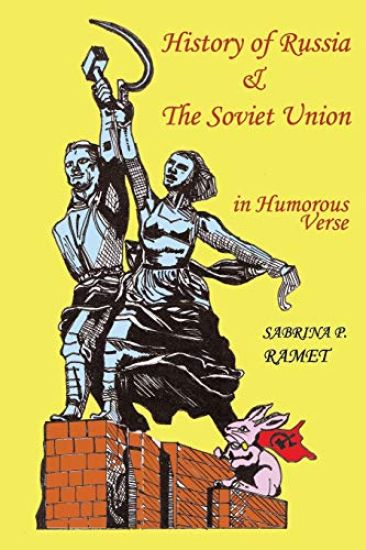
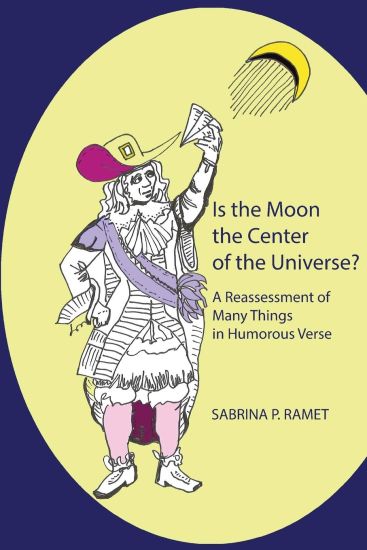

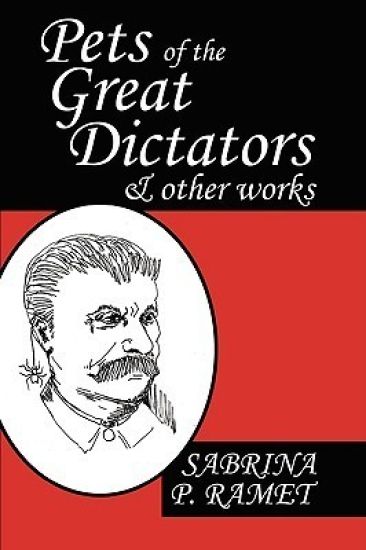
"What do Mao's Cockroach, a stuffed Jeremy Bentham, an ode to a semi-colon, and a rabbit in someone's brain all have in common? They all come from the wonderful and imaginative mind of Sabrina Ramet The Earth is a Spaceship reprints some of Sabrina's finest poetry from nearly 20 years of published verse, most of it in rhymed meter. This selection of hilarious poetry puts the world to right by posing the crucial question 'Were Adam and Eve really married', and continuing with such verses as 'You cannot be right against the party, or Trotsky agreed with himself', and musings on the theme 'If the mayor were a pigeon'. This collection brings together some of her material from her five previous collections of absurdist verse, demonstrating once again that Sabrina Ramet is nothing short of a comic genius." --Dave Collins, Assistant Professor, Department of Architecture and Planning, NTNU."Ribald and irreverent, Sabrina P. Ramet's new verse menagerie is a brilliant excursion into the depths of the absurd, with unexpected humor at every turn, as she romps through such subjects as religion, politics, world history, literature, and mental health. The lyrics of this collection are in many cases set to popular music from the twentieth century. Personal favorites include "Church-run brothels" (based on actual historical fact) set to the tune of "Happy Days Are Here Again " ("Church-run brothels in your town - / they banish sadness and your frown"), "The Mayan Calendar" sung to the tune of 1960s television program "Rawhide," and--another favorite--an address by an unnamed ordinary citizen to his mother, "O mamma, are you a virgin?" sung as a blues song. This collection provoked abundant smiles and uncontrollable guffaws." --David Hahn, composer of the opera Attack of the Trumpanzees and other musical works.
Historical Legacies and the Radical Right in Post-Cold War Central and Eastern Europe
Sabrina P Ramet
ibidem-Verlag, Jessica Haunschild u Christian Schon
2010
nidottu
The transformation process in Central and Eastern Europe (CEE) after 1989 is often clothed in terms of historical and geographical categories, either as a 'return of history' or as a 'return to Europe', or both. Either way, the radical right in CEE claims a prominent place in this politics of return. Studies of the radical right echo the more general concern, in analyses of the region, with historical analogies and the role of legacies. Sometimes parallels are discovered between the post-1989 radical right and inter-war fascism. They imply a 'Weimarisation' of the transformation countries and the return of the pre-socialist, ultranationalist, or even fascist past - the 'return of history'. Another interpretation argues that since some CEE party systems increasingly resemble their West European counterparts, so does the radical right, at least where it is electorally successful - the 'return to Europe'. A third line of thought states that the radical right in the region is a phenomenon sui generis, inherently shaped by the historical forces of state socialism and the transformation process. As a result and in contrast to Western Europe, it is ideologically more extreme and anti-democratic while organisationally more a movement than a party phenomenon. This book provides insight into the role of historical forces in the shaping and performance of the current radical right in CEE. It conceptualises 'legacies' both as a contextual factor, (ie: as part of structural and cultural opportunities for new movements and parties in the region, and as textual factors; ie: as part of the ideological baggage of the past which is revived -- and reinterpreted -- by the radical right). An introductory essay by Michael Minkenberg puts the topic and the concept of legacies into a larger research perspective. Articles by Lenka Bustikova and Herbert Kitschelt as well as John Ishiyama employ the role of legacies as context, whereas the contributions by Timm Beichelt, Sarah de Lange and Simona Guerra as well as James Frusetta and Anca Glont treat legacies as text.