

Kirjahaku
Etsi kirjoja tekijän nimen, kirjan nimen tai ISBN:n perusteella.
16 kirjaa tekijältä Sallie Bingham


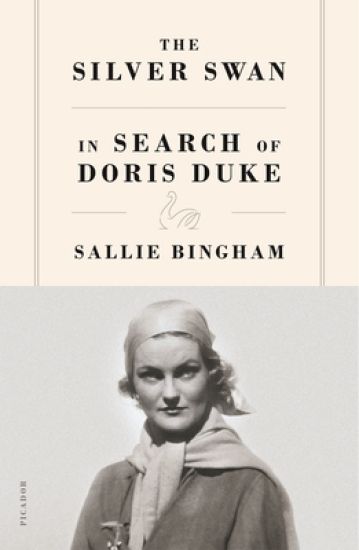
“Don’t touch that girl, she’ll burn your fingers,” the FBI director J. Edgar Hoover once said about Doris Duke, the inheritor of James Buchanan Duke’s billion-dollar tobacco fortune. During her life, she would be blamed for scorching many, including her mother (whom she sued) and various ex-lovers. She established her first foundation when she was twenty-one; cultivated friendships with the likes of Jackie Kennedy, Imelda Marcos, and Michael Jackson; flaunted interracial relationships; and adopted a thirty-two-year-old woman she believed to be the reincarnation of her deceased daughter. Even though Duke was the subject of constant scrutiny, little beyond the tabloid accounts of her behaviour has been publicly known. In 2012, when eight hundred linear feet of her personal papers were made available, Sallie Bingham set out to uncover the truth of the tobacco heiress’s life. She found a spectacular character forged in the Jazz Age who not only was an early war correspondent but also was a surfer, an environmentalist, a collector of Islamic art, and a businesswoman who tripled her father’s fortune. This spirited and perceptive biography dissects the stereotypes that have defined Duke’s story while confronting those disturbing questions that cleave to her legacy. The Silver Swan chronicles one of the great underexplored lives of the twentieth century and the very archetype of a modern woman.
"There are many accounts of the Bingham family saga, but no other by someone who was there. For the first time, a gifted writer born into a family of inherited wealth and power takes us with her behind the doors of that patriarchal hothouse. Passion and Prejudice is a major step toward feminist change and democracy. By her courage and example, Sallie Bingham already has inspired women in powerful families to begin to revolt. What is wrongly seen now as a private war will be come the opening skirmish in a high-level revolution." - Gloria Steinem
Four generations of an extended mixed-race family live with the problems we've all heard about, yet thrive amidst hardship, turning the myth of the Old West on its head.Prize-winning story writer Sallie Bingham's latest group of tales reverse commonly held assumptions about the American West. The Hispanic, Native, and white members of this rough and tumble family pivot around an outrageously funny and fallible rodeo rider known as Cowboy. They live with alcohol and drug addiction, dependency on a fraying welfare system, poverty, violence, and deep-held loyalties. Unlikely learning and unlikely sources of wisdom abound. "During those long winter nights when Dad took off for Sheridan—no liquor allowed on the rez but Sheridan is only about twenty miles west," Fat Annie tells the boy known as Sure Enough some truths about women that will guide him for the rest of his life. Running away on horseback from the imposition of ashes at his Jesuit boarding school, eleven-year-old Jimmy James finds "this little lady priest" in the town park. She makes the cross with ashes on his horse's head, then turns to him, and he feels the cross "burn into him worse than any brand." A bizarre accident in "How Daddy Lost His Ear" results in an equally bizarre wedding. And one of the many "white ladies" who appear briefly and disappear fast finally gets Cowboy to tell the truth.These men, women, and kids don't just endure. They thrive in their own peculiar style, turning seemingly tragic outcomes into sources of madcap humor, and nourishing indelible family ties. This is the West as it was and is, a complex web of traditions and surprising, even shocking, ways of finding triumph.
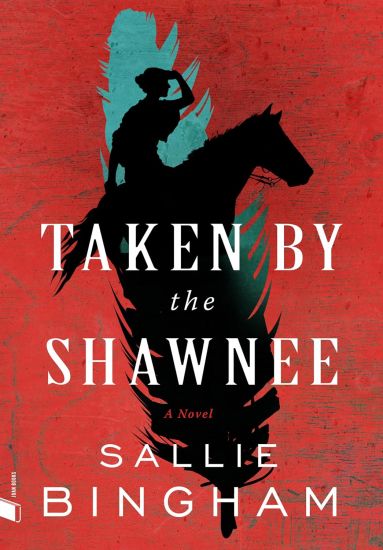
"A masterpiece of women’s frontier experience!" —KATHY SCHULZ, author of The Underground Railroad in Ohio"This is an amazing book, and I couldn’t stop reading it." —JOAN SILBER, PEN/Faulkner and National Book Critics Circle Award-winning author of Secrets of Happiness and Improvement"An awesome account of female survival at a horrific time." —BOOKLISTA most unusual portrait of early America based on a rare family document, in which a young mother’s years in captivity with the Shawnee prove to be the best years of her life.It's 1779 and a young white woman named Margaret Erskine is venturing west from Virginia, on horseback, with her baby daughter and the rest of her family. She has no experience of Indians, and has absorbed most of the prejudices of her time, but she is open-minded, hardy, and mentally strong, a trait common to most of her female descendants—Sallie Bingham's ancestors.Bingham had heard Margaret's story since she was a child but didn't see the fifteen pages Margaret had dictated to her nephew a generation after her captivity until they turned up in her mother's blue box after her death. Devoid of most details, this restrained account inspired Bingham to research and imagine and fill the gaps in her story and to consider the tough questions it raises. How did Margaret, our narrator, bear witnessing the murder of her infant? How did she survive her near death at the hands of the Shawnee after the murder of the chief? Whose father was her baby John's, born nine months after her taking? And why did her former friends in Union, Virginia, turn against her when, ransomed after four years, she reluctantly returned?This is the seldom told story of the making of this country in the years of the Revolution, what it cost in lives and suffering, and how one woman among many not only survived extreme hardship, but flourished.
"Bingham writes with an austere and unerring knowledge of what it is to be human and—transgressive."—Paula Fox "These are marvelous stories of experience and have the ripeness of wry, hard-won wisdom."—Phillip Lopate "Bingham has the eye to see where a story lives, the heart to understand it, and the voice—and craft—to tell it."—Robin Morgan In her wise and sexy new collection, Sallie Bingham examines modern-day "transgressions" in affairs of the heart. She offers up a ménage à trois, an older woman’s affair with a student, a painter who uses his age as an excuse to behave indecorously. But the reader quickly discovers the real transgressions are those of the self against the self.
"Bingham writes with an austere and unerring knowledge of what it is to be human and—transgressive."—Paula Fox "These are marvelous stories of experience and have the ripeness of wry, hard-won wisdom."—Phillip Lopate "Bingham has the eye to see where a story lives, the heart to understand it, and the voice—and craft—to tell it."—Robin Morgan In her wise and sexy new collection, Sallie Bingham examines modern-day "transgressions" in affairs of the heart. She offers up a ménage à trois, an older woman’s affair with a student, a painter who uses his age as an excuse to behave indecorously. But the reader quickly discovers the real transgressions are those of the self against the self.
“[Sallie] Bingham writes with an austere and unerring knowledge of what it is to be human and transgressive.”—Paula Fox “Restrained and wise, these lovely stories unfold like lavender-scented linens, quieting the fretful mind.”—Joe Ashby Porter Forty-year veteran of the novel, noted feminist, and author of over ten books, Sallie Bingham returns with Red Car, a collection written in her signature style—discreet, sly prose circling taboo subjects. Her new offering is about love enjoyed, whether alone or with lovers, sensual or familial, comedic or tragic, often with a wry twist. Sallie Bingham lives in Santa Fe, New Mexico.
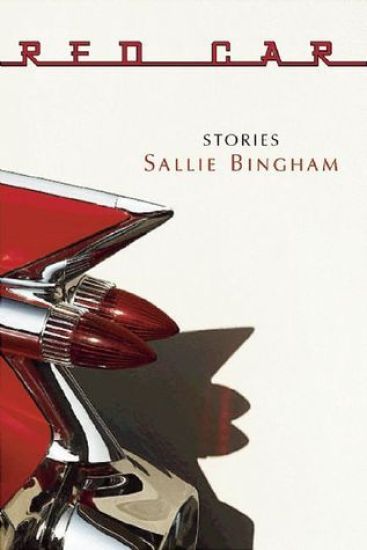
“[Sallie] Bingham writes with an austere and unerring knowledge of what it is to be human and transgressive.”—Paula Fox “Restrained and wise, these lovely stories unfold like lavender-scented linens, quieting the fretful mind.”—Joe Ashby Porter Forty-year veteran of the novel, noted feminist, and author of over ten books, Sallie Bingham returns with Red Car, a collection written in her signature style—discreet, sly prose circling taboo subjects. Her new offering is about love enjoyed, whether alone or with lovers, sensual or familial, comedic or tragic, often with a wry twist. Sallie Bingham lives in Santa Fe, New Mexico.
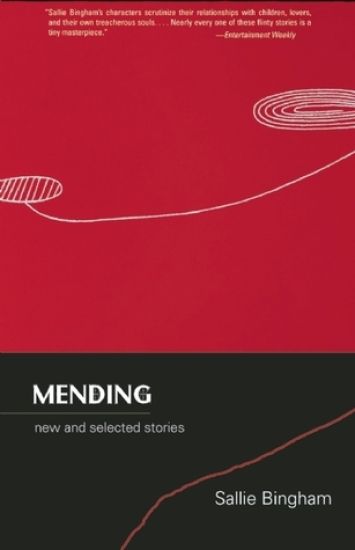
Praise for Sallie Bingham: "Sallie Bingham binds her collection together with sheer talent. The title novella is absolutely first-rate?a skillfully suggestive amalgam of Katherine Mansfield and Eudora Welty. This same unblinking gaze is hard at work on the essential weakness and dependence of men ('The Banks of the Ohio' and 'The Ice Party'), the illusion of freedom that comes with divorce ('Bare Bones'), and the desperate terror of adolescent love ('Winter Term')."?James R. Frakes, The New York Times Book Review "Sallie Bingham's characters scrutinize their relationships with children, lovers, and their own treacherous souls. . . . Nearly every one of these flinty stories is a tiny masterpiece."?Entertainment Weekly "Hardened but not compromised by adult life, these luminous stories . . . feature narrators who find mature, often solitary forms of reckoning, and even happiness. . . . There is not a false note in Bingham's striking collection."?Publishers Weekly, starred review "These engaging tales span landscape, gender, and age, and readers will treasure Bingham's strikingly perceptive composition and refined, clever flashes of detail and clarity."?Booklist Sallie Bingham published her first novel with Houghton Mifflin in 1961. Since then she has published four collections of short stories, four novels, and a memoir. She was book editor for The Courier-Journal in Louisville, Kentucky, and has been a director of the National Book Critics Circle. She is the founder of The Kentucky Foundation for Women.
Praise for Sallie Bingham: "Sallie Bingham binds her collection together with sheer talent. The title novella is absolutely first-rate?a skillfully suggestive amalgam of Katherine Mansfield and Eudora Welty. This same unblinking gaze is hard at work on the essential weakness and dependence of men ('The Banks of the Ohio' and 'The Ice Party'), the illusion of freedom that comes with divorce ('Bare Bones'), and the desperate terror of adolescent love ('Winter Term')."?James R. Frakes, The New York Times Book Review "Sallie Bingham's characters scrutinize their relationships with children, lovers, and their own treacherous souls. . . . Nearly every one of these flinty stories is a tiny masterpiece."?Entertainment Weekly "Hardened but not compromised by adult life, these luminous stories . . . feature narrators who find mature, often solitary forms of reckoning, and even happiness. . . . There is not a false note in Bingham's striking collection."?Publishers Weekly, starred review "These engaging tales span landscape, gender, and age, and readers will treasure Bingham's strikingly perceptive composition and refined, clever flashes of detail and clarity."?Booklist Sallie Bingham published her first novel with Houghton Mifflin in 1961. Since then she has published four collections of short stories, four novels, and a memoir. She was book editor for The Courier-Journal in Louisville, Kentucky, and has been a director of the National Book Critics Circle. She is the founder of The Kentucky Foundation for Women.
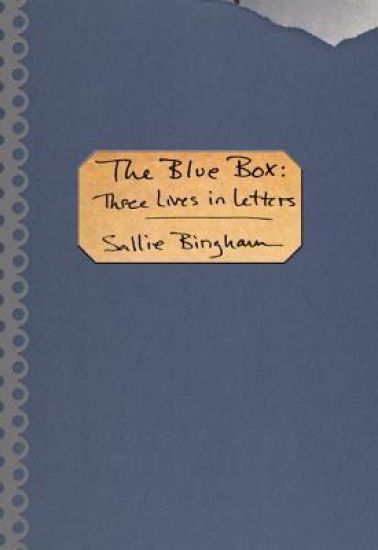
This family history centered around three women from three generations spans the Civil War through the Jazz Age. Fans of Sallie Bingham's work will especially appreciate her parents Mary and Barry's romance that unfolds in letters and finally results in marriage. Bingham beautifully demonstrates an inheritance of emotion, morality, ideology, and most lasting of all, irreverence. Sallie Bingham has published four short story collections, four novels, a memoir, and several plays. Bingham was a director of the National Book Critics Circle, and founded the Kentucky Foundation for Women and the Sallie Bingham Archive for Women's Papers and Culture at Duke University.
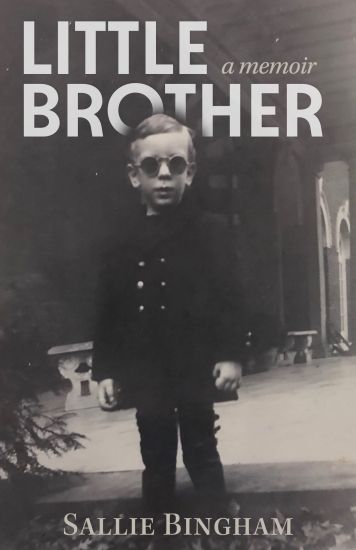
Readers familiar with Sallie Bingham’s 1989 memoir, Passion and Prejudice, will remember her provocative chronicle of the Bingham family saga, cited by Gloria Steinem as “a major step toward feminist change and democracy.” In Little Brother, she reflects on just one of her siblings: the youngest son Jonathan and his all-too brief life. The book begins with a count she calls her “dreadful list” of nine close relatives who died by accident, suicide, overdose, exposure to the elements, and electrocution, all before the age of 50. Jonathan was only twenty-two years old when he climbed a pole, hoping to rig up some lighting for a barn party and, by some fluke, grabbed a live wire. But even before his fatal fall to the ground, the boy suffered from insecurity, isolation, and difficulty relating to his large family. Bingham draws from archived material, chief among them the young man’s journal and letters. She writes his short history with obvious affection and tenderness, along with more than a dash of survival guilt. Little Brother is a moving and honest new work.