Kirjojen hintavertailu. Mukana 12 016 292 kirjaa ja 12 kauppaa.

Kirjahaku

Etsi kirjoja tekijän nimen, kirjan nimen tai ISBN:n perusteella.

6 kirjaa tekijältä Sally Cline

Zelda Fitzgerald

Zelda Fitzgerald

Sally Cline

Faber Faber
2010
pokkari
Zelda Fitzgerald, along with her husband F. Scott Fitzgerald, is remembered above all else as a personification of the style and glamour of the roaring twenties - an age of carefree affluence such as the world has not seen since. But along with the wealth and parties came a troubled mind, at a time when a woman exploiting her freedom of expression was likely to attract accusations of insanity. After 1934 Zelda spent most of her life in a mental institution; outliving her husband by few years, she died in a fire as she was awaiting electroconvulsive therapy in a sanatorium. Zelda's story has often been told by detractors, who would cast her as a parasite in the marriage - most famously, Ernest Hemingway accused her of taking pleasure in blunting her husband's genius; when she wrote her autobiographical novel, Fitzgerald himself complained she had used his material. But was this fair, when Fitzgerald's novels were based on their life together? Sally Cline's biography, first published in 2003, makes use of letters, journals, and doctor's records to detail the development of their marriage, and to show the collusion between husband and doctors in a misdirected attempt to 'cure' Zelda's illness. Their prescription - no dancing, no painting, and above all, no writing - left her creative urges with no outlet, and was bound to make matters worse for a woman who thrived on the expression of allure and wealth.
Radclyffe Hall

Radclyffe Hall

Sally Cline

Faber Faber
2010
nidottu
Radclyffe Hall was the pen-name of Marguerite Radclyffe-Hall, the author of The Well of Loneliness, which on its publication in 1928 became the centre of a trial for obscenity and was banned in Britain until 1949. The novel itself openly discussed lesbian relationships and challenged contemporary ideas about lesbianism.Radclyffe-Hall's life as well as her novel flouted convention, and Sally Cline's biography, first published in 1998, explores her other literary works, as well as her relationships and politics, which were often at odds.
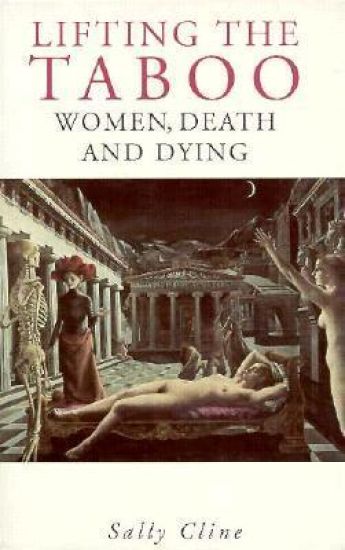
Lifting the Taboo

Lifting the Taboo

Sally Cline

New York University Press
1997
sidottu
lluminated by a profound yet humorous vision, Lifting the Taboo explores the specific relationship women of many colors, cultures, ages, and sexual orientations have to their own deaths, their attitudes towards loss, and their disposition to their role as primary care-givers to the dying. Specifically, the book weighs the implications of breast cancer and examines in detail Alzheimer's Disease which, contrary to popular myth, can in several significant ways be perceived as a women's disease. Investigating mothers' responses to children's deaths, Sally Cline establishes that women's relationships to death are intricately connected to the experience of giving birth. They are, she argues, therefore psychologically and emotionally different from those of men. Cline goes on to examine women's roles and responses to AIDS and suicide, women's sexual relationships while dying, how society views widows as leftover lives, and women's radical work in hospices and death therapy, as well as their roles as female funeral directors.
Lifting the Taboo

Lifting the Taboo

Sally Cline

New York University Press
1997
pokkari
lluminated by a profound yet humorous vision, Lifting the Taboo explores the specific relationship women of many colors, cultures, ages, and sexual orientations have to their own deaths, their attitudes towards loss, and their disposition to their role as primary care-givers to the dying. Specifically, the book weighs the implications of breast cancer and examines in detail Alzheimer's Disease which, contrary to popular myth, can in several significant ways be perceived as a women's disease. Investigating mothers' responses to children's deaths, Sally Cline establishes that women's relationships to death are intricately connected to the experience of giving birth. They are, she argues, therefore psychologically and emotionally different from those of men. Cline goes on to examine women's roles and responses to AIDS and suicide, women's sexual relationships while dying, how society views widows as leftover lives, and women's radical work in hospices and death therapy, as well as their roles as female funeral directors.
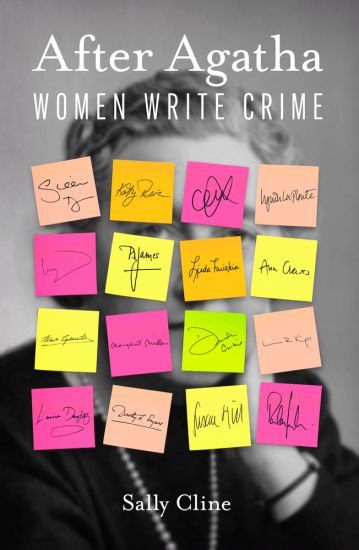
After Agatha

After Agatha

Sally Cline

OLDCASTLE BOOKS LTD
2022
pokkari
From Agatha Christie and Patricia Highsmith to Val McDermid and JK Rowling, After Agatha is an indispensable guide to women's crime writing over the last century and an exploration of why women read crime Spanning the 1930s to present day, After Agatha charts the explosion in women\'s crime writing and examines key developments on both sides of the Atlantic: from the women writers at the helm of the UK Golden Age and their American and Canadian counterparts fighting to be heard, to the 1980s experimental trio, Marcia Muller, Sara Paretsky and Sue Grafton, who created the first female PIs, and the more recent emergence of forensic crime writing and domestic noir thrillers such as Gone Girl and Apple Tree Yard. After Agatha examines the diversification of crime writing and highlights landmark women's novels which featured the marginalised in society as centralised characters. Cline also explores why women readers are drawn to the genre and seek out justice in crime fiction, in a world where violent crimes against women rarely have such resolution. The book includes interviews with dozens of contemporary authors such as Ann Cleeves, Sophie Hannah, Tess Gerritsen and Kathy Reichs and features the work of hundreds of women crime and mystery writers. It is an essential read for crime fiction lovers.
Dashiell Hammett

Dashiell Hammett

Sally Cline

Skyhorse Publishing
2014
sidottu
Dashiell Hammett changed the face of crime fiction. In five novels published over five years as well as a string of stories, he transformed the mystery genre into literature and left us with the figure of the hard-boiled detective, from the Continental Op to Sam Spade—immortalized on film by Humphrey Bogart in The Maltese Falcon—and the more glamorous Thin Man, also made iconic with the aid of Hollywood. A brilliant writer, Hammett was a complex and enigmatic man. After 1934 until his death in 1961, he published no more novels and suffered from a writer’s block that both shamed and maimed him. He is identified with his tough protagonists, but his tuberculosis compromised his masculine identity and alcoholism may have been his answer. A former Pinkerton detective who valued honesty, he was attracted to women who lied outrageously, most notably Lillian Hellman, with whom he conducted a thirty-year affair. A controversial political activist who stood up for civil liberty, he was also a very private man. In this compact new biography, Sally Cline uses fresh research, including interviews with Hammett’s family and Hellman’s heir, to reexamine the life and works of the writer whom Raymond Chandler called “the ace performer.”