Kirjojen hintavertailu. Mukana 12 259 656 kirjaa ja 12 kauppaa.

Kirjahaku

Etsi kirjoja tekijän nimen, kirjan nimen tai ISBN:n perusteella.

33 kirjaa tekijältä Sally Featherstone

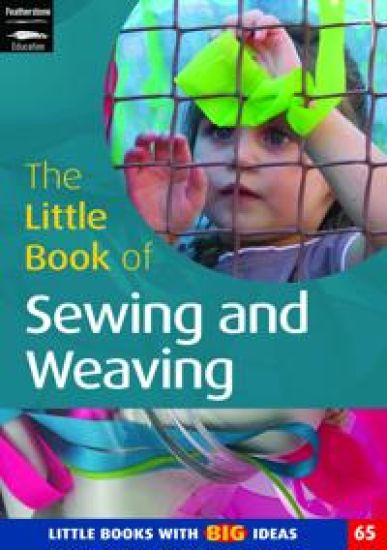
The Little Book of Sewing and Weaving

The Little Book of Sewing and Weaving

Sally Featherstone

Featherstone
2009
nidottu
This Little Book gives you lots of new ideas around the use of fabrics, sewing and weaving. As well as producing some wonderful results, children will have enjoyable activities for developing fine motor skills, concentration and creativity, working on their own or with friends. Little Books are packed with advice and ideas for all those working with children in Early Years settings. They are carefully planned to match the EYFS framework and reflect the latest thinking on the education of young children.
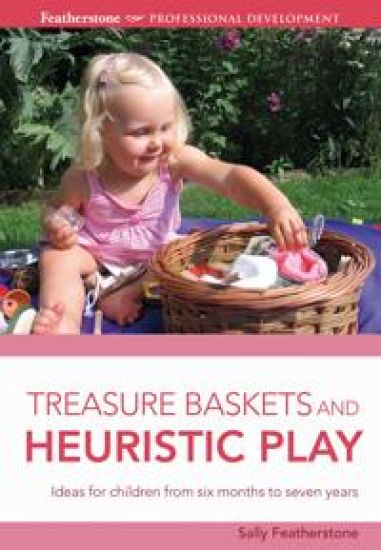
Treasure Baskets and Heuristic Play

Treasure Baskets and Heuristic Play

Sally Featherstone

Featherstone
2013
nidottu
Heuristic Play is a tightly described, but freely accessed activity, using a specific range of 'found' or everyday objects, and, in its pure sense, is only really applicable to a specific age range (from 12 months to about two and a half). However, there is now plenty of evidence that heuristic play has continuing value for children throughout the Foundation Stage and well into the primary years. Collections of objects, carefully selected and offered in both adult-led and child-initiated sessions, indoors and outside, can build on the experience of treasure basketsIn this informative and helpful book you will find further information on the process of using both treasure baskets and heuristic play with babies and young children. You will also find chapters which explore the benefits of heuristic play with objects for children throughout the early years from six months to seven years. Of course, the materials, the provision and the adult role will develop and change as children mature, so this book also gives guidance on how heuristic play itself should change to meet the needs of children at different stages of development.
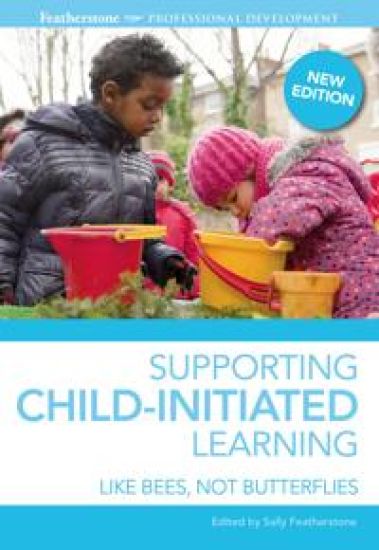
Supporting Child-initiated Learning

Supporting Child-initiated Learning

Sally Featherstone

Featherstone
2013
nidottu
Why is it that, when children play, some behave like butterflies, flitting around among the flowers of the activities on offer, landing for a moment before moving on to the next attractive flower (activity) while others behave with the single minded concentration of bees?As children grow and learn, they acquire skills through play and practical activities. This recently acquired learning is tenuous and is secured through practice, repeating the skills in different contexts, with different people. Only then will learning be 'hard wired' for life. It is now evident that where children are able to select resources, play companions and activities for themselves, they can practise emerging skills and concepts by selecting the resources they need and using them in ways which are unique to them.This book, written by a group of experts in early years practice, explores the place and purpose of child-intitiated learning in high quality early years practice. Child-initiated learning is a key feature of the Early Years Foundation Stage.
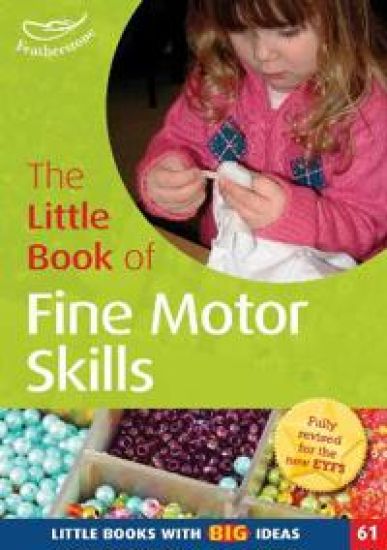
The Little Book of Fine Motor Skills

The Little Book of Fine Motor Skills

Sally Featherstone

Featherstone
2013
nidottu
Developing fine motor skills is a key feature in learning to read and write. Many children need additional help to develop these skills in the Early Years Foundation Stage, and The Little Book of Fine Motor Skills gives you lots of ideas for interesting activities focused on hand/eye coordination and refining the movements of arms and hands. Like all the other books in the Little Book series, this book presents appropriate and enjoyable activities in asimple format, which would enable the most inexperienced practitioners to plan and deliver the curriculum against clear objectives.
50 Fantastic Ideas to Captivate Boys

50 Fantastic Ideas to Captivate Boys

Sally Featherstone

Featherstone
2014
nidottu
_______________The 50 Fantastic Ideas series is packed full of fun, original, skills-based activities for Early Years practitioners to use with children aged 0-5. Each activity features step-by-step guidance, a list of resources, and a detailed explanation of the skills children will learn. Creative, simple, and highly effective, this series is a must-have for every Early Years setting.You only need to watch children to know that boys and girls learn differently! It’s not that girls don’t like to be outdoors, to get messy or to be noisily active, they do – they are just able control their muscles at a younger age, so they can sit, watch and listen to adults more easily. They can also manipulate materials and tools such as pencils (called fine motor skills) earlier than many boys, so they are ready for the reading and writing activities in school.But we must resist the temptation to think that boys are not as good as girls – they are just different. Their skills and interests draw them to activities that are big, adventurous, risky and messy, and of course, they love being outside. All children like pretend play, but this is sometimes limited to domestic activity in the home corner, rather than allowing boys to experiment with roles often associated with grown-up men.This book offers you fifty ideas for things that make the most of the ways boys learn, capturing their interest and helping them to learn. Many offer opportunities for early writing, mathematics and reading, as well as technology, science and role-play.
50 Fantastic Ideas for Found Materials

50 Fantastic Ideas for Found Materials

Sally Featherstone

Featherstone
2014
nidottu
The 50 Fantastic Ideas series is packed full of fun, original, skills-based activities for Early Years practitioners to use with children aged 0-5. Each activity features step-by-step guidance, a list of resources, and a detailed explanation of the skills children will learn. Creative, simple, and highly effective, this series is a must-have for every Early Years setting.Children love constructing models and other objects, and working with found and recycled materials has a firm and continuing place in the early years, encouraging children to be imaginative and creative as they practice their skills in joining, wrapping, bending and cutting. These materials that are often free or low cost, are available everywhere, waiting for imaginative practitioners to find and use them.This book gives you 50 ideas for using free, cheap and recycled materials in your setting, both for creative and independent play and for specific projects. The resources suggested are all easily available, and the ideas are only starters for the continuing interest children have in this sort of work.
The Little Book of Sand and Water

The Little Book of Sand and Water

Sally Featherstone

Featherstone
2014
nidottu
Give your sand and water sessions a new lease of life with this fully updated Little Book. Split into two sections, it offers a range of activities for sand and water play that link to the early learning goals and which are accompanied by a list of suggested resources, useful vocabulary and related songs and stories to take the theme further.
Country Flowers

Country Flowers

Sally Featherstone

Opitus Books
2021
pokkari
Country Flowers was inspired by the book Flora, ten years among the flowers of an endangered landscape, which describes the unique range of flowers growing in seven small fields on the hills above the Calder Valley in West Yorkshire. Readers of Flora, while enjoying the full sized, lavishly illustrated volume, with its 400 colour photos and detailed context, said they would find a pocket-sized version of the individual flower pages useful to take with them on walks through the Pennine countryside and the hay meadows of West Yorkshire. Country Flowers has been compiled to contain all the flowers from Flora, expanded to include a wider range of common British wildflowers. Each page carries essential information to help you to identify individual flowers from their key features, including colour photographs, the Latin name, some of the country names, which are often more amusing and descriptive than the official ones, the size and colour of the flower, historical and herbal details, and fascinating facts about each one.We are all concerned about the loss of natural environments, and the living things we enjoy and want to protect. Little wildflowers, often grow unnoticed on the footpath verges, in hedgerows, field margins, or in the protected flower meadows of our beautiful, increasingly threatened countryside. As well as delighting us with the colours of their blooms, wildflowers support a myriad of animals and insects, flying, hopping, crawling and munching, and helping to pollinate and propagating the flowers of food crops as well as those in the wild. Like me, you may have found an unfamiliar flower, or one that you recognise, but with a name you can no longer remember Country Flowers will help your memory for the names you used to know, and introduce you to new varieties. The plants in Country Flowers have been selected to enhance your enjoyment of walks in the countryside, alone or with your friends and family. Over 100 photographs of individual flowers, taken in their natural surroundings, are accompanied by details of country uses, 'fascinating facts' about their history, and culinary or medicinal uses. The meadows where they grow are endangered habitats, and could be permanently damaged by trampling or picking the flowers, or even walking among them. We must preserve the places where wildflowers grow, so our children and grandchildren can enjoy them too.Living through a pandemic has made us all appreciate the countryside so much more, and we know that taking time to stop and look in detail at nature can improve both our mental and physical health. I hope this book will enhance your enjoyment of our sometimes overlooked country flowers.
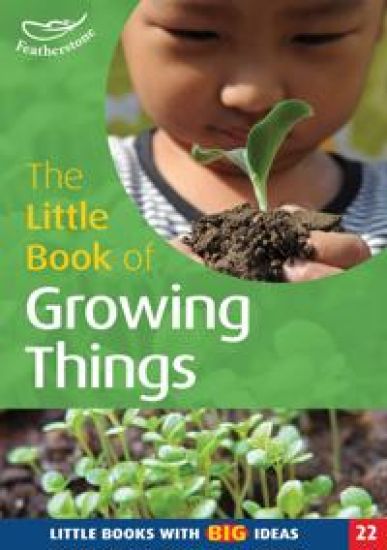
The Little Book of Growing Things

The Little Book of Growing Things

Sally Featherstone

Featherstone Education Ltd
2003
nidottu
You can grow something in every setting! This book helps you to offer the magic of plants and flowers even in the most difficult situations. Seeds, pips, stones and cuttings are all explored, and there are suggestions for hanging baskets, window boxes and growing your own food.
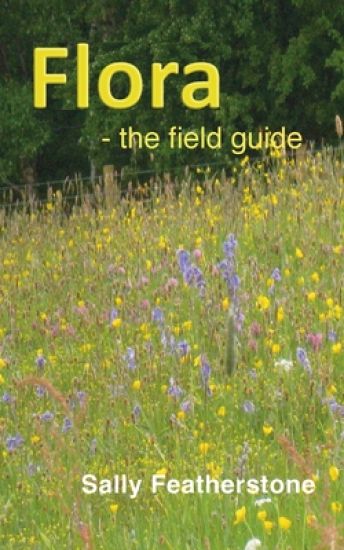
Flora - the field guide

Flora - the field guide

Sally Featherstone

Opitus Books
2020
pokkari
It took 6,000 years to create the species-rich grassland for which the UK is globally famous, but since the nineteen thirties over ninety seven percent of these wildflower meadows and other species-rich grasslands have been lost. Fertilisers, herbicides and insecticides have destroyed many of the flowers, birds, insects and animals that used to enrich our countryside. The companion to this book, 'Flora - ten years among the flowers of an endangered landscape' attempts to capture the essence of the flowers that have decorated the traditional meadows of the West Yorkshire pennines.Upland hay meadows are governed by the weather and the seasons, and the process of natural haymaking, where grass is grown without artificial fertilisers or weed killers, and cut just once a year. This allows a unique range of wild plants to thrive among the many species of grasses that flourish in such conditions. 'Flora - the pocket guide' is a companion to the larger book and is intended to facilitate easy recognition of wild flower species of the upland hay meadows in northern England.
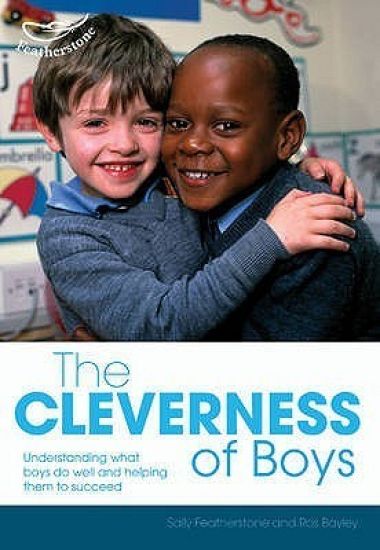
The Cleverness of boys

The Cleverness of boys

Sally Featherstone; Ros Bayley

Featherstone
2010
nidottu
The differences between boys and girls, in development and attitude to learning are well documented, and a formalised early curriculum emphasises these differences. The abilities of most girls to meet goals for learning at an earlier age may result in a tendency to focus on trying to teach boys to learn like girls, instead of recognising their unique gifts and abilities. If we are to help boys to become strong, competent learners from an early age, we must resist the temptation to feel sorry for them. We must dispel the myths about 'under-achievement', challenge stereotypical views of gender, and recognise the unique strengths and abilities of young boys.
50 Fantastic Things to Do with Toddlers

50 Fantastic Things to Do with Toddlers

Sally Featherstone; Phill Featherstone

Featherstone
2010
nidottu
_______________ The 50 Fantastic Ideas series is packed full of fun, original, skills-based activities for Early Years practitioners to use with children aged 0-5. Each activity features step-by-step guidance, a list of resources, and a detailed explanation of the skills children will learn. Creative, simple, and highly effective, this series is a must-have for every Early Years setting. Each page gives step-by-step instructions, tips and plenty of further ideas for children ready for more. They offer practical ideas on differentiation for young babies with special needs as well as tips on what to look and listen for. The experiences suggested in this book will help young children to grow and develop through a range of both planned and informal activities, many of which the reader will already be familiar with. The activities use objects and resources easily available in most homes and settings; they focus on practical activities and purposeful play for individuals, pairs and small groups. They allow babies and children to develop at their own pace, to make unhurried discoveries and allow for much repetition.
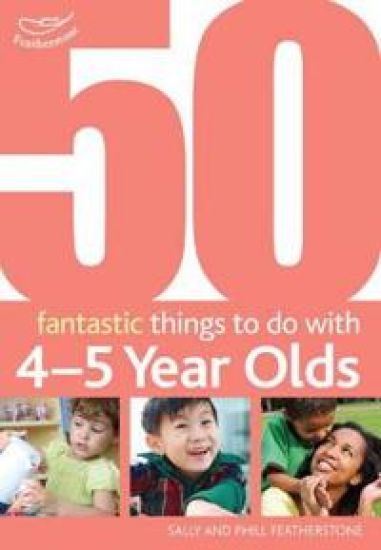
50 Fantastic things to do with 4-5 year olds

50 Fantastic things to do with 4-5 year olds

Sally Featherstone; Phill Featherstone

Featherstone
2010
nidottu
_______________ The 50 Fantastic Ideas series is packed full of fun, original, skills-based activities for Early Years practitioners to use with children aged 0-5. Each activity features step-by-step guidance, a list of resources, and a detailed explanation of the skills children will learn. Creative, simple, and highly effective, this series is a must-have for every Early Years setting. Each page gives step-by-step instructions, tips and plenty of further ideas for children ready for more. The experiences suggested in this book will help young children to grow and develop through a range of both planned and informal activities, many of which the reader will already be familiar with. The activities use objects and resources easily available in most homes and settings; they focus on practical activities and purposeful play for individuals, pairs and small groups. They allow children to develop at their own pace, to make unhurried discoveries and allow for much repetition.
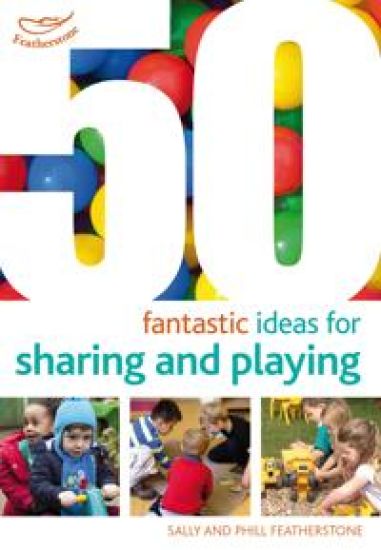
50 Fantastic ideas for Sharing and Playing

50 Fantastic ideas for Sharing and Playing

Sally Featherstone; Phill Featherstone

Featherstone
2013
nidottu
_______________The 50 Fantastic Ideas series is packed full of fun, original, skills-based activities for Early Years practitioners to use with children aged 0-5. Each activity features step-by-step guidance, a list of resources, and a detailed explanation of the skills children will learn. Creative, simple, and highly effective, this series is a must-have for every Early Years setting.50 Fantastic Ideas for Sharing and Playing introduces children to the concept of sharing and supports practitioners with lots of ideas for sharing through play. Sharing is an essential skill for children to learn and this simple text has activity ideas for both indoors and outdoors, helping children to share their talk and thoughts as well as their belongings. For young children and those children who are not used to sharing they need to be introduced to the concept in a meaningful way, which is going to make them willing to share, as they are keen to achieve the ultimate reward. The best way to do this is through play. Children are far more likely to able to apply what they have learnt about sharing through a real play experience than they are to apply the morals of a sharing story to their every day life and ultimately shows children that sharing can help them to achieve their goals.
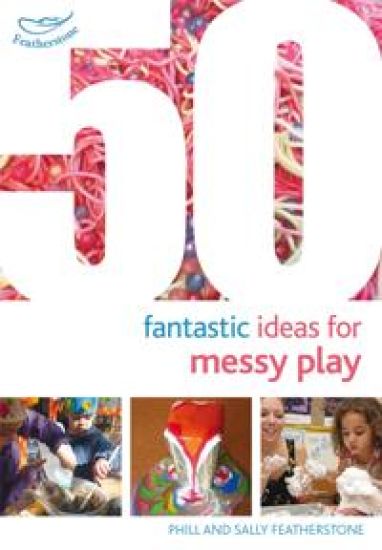
50 Fantastic Ideas for Messy Play

50 Fantastic Ideas for Messy Play

Sally Featherstone; Phill Featherstone

Featherstone
2016
nidottu
The 50 Fantastic Ideas series is packed full of fun, original, skills-based activities for Early Years practitioners to use with children aged 0-5. Each activity features step-by-step guidance, a list of resources, and a detailed explanation of the skills children will learn. Creative, simple, and highly effective, this series is a must-have for every Early Years setting.Messy play is at the heart of the early years curriculum, supporting creativity and imagination, and giving children opportunities to experiment with tactile materials. This book offers 50 ideas for using natural resources, simple household items and recycled resources for low cost inspiration.Practitioners and teachers in the early years are always looking for new ideas for messy and ‘hands-on’ play, and this book will give children many opportunities for exploration and investigation through sensory play.
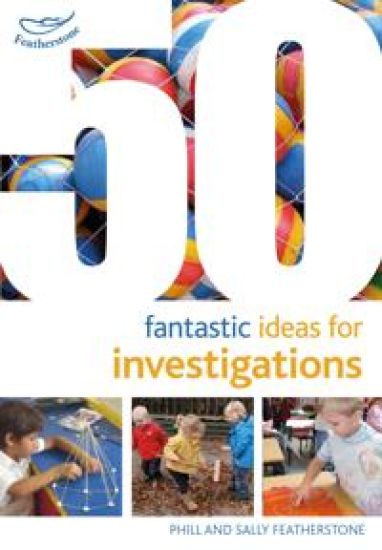
50 Fantastic Ideas for Investigations

50 Fantastic Ideas for Investigations

Sally Featherstone; Phill Featherstone

Featherstone
2016
nidottu
The 50 Fantastic Ideas series is packed full of fun, original, skills-based activities for Early Years practitioners to use with children aged 0-5. Each activity features step-by-step guidance, a list of resources, and a detailed explanation of the skills children will learn. Creative, simple, and highly effective, this series is a must-have for every Early Years setting.Exploring and investigating familiar objects and places gives children real experiences to think, plan and get involved in both indoors and outside. This book gives a variety of ideas for investigations, some of which will extend far beyond the simple initial starting points.Simple observations can turn into early science, technology and creative thinking. Using familiar and easily found objects, the investigations will involve and encourage children to develop these thoughts.
Mark Making

Mark Making

Sally Featherstone; Liz Williams

Featherstone Education Ltd
2006
nidottu
This book gives ideas for introducing and extending mark making activities and experiences for babies and young children. Each page spread contains a range of experiences and a selection of ideas for each of the four developmentas stages of the Birth to Three Matters Framework, and extends this progression into the early steppng stones for the foundation stage. The experiences with mark making materials described in this book encouragedevelopment and learning through active play using all the senses. Enhancing experiences of mark making from babyhood will encourage children's independence and involvement in communication through meaningful marks.