Kirjojen hintavertailu. Mukana 11 244 527 kirjaa ja 12 kauppaa.

Kirjahaku

Etsi kirjoja tekijän nimen, kirjan nimen tai ISBN:n perusteella.

4 kirjaa tekijältä Sam Bass Warner

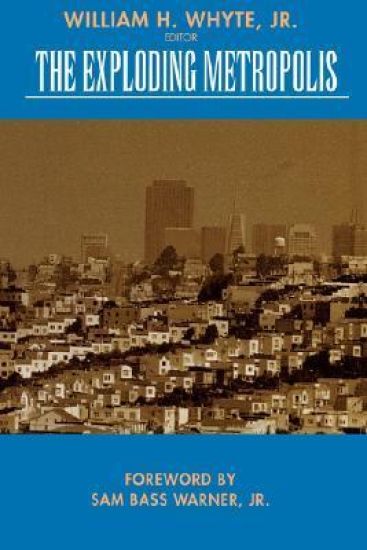
The Exploding Metropolis

The Exploding Metropolis

Sam Bass Warner

University of California Press
1993
pokkari
In "The Exploding Metropolis", first published in 1958, William H. Whyte, Jane Jacobs, Francis Bello, Seymour Freedgood, and Daniel Seligman address the problems of urban decline and suburban sprawl, transportation, city politics, open space, and the character and fabric of cities. A new foreword by Sam Bass Warner, Jr., and preface by Whyte demonstrate the relevance of "The Exploding Metropolis" to urban issues in the 90s.
The Urban Wilderness

The Urban Wilderness

Sam Bass Warner

University of California Press
2018
pokkari
Sam Bass Warner, Jr., examines the historical roots of the major economic and social problems facing the U.S. in the 1990s. He documents the efforts, both failed and successful, to provide for basic human needs in the urban context, especially for decent housing and health care. For this edition, Warner provides a new preface and Charles Tilly a new foreword. This title is part of UC Press's Voices Revived program, which commemorates University of California Press’s mission to seek out and cultivate the brightest minds and give them voice, reach, and impact. Drawing on a backlist dating to 1893, Voices Revived makes high-quality, peer-reviewed scholarship accessible once again using print-on-demand technology. This title was originally published in 1972.
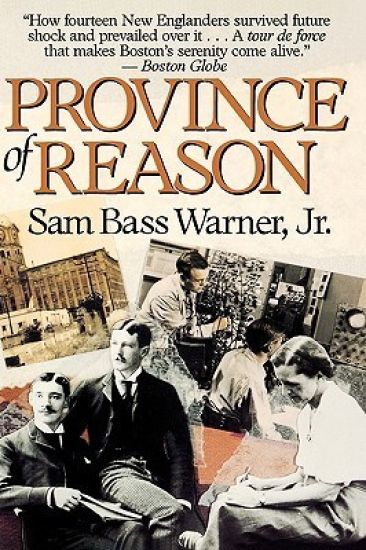
Province of Reason

Province of Reason

Sam Bass Warner

The Belknap Press
1988
nidottu
This book is about some of the largest events of the twentieth century, about international war, economic collapse, new science and technologies, and about the transformation of an old mill town region into a modern American metropolis. But it sees those sweeping changes through the eyes of fourteen particular Bostonians, in an ambitious attempt to understand the disorienting experiences of recent history. These lives span the years from 1850 to 1980, a time when Boston, like all American cities, was being rebuilt according to the continually changing specifications of science, engineering, mass wealth, and big corporations.From Boston Brahmins to self-made millionaires, Sam Warner, Jr., brings us into the diverse worlds of Robert Grant, judge and popular novelist; Mary Antin, mystic and advocate for immigrants; Fred Allen, radio comedian; Charles A. Stone and Edwin S. Webster, electrical engineers; Laura Elizabeth Richards, reformist clubwoman; Emily Greene Balch, economist and winner of the Nobel Peace Prize; William Madison Wood, textile magnate; Fred Erwin Beal, socialist labor organizer; Louise Andrews Kent, suburban housewife and writer; Vannevar Bush, science administrator; Laurence K. Marshall, electronics entrepreneur; James Bryant Conant, university president and educational reformer; and Rachel Carson, renowned science writer.These varied lives have been deftly brought together to illuminate the many contradictory qualifies of today’s metropolitan life: ambitions for education and pervasive social neglect; conspicuous luxuries and endemic poverty; elaborate science and a poisoned environment; far-reaching cooperative networks of strangers and narrow, segregated neighborhoods; the multiplication of women’s roles and the entrapment of women in the home.Individual experience—how one person lived as a child in a family and in a particular place, how people did their work—can bring renewed insight to the conflicts of modern life. This engrossing story speaks from an urge to recapture history through human lives and to examine its meaning as authentic experience. As Alfred Kazin expresses it, we are a nation of men and women who have endeavored to escape traditions, and therefore self-discovery is our preoccupation and delight.
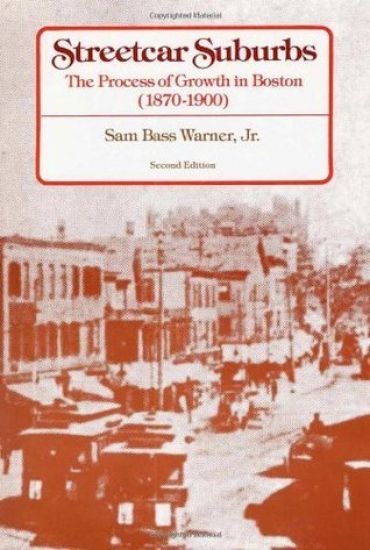
Streetcar Suburbs

Streetcar Suburbs

Sam Bass Warner

Harvard University Press
1978
nidottu
In the last third of the nineteenth century Boston grew from a crowded merchant town, in which nearly everybody walked to work, to the modern divided metropolis. The street railway created this division of the metropolis into an inner city of commerce and slums and an outer city of commuters’ suburbs. Streetcar Suburbs tells who built the new city, and why, and how.Included here is a new Introduction that considers the present suburb/city dichotomy and suggests what we can learn from it to assure a livable city of the future.