Kirjojen hintavertailu. Mukana 11 244 527 kirjaa ja 12 kauppaa.

Kirjahaku

Etsi kirjoja tekijän nimen, kirjan nimen tai ISBN:n perusteella.

10 kirjaa tekijältä Sam Smiles

The Image of Antiquity

The Image of Antiquity

Sam Smiles

Yale University Press
1994
sidottu
How was the remote past of Britain imagined in the eighteenth and nineteenth centuries? What part did the visual arts play in that process? In this book Sam Smiles argues that the ancient Britain of the romantic imagination was a contested world, variously seen as a noble epoch of wisdom and patriotism and as a period of unredeemed savagery and barbarism. The arts, says Smiles, not only reflected these historical debates but actively contributed to them by attempting to bring the archaic past to life.Smiles examines the interplay of antiquarian research, historiography, and the visual arts in constructing an image of Britain from prehistoric times to the arrival of the Saxons. He discusses such topics as the lengthening of prehistoric time in the contemporary view, the status of antiquarian learning, and the celebration of ancestral peoples as an offshoot of the growing sense of national identity. He describes the Celtic revival during the late eighteenth century, with its iconography that fashioned a pictorial repertoire for megaliths, bards, Druids, and the patriotic leaders Boadicea and Caractacus, who fought off the Romans. He also explains why the Victorians downgraded the Celts and replaced them with the Saxons, preferred by Victorians because they were Christians, because they were English (rather than British), and because they had established organized kingdoms. Illustrated with images from a wide range of sources, this is the first major interdisciplinary examination of the British image of antiquity that has a particular significance for art historians and historians alike. Published for the Paul Mellon Centre for Studies in British ArtPublished for the Paul Mellon Center for Studies in British Art
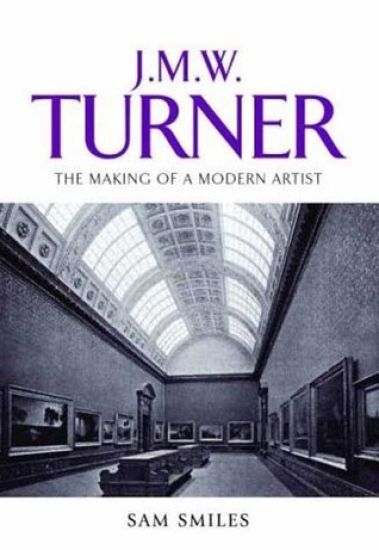
J. M. W. Turner

J. M. W. Turner

Sam Smiles

Manchester University Press
2007
sidottu
Alone of his contemporaries, J.M.W. Turner is commonly held to have prefigured modern painting, as signalled in the existence of The Turner Prize for contemporary art. Our celebration of his achievement is very different to what Victorian critics made of his art. This book shows how Turner was reinvented to become the artist we recognise today.On Turner's death in 1851 he was already known as an adventurous, even baffling, painter. But when the Court of Chancery decreed that the contents of his studio should be given to the nation, another side of his art was revealed that effected a wholescale change in his reputation. This book acts as a guide to the reactions of art writers and curators from the 1850s to the 1960s as they attempted to come to terms with his work. It documents how Turner was interpreted and how his work was displayed in Britain, in Europe and in North America, concentrating on the ways in which his artistic identity was manipulated by art writers, by curators at the Tate and by designers of exhibitions for the British Council and other bodies.
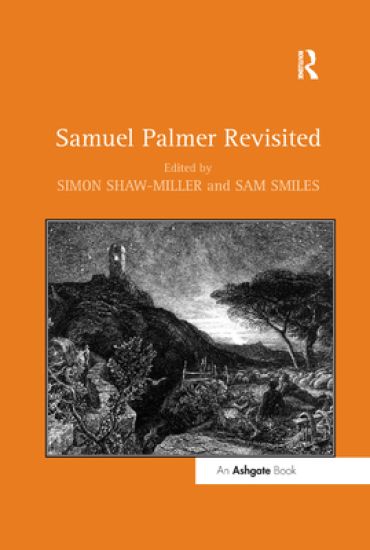
Samuel Palmer Revisited

Samuel Palmer Revisited

Sam Smiles

Ashgate Publishing Limited
2010
sidottu
Varied and deliberately diverse, this group of essays provides a reassessment of the life and work of the popular nineteenth-century artist Samuel Palmer. While scholarly publications have been published recently which reassess Palmer's achievement, those works primarily consider the artist in isolation. This volume examines his work in relation to a wider art world and analyses areas of his life and output that have until now received little attention, reinstating the study of Palmer's work within broader debates about landscape and cultural history. In Samuel Palmer Revisited, the contributors provide a fresh perspective on Palmer's work, its context and its influence.
Samuel Palmer Revisited

Samuel Palmer Revisited

Sam Smiles

Routledge
2019
nidottu
Varied and deliberately diverse, this group of essays provides a reassessment of the life and work of the popular nineteenth-century artist Samuel Palmer. While scholarly publications have been published recently which reassess Palmer's achievement, those works primarily consider the artist in isolation. This volume examines his work in relation to a wider art world and analyses areas of his life and output that have until now received little attention, reinstating the study of Palmer's work within broader debates about landscape and cultural history. In Samuel Palmer Revisited, the contributors provide a fresh perspective on Palmer's work, its context and its influence.
Eye Witness

Eye Witness

Sam Smiles

Routledge
2019
nidottu
This title was first published in 2000: This study examines the ways in which very different visual fields might be said to have shared certain working assumptions concerning the truth of representation. It concentrates particularly on prints.
Eye Witness

Eye Witness

Sam Smiles

Routledge
2017
sidottu
This title was first published in 2000: This study examines the ways in which very different visual fields might be said to have shared certain working assumptions concerning the truth of representation. It concentrates particularly on prints.
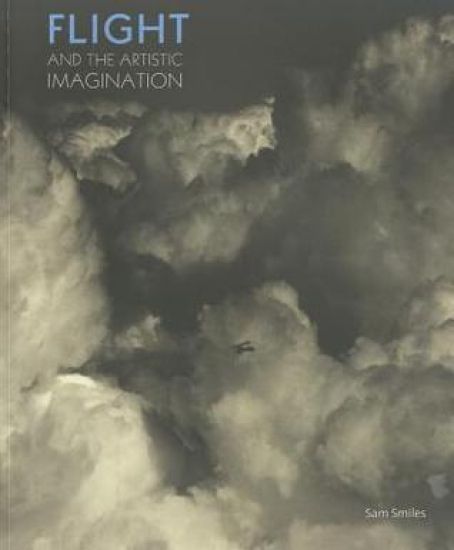
Flight and the Artistic Imagination

Flight and the Artistic Imagination

Sam Smiles

Paul Holberton Publishing
2012
pokkari
Accompanying a major exhibition at Compton Verney, Warwickshire, this book examines the innate human desire to transcend the limitations of physiology and gravity – and to fly. Through an intriguing combination of paintings, sculpture, photographs, drawings, prints and video, including works by Leonardo da Vinci, José Francisco de Goya y Lucientes, Paul Nash, Peter Lanyon and Hiraki Sawa, the reader will be provided with a unique overview of artists' creative responses to flight, from the earliest imaginings to an era in which space travel has allowed us to glimpse other worlds.
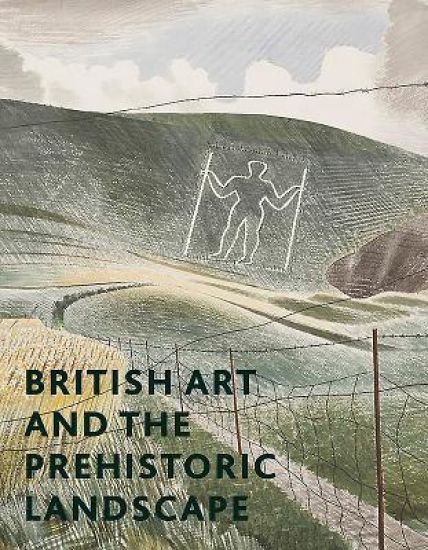
British Art: Ancient Landscapes

British Art: Ancient Landscapes

Sam Smiles

Paul Holberton Publishing
2016
pokkari
are much less well known and have never been grouped together. The author aims to show the significance of antiquity for 20th-century artists, demonstrating how they responded to the observable features of prehistoric Britain and exploited their potential for imaginative re-interpretation. The classic phase of modernist interest in these sites and monuments was the 1930s, but a number of artists working after WWII developed this legacy or were stimulated to explore that landscape in new ways. Indeed, it continues to stimulate responses and the book concludes with an examination of works made within the last few years. An introductory essay looks at the changing artistic approach to British prehistoric remains over the last 250 years, emphasizing the artistic significance of this body of work and examining the very different contexts that brought it into being. The cultural intersections between the prehistoric landscape, its representation by fine artists and the emergence of its most famous sites as familiar locations in public consciousness will also be examined. For example, engraved topographical illustrations from the 18th and 19th centuries and Shell advertising posters from the 20th century will be considered. Artists represented include: JMW Turner, John Constable, Thomas Hearne, William Blake, Samuel Prout, William Geller, Richard Tongue, Thomas Guest, John William Inchbold, George Shepherd, William Andrews Nesfield, Copley Fielding, Yoshijiro (Mokuchu) Urushibara, Alan Sorrell, Edward McKnight Kauffer, Frank Dobson, Paul Nash, Eric Ravilious, John Piper, Henry Moore, Barbara Hepworth, Ithell Colquhoun, Gertrude Hermes, Norman Stevens, Norman Ackroyd, Bill Brandt, Derek Jarman, Richard Long, Joe Tilson, David Inshaw and Jeremy Deller.
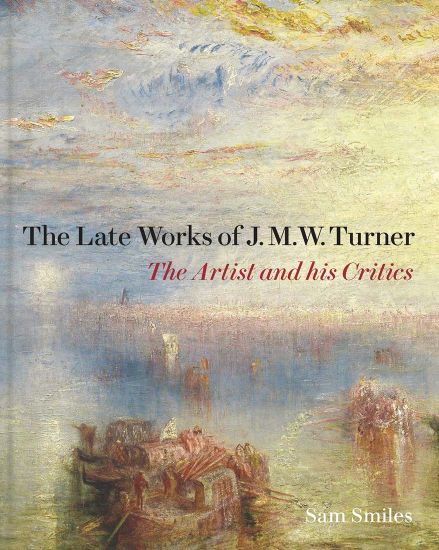
The Late Works of J. M. W. Turner

The Late Works of J. M. W. Turner

Sam Smiles

Paul Mellon Centre for Studies in British Art
2020
sidottu
An exploration of Turner’s final, vital years, including new readings of some of his most significant paintings The paintings and drawings Joseph Mallord William Turner (1775–1851) produced from 1835 to his death are seen by many as his most audacious and compelling work, a highly personal final vision that ranks with the late styles of the greatest artists. In this study, Sam Smiles shows how a richer account of Turner’s achievement can be presented once his historical circumstances are given proper attention. He discusses the style and subject matter of Turner’s later oil paintings and watercolours, his commercial dealings and his relations with patrons; he examines the artist’s critical reception and scrutinises accounts of his physical and mental health to see what can be reliably said about this last phase of creative endeavour. Emerging from this study is an artist who used his final years to consolidate the principles that had motivated him throughout his career.Distributed for the Paul Mellon Centre for Studies in British Art
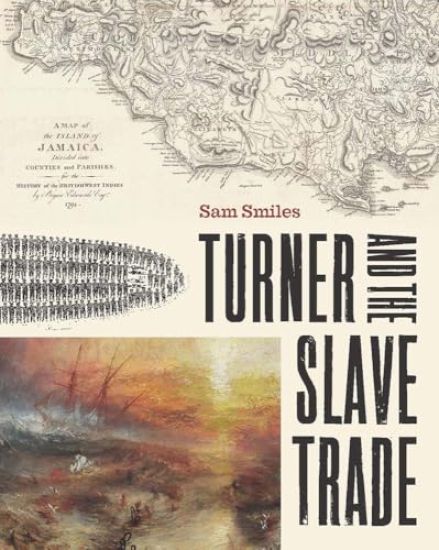
Turner and the Slave Trade

Turner and the Slave Trade

Sam Smiles

Paul Mellon Centre for Studies in British Art
2025
sidottu
Exploring Turner’s evolving response to slavery, from his investment in enslaved labour to his later denunciation in The Slave Ship While J. M. W. Turner’s iconic painting The Slave Ship (1840) is celebrated as a powerful criticism of the transatlantic trade in enslaved people, his personal and professional ties to slavery tell a more nuanced story. This book provides the first detailed analysis of Turner’s evolving responses to slavery over his lifetime, from his financial investment in a Jamaican property worked by enslaved labourers to his later denunciation of the trade in his art. Drawing on extensive archival research, Turner and the Slave Trade traces the artist’s interactions with patrons tied to the plantation economy and examines the impact of abolitionist discourse on his work. Key chapters investigate The Slave Ship, its inspiration, and its contested interpretations while situating Turner within broader debates about art, slavery and shifting public sentiment. Offering a nuanced understanding of how art engages with history’s most urgent issues, this important new study presents Turner as an exceptional yet complex figure, whose legacy is intertwined with the institution of slavery and its eventual abolition. ?Distributed for the Paul Mellon Centre for Studies in British Art