Kirjojen hintavertailu. Mukana 11 717 486 kirjaa ja 12 kauppaa.

Kirjahaku

Etsi kirjoja tekijän nimen, kirjan nimen tai ISBN:n perusteella.

4 kirjaa tekijältä Samantha Baskind

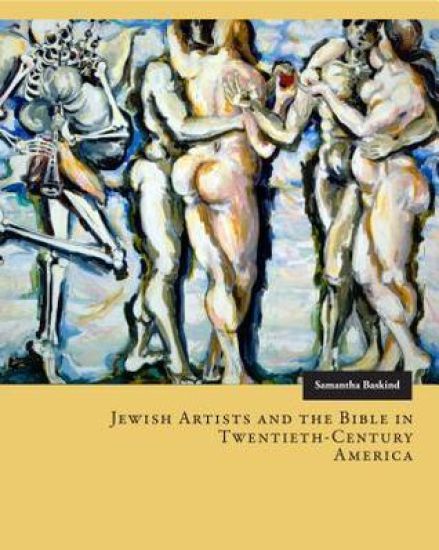
Jewish Artists and the Bible in Twentieth-Century America

Jewish Artists and the Bible in Twentieth-Century America

Samantha Baskind

Pennsylvania State University Press
2014
sidottu
Jack Levine, George Segal, Audrey Flack, Larry Rivers, and R. B. Kitaj have long been considered central artists in the canon of twentieth-century American art: Levine for his biting paintings and prints of social conscience, Segal for his quiet plaster figures evoking the alienation inherent in modern life, Flack for her feminist photorealist canvases, Rivers for his outrageous pop art statements, and Kitaj for his commitment to figuration. Much less known is the fact that at times, all five artists devoted their attention to biblical imagery, in part because of a shared Jewish heritage to which they were inexorably tied.Taking each artist as an extensive case study, Jewish Artists and the Bible in Twentieth-Century America uncovers how these artists and a host of their Jewish contemporaries adopted the Bible in innovative ways. Indeed, as Samantha Baskind demonstrates, by linking the past to the present, Jewish American artists customized the biblical narrative in extraordinary ways to address modern issues such as genocide and the Holocaust, gender inequality, assimilation and the immigrant experience, and the establishment and fate of the modern State of Israel, among many other pertinent concerns.
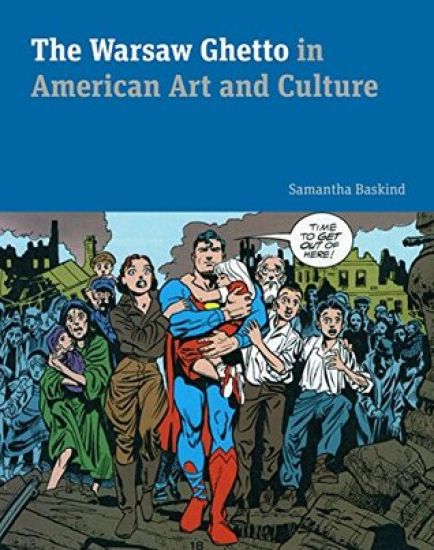
The Warsaw Ghetto in American Art and Culture

The Warsaw Ghetto in American Art and Culture

Samantha Baskind

Pennsylvania State University Press
2018
sidottu
On the eve of Passover, April 19, 1943, Jews in the Warsaw Ghetto staged a now legendary revolt against their Nazi oppressors. Since that day, the deprivation and despair of life in the ghetto and the dramatic uprising of its inhabitants have captured the American cultural imagination. The Warsaw Ghetto in American Art and Culture looks at how this place and its story have been remembered in fine art, film, television, radio, theater, fiction, poetry, and comics.Samantha Baskind explores seventy years’ worth of artistic representations of the ghetto and revolt to understand why they became and remain touchstones in the American mind. Her study includes iconic works such as Leon Uris’s best-selling novel Mila 18, Roman Polanski’s Academy Award–winning film The Pianist, and Rod Serling’s teleplay In the Presence of Mine Enemies, as well as accounts in the American Jewish Yearbook and the New York Times, the art of Samuel Bak and Arthur Szyk, and the poetry of Yala Korwin and Charles Reznikoff. In probing these works, Baskind pursues key questions of Jewish identity: What links artistic representations of the ghetto to the Jewish diaspora? How is art politicized or depoliticized? Why have Americans made such a strong cultural claim on the uprising?Vibrantly illustrated and vividly told, The Warsaw Ghetto in American Art and Culture shows the importance of the ghetto as a site of memory and creative struggle and reveals how this seminal event and locale served as a staging ground for the forging of Jewish American identity.
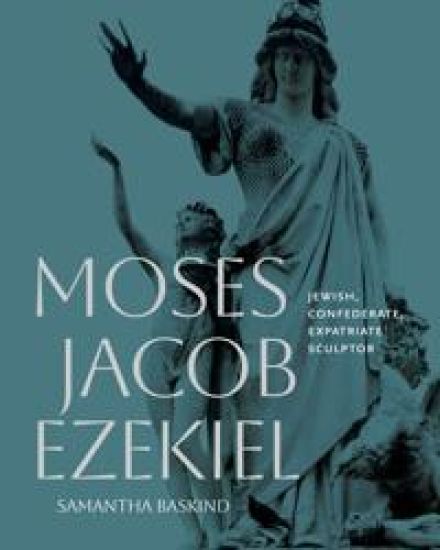
Moses Jacob Ezekiel

Moses Jacob Ezekiel

Samantha Baskind

Pennsylvania State University Press
2025
sidottu
How is it that the prolific nineteenth-century sculptor Moses Jacob Ezekiel is largely forgotten today? Ezekiel was the first renowned Jewish American artist and one of the most popular artist-celebrities of his day. In terms of drama, his life story rivals Alexander Hamilton’s. Ezekiel fought for the Confederacy at the Battle of New Market as a teenager and was friends with Robert E. Lee. After the war, he established himself as an artist in Rome, and he was honored by European royalty and enjoyed friendships with the likes of Franz Liszt, Queen Margherita, and Kaiser Wilhelm II. Ezekiel created well over one hundred sculptures, but his hotly contested Confederate works have since obscured his other major accomplishments.Drawing on a wealth of primary sources, Moses Jacob Ezekiel resurrects this complicated artist’s life and work and presents the fascinating details of how his sculptures were commissioned and made. Samantha Baskind shows how Ezekiel’s sculptures shed light on a range of issues, including the modernization of American Jewry, radical changes in the art world concerning style and patronage, and Civil War commemoration. The conflicting allegiances that motivated Ezekiel’s statues—his conservative Confederate leanings alongside his liberal views on peace, Judaism, and religious liberty—make him an intriguing lens through which to understand nineteenth-century transatlantic culture and history.This compelling book provides a complete picture of Ezekiel’s oeuvre and his renowned home studio, which drew international visitors. It will appeal to scholars of art history, Jewish studies, Civil War studies, and American studies as well as readers interested in public monuments.
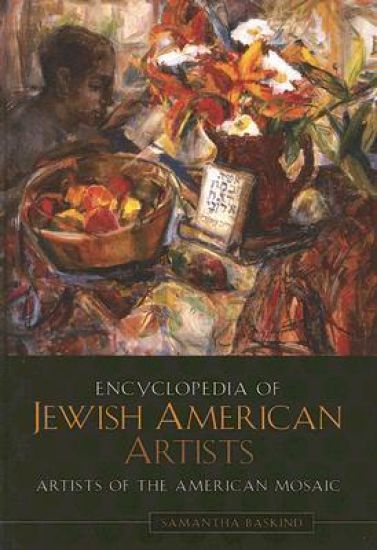
Encyclopedia of Jewish American Artists

Encyclopedia of Jewish American Artists

Samantha Baskind

Greenwood Press
2006
sidottu
Encyclopedia of Jewish American Artists presents over 80 19th- and 20-century Jewish American artists, ranging from the critically neglected Theresa Bernstein, Ruth Gikow, and Jennings Tofel, to the well-known Eva Hesse, Roy Lichtenstein, and Larry Rivers. The subject matter of some of these artists may surprise readers. Adolph Gottlieb designed and supervised the fabrication of a 35-foot wide, four-story high stained glass facade for a synagogue; Louise Nevelson sculpted a Holocaust memorial; and Philip Pearlstein painted a version of Moses with the Tablets of the Law early in his career. Covering painters, sculptors, printmakers, and photographers, as well as artists who engage in newer forms of visual expression such as video, conceptual, and performance art, the book is in part intended to stimulate further scholarship on these artists. When appropriate, entries reveal the influence of the Jewish American encounter on the artists' work along with other factors such as gender and the immigrant experience. In many cases, the artists' own words are employed to flesh out perspectives on their art as well as on their Jewish identity. To that end, the volume contains excerpts from recent interviews conducted by the author with some of the artists, including Judy Chicago, Audrey Flack, Jack Levine, and Sol LeWitt. Illustrations accompanying each artist's entry, some in color, aid this invaluable look at Jewish American art.