Kirjojen hintavertailu. Mukana 11 244 527 kirjaa ja 12 kauppaa.

Kirjahaku

Etsi kirjoja tekijän nimen, kirjan nimen tai ISBN:n perusteella.

8 kirjaa tekijältä Samir Chopra

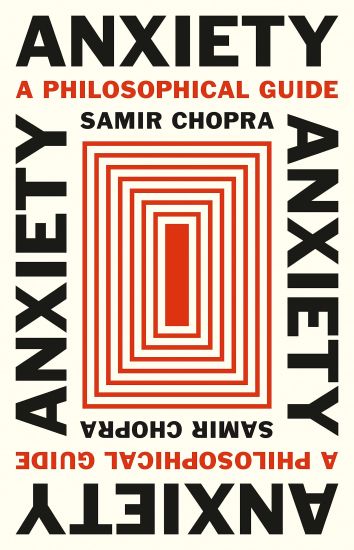
Anxiety

Anxiety

Samir Chopra

PRINCETON UNIVERSITY PRESS
2024
sidottu
How philosophy can teach us to be less anxious about being anxious by understanding that it’s an essential part of being humanToday, anxiety is usually thought of as a pathology, the most diagnosed and medicated of all psychological disorders. But anxiety isn’t always or only a medical condition. Indeed, many philosophers argue that anxiety is a normal, even essential, part of being human, and that coming to terms with this fact is potentially transformative, allowing us to live more meaningful lives by giving us a richer understanding of ourselves. In Anxiety, Samir Chopra explores valuable insights about anxiety offered by ancient and modern philosophies—Buddhism, existentialism, psychoanalysis, and critical theory. Blending memoir and philosophy, he also tells how serious anxiety has affected his own life—and how philosophy has helped him cope with it.Chopra shows that many philosophers—including the Buddha, Kierkegaard, Nietzsche, Freud, and Heidegger—have viewed anxiety as an inevitable human response to existence: to be is to be anxious. Drawing on Karl Marx and Herbert Marcuse, Chopra examines how poverty and other material conditions can make anxiety worse, but he emphasizes that not even the rich can escape it. Nor can the medicated. Inseparable from the human condition, anxiety is indispensable for grasping it. Philosophy may not be able to cure anxiety but, by leading us to greater self-knowledge and self-acceptance, it may be able to make us less anxious about being anxious.Personal, poignant, and hopeful, Anxiety is a book for anyone who is curious about rethinking anxiety and learning why it might be a source not only of suffering but of insight.
Anxiety

Anxiety

Samir Chopra

PRINCETON UNIVERSITY PRESS
2025
pokkari
How philosophy can teach us to be less anxious about being anxious by understanding that it’s an essential part of being humanToday, anxiety is usually thought of as a pathology, the most diagnosed and medicated of all psychological disorders. But anxiety isn’t always or only a medical condition. Indeed, many philosophers argue that anxiety is a normal, even essential, part of being human, and that coming to terms with this fact is potentially transformative, allowing us to live more meaningful lives by giving us a richer understanding of ourselves. In Anxiety, Samir Chopra explores valuable insights about anxiety offered by ancient and modern philosophies—Buddhism, existentialism, psychoanalysis, and critical theory. Blending memoir and philosophy, he also tells how serious anxiety has affected his own life—and how philosophy has helped him cope with it.Chopra shows that many philosophers—including the Buddha, Kierkegaard, Nietzsche, Freud, and Heidegger—have viewed anxiety as an inevitable human response to existence: to be is to be anxious. Drawing on Karl Marx and Herbert Marcuse, Chopra examines how poverty and other material conditions can make anxiety worse, but he emphasizes that not even the rich can escape it. Nor can the medicated. Inseparable from the human condition, anxiety is indispensable for grasping it. Philosophy may not be able to cure anxiety but, by leading us to greater self-knowledge and self-acceptance, it may be able to make us less anxious about being anxious.Personal, poignant, and hopeful, Anxiety is a book for anyone who is curious about rethinking anxiety and learning why it might be a source not only of suffering but of insight.
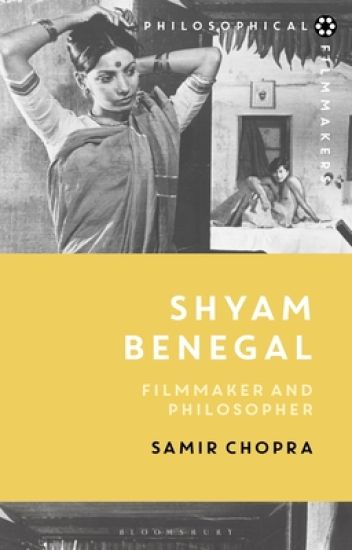
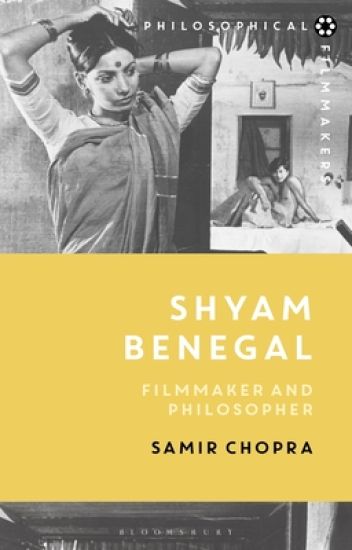
Shyam Benegal

Shyam Benegal

Samir Chopra

Bloomsbury Academic
2021
sidottu
For over forty years, Shyam Benegal has been one the leading forces in Indian cinema. Informed by a rich political and philosophical sensibility and a mastery of the art and craft of filmmaking, Benegal is both of, and not of, Bollywood. As a philosophical filmmaker Benegal brings to life the existential crisis of the downtrodden Indian, the ‘subaltern’ if you will—the serf, the peasant, the woman—and imposes a distinctive philosophical vision on his cinematic reworkings of literary products. To understand Benegal’s cinema is to understand, through his lens, modern India’s continued process of political and social becoming.Focusing on the philosophical depth of Benegal's oueuvre, Samir Chopra identifies three key aspects of his work:- A trio of films which signalled to middle-class India that a revolt was brewing in India’s hinterlands- Two sets of movies which make powerful feminist statements and bring viewers into the lives of Indian women by showcasing strong, interesting female characters- Benegal the master storyteller, who possessed of a unique fabulist style in a reboot of the Indian epic Mahabharata, a Ruskin Bond novel set during the Indian Mutiny of 1857, and a Rashomon-like retelling of an Indian experimental novel, where three perspectives converge to form a unified whole
Shyam Benegal

Shyam Benegal

Samir Chopra

Bloomsbury Academic
2021
nidottu
For over forty years, Shyam Benegal has been one the leading forces in Indian cinema. Informed by a rich political and philosophical sensibility and a mastery of the art and craft of filmmaking, Benegal is both of, and not of, Bollywood. As a philosophical filmmaker Benegal brings to life the existential crisis of the downtrodden Indian, the ‘subaltern’ if you will—the serf, the peasant, the woman—and imposes a distinctive philosophical vision on his cinematic reworkings of literary products. To understand Benegal’s cinema is to understand, through his lens, modern India’s continued process of political and social becoming.Focusing on the philosophical depth of Benegal's oueuvre, Samir Chopra identifies three key aspects of his work:- A trio of films which signalled to middle-class India that a revolt was brewing in India’s hinterlands- Two sets of movies which make powerful feminist statements and bring viewers into the lives of Indian women by showcasing strong, interesting female characters- Benegal the master storyteller, who possessed of a unique fabulist style in a reboot of the Indian epic Mahabharata, a Ruskin Bond novel set during the Indian Mutiny of 1857, and a Rashomon-like retelling of an Indian experimental novel, where three perspectives converge to form a unified whole
The Evolution of a Cricket Fan

The Evolution of a Cricket Fan

Samir Chopra

Temple University Press,U.S.
2021
sidottu
Samir Chopra is an immigrant, a “voluntary exile,” who discovers he can tell the story of his life through cricket, a game that has long been an influence-really, an obsession-for him. In so doing, he reveals how his changing views on the sport mirror his journey of self-discovery. In The Evolution of a Cricket Fan, Chopra is thus able to reflect on his changing perceptions of self, and of the nations and cultures that have shaped his identity, politics, displacement, and fandom. Chopra’s passion for the sport began as a child, when he rooted for Pakistan and against his native India. When he migrated, he became a fan of the Indian team that gave him a sense of home among the various cultures he encountered in North America and Australia. This “shapeshifting” exposes the rift between the Old and the New world, which Chopra acknowledges is “cricket’s greatest modern crisis.” But it also illuminates the identity dilemmas of post-colonial immigrants in the Indian diaspora.Chopra’s thoughts about the sport and its global influence are not those of a player. He provides access to the inner world of the global cricket fan navigating the world that colonial empire wrought and that cricket continues to connect and animate. He observes that the Indian cricket team carries many burdens-not only must they win cricket matches, but their style of play must generate a pride that assuages generations of wounds inflicted by history. And Chopra must navigate where he stands in that history.The Evolution of a Cricket Fan shows Chopra’s own wins and losses as his life takes new directions and his fandom changes allegiances.
The Evolution of a Cricket Fan

The Evolution of a Cricket Fan

Samir Chopra

Temple University Press,U.S.
2021
nidottu
Samir Chopra is an immigrant, a “voluntary exile,” who discovers he can tell the story of his life through cricket, a game that has long been an influence-really, an obsession-for him. In so doing, he reveals how his changing views on the sport mirror his journey of self-discovery. In The Evolution of a Cricket Fan, Chopra is thus able to reflect on his changing perceptions of self, and of the nations and cultures that have shaped his identity, politics, displacement, and fandom. Chopra’s passion for the sport began as a child, when he rooted for Pakistan and against his native India. When he migrated, he became a fan of the Indian team that gave him a sense of home among the various cultures he encountered in North America and Australia. This “shapeshifting” exposes the rift between the Old and the New world, which Chopra acknowledges is “cricket’s greatest modern crisis.” But it also illuminates the identity dilemmas of post-colonial immigrants in the Indian diaspora.Chopra’s thoughts about the sport and its global influence are not those of a player. He provides access to the inner world of the global cricket fan navigating the world that colonial empire wrought and that cricket continues to connect and animate. He observes that the Indian cricket team carries many burdens-not only must they win cricket matches, but their style of play must generate a pride that assuages generations of wounds inflicted by history. And Chopra must navigate where he stands in that history.The Evolution of a Cricket Fan shows Chopra’s own wins and losses as his life takes new directions and his fandom changes allegiances.