Kirjojen hintavertailu. Mukana 11 342 296 kirjaa ja 12 kauppaa.

Kirjahaku

Etsi kirjoja tekijän nimen, kirjan nimen tai ISBN:n perusteella.

4 kirjaa tekijältä Samuel A. Culbert

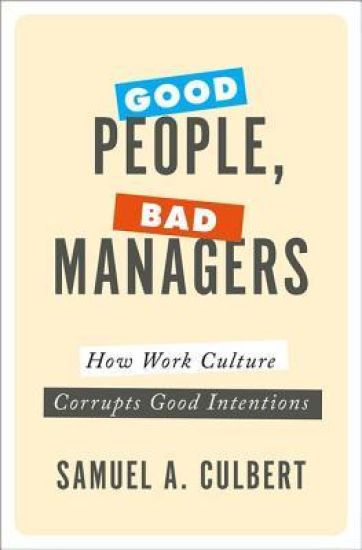
Good People, Bad Managers

Good People, Bad Managers

Samuel A. Culbert

Oxford University Press Inc
2017
sidottu
What's worse than a bad manager who everybody knows is bad? A bad manager who is well-intentioned and considered to be good. Yet these well-intentioned bad managers make up the bulk of management today. How did that happen? How did so many of today's managers end up with a self-preservation mindset that doesn't always translate to a productive and mission-oriented environment? How did so many good people become wedded to a work culture that saps morale, well-being and performance at both the individual and organizational levels? an the well-intentioned doling it out realize... and even In Good People, Bad Managers: How Work Culture Corrupts Good Intentions, author Samuel A. Culbert sheds a light on the bad habits that are routinely followed by these well-intended managers. Managers need to understand the causes of their misguided practices. They need to become more aware of the damage they inflict, and the hollowness of the rationales they use to justify what they do. Company leaders, CEOs, and top-tier managers must become aware of how they have gone astray as a first step in implementing the truly beneficial management mentality that their companies, their managers and their employees require to succeed.
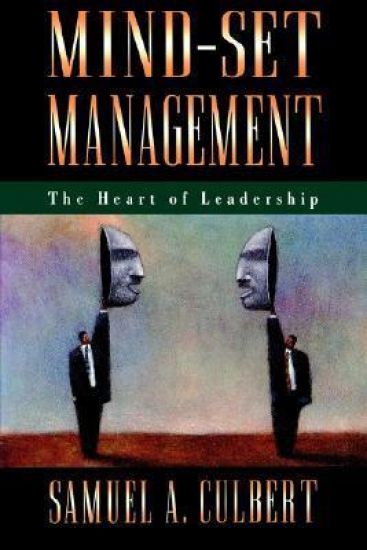
Mind-Set Management

Mind-Set Management

Samuel A. Culbert

Oxford University Press Inc
1996
sidottu
You can follow any business guru you want, be it Peter Drucker or Tom Peters. You can adopt any new management concept, from reengineering to `empowering people'. But Samuel A. Culbert has one caveat: no matter what managerial `religion' you follow - and there are many sound ones out there - before you can lead, manage, or team up effectively, you must comprehend the mind-sets of the people with whom you deal. In Mind-Set Management, Culbert provides a model for thinking about other people - about their self-interested motives and about their biased views of work events - as he shows managers at all levels how to use psychology instead of manipulation to give more productive advice. The essence of managing, says Culbert, is `staging the conditions for others to be effective', which today entails giving advice and feedback, not directives. This is particularly true with today's `empowering' management styles. But as most managers know all too well, advice is often resisted, resented, or ignored. The problem, Culbert contends, is that managers don't have the other person in focus, that when most managers formulate advice, they think they are attuned to the other person, but in fact the person they have listened to most is themselves. Mind-Set Management will help you focus on the person you want to advise, explaining what you need to learn and to know prior to giving advice and feedback. It will prompt you to ask yourself (and will help you answer) such questions as: Why do people insist on seeing events with their own particular biases and distortions? Why do others resist my best ideas and advice for how they can perform more effectively? Why can't I get them to change how they think? Why do people have so much difficulty putting internal politics aside? What's needed for people to trust one another and listen to advice? Why are some people blind to the obvious logic behind the feedback and advice they receive? Culbert has packed the book with vivid case illustrations and stories that people at every level, from CEOs through staff, will identify with, weaving the concepts and stories together to present evidence that makes the lessons compelling and personal. With these lessons, managers at all levels will view management as a psychological art. You will be better able to see where the other person's interests lie and how they view the corporation and the task at hand, and you will be able to give great advice, advice that will be followed because it serves the interests of the person who receives it even as it advances the company's goals. Today there are many new ideas about how to manage more effectively, but without the psychological component that Samuel Culbert provides in Mind-Set Management, these hot new concepts won't work any better than the old ones did. Thus this is an important, groundbreaking work. Indeed, Warren Bennis, in the Foreword, calls it `one of the lasting contributions of this decade to our understanding of corporations, the psychology of people who work in them, and perhaps most of all, a contribution to understanding ourselves."
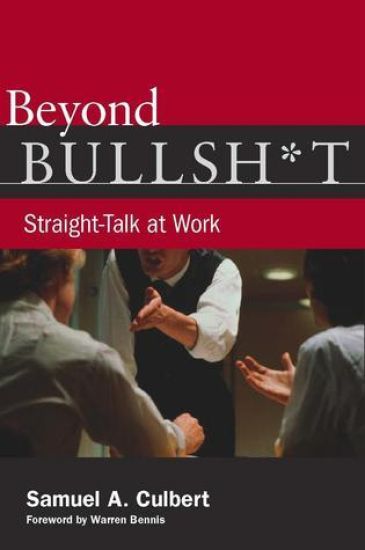
Beyond Bullsh*T

Beyond Bullsh*T

Samuel A. Culbert

Stanford University Press
2008
sidottu
Straight-talk at work! Grumblings in offices everywhere suggest that we crave more, but don't get often enough of it. Beyond Bullsh*t reveals the dynamics of bullsh*t and why it has become the corporate etiquette of choice. It also explains how telling it straight contributes to personal well-being and business success. After decades of research and consulting, Samuel A. Culbert is convinced that straight-talk at work is possible. But it requires more than luck and willing people. Straight-talk is the product of thoughtful, caring relationships, built upon trust and commitment. There's no greater contribution to operational effectiveness and success than conversations in which people with conflicting viewpoints discuss their differences forthrightly. Readers will be engaged and delighted as the text demystifies the obstacles to getting beyond bullsh*t and guides them in developing straight-talk relationships. Further details are available at www.straighttalkatwork.com.
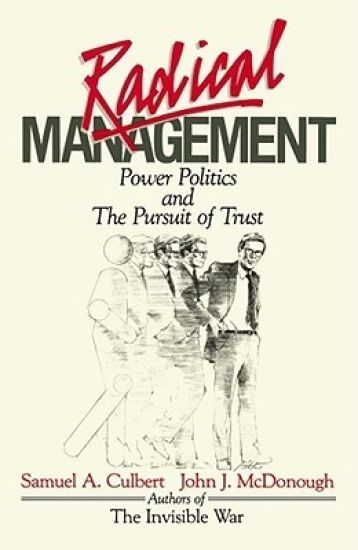
Radical Management

Radical Management

Samuel A. Culbert

The Free Press
2007
pokkari
When newspapers across the country reported Capital Cities Communications' stunningly successful bid for ABC, The New York Times asked a senior official at another of Capital Cities' recent acquisitions, Institutional Investor, if it was true that Capital Cities left management in place when it took over a firm. "I was a little skeptical when the company was bought," he conceded. "But they create a sense of trust. It's a wonderful motivational device."This concept of trust as a key to organizational effectiveness lies at the heart of Radical Management, Samuel A. Culbert and John J. McDonough's challenging new book. For years, the authors point out, business has been enslaved to a "rational" model of management that asks only that executives meet narrow organizational goals, regardless of the needs and views of those they work with. But while this bottom-line mentality can produce satisfactory results on the balance sheet, in the workplace its effects are often disastrous -- breeding misunderstandings, hidden resentments, infighting, and even costly power struggles.Arguing that what many executives understand about the complex political forces at work in an organization "wouldn't fill the proverbial thimble," Culbert and McDonough propose a radical model of management: one that gives managers the insight they need into organizational politics to allow them to improve communication and share power. Generously illustrated with revealing case vignettes drawn from their extensive consulting experience, the authors' framework shows accomplished and prospective managers alike how to recognize and respect the inevitably differing talents, perspectives, and expectations that associates bring to their jobs. It reveals the enormously subjective influences at work in any organization and why they must be openly acknowledged and accommodated if managers are to promote cooperation and assure productivity.Radical Management decodes and demystifies the vast majority of organizational conflicts in which executives at all levels so often become embroiled. Adding a human dimension missing from the "rational" model's hard-nosed, coldly analytic approach to management, Culbert and McDonough demonstrate how to foster the trust that generates teamwork, cements support for corporate plans, and -- yes -- boosts profits as well. Above all, they prove that trusting relationships in business make for more than good office morale: They're nothing less than "the most efficient management tool ever invented."