Kirjojen hintavertailu. Mukana 11 699 587 kirjaa ja 12 kauppaa.

Kirjahaku

Etsi kirjoja tekijän nimen, kirjan nimen tai ISBN:n perusteella.

13 kirjaa tekijältä Samuel A. Matz

Chemistry and Technology of Cereals as Food and Feed

Chemistry and Technology of Cereals as Food and Feed

Samuel A. Matz

Van Nostrand Reinhold Inc.,U.S.
1991
sidottu
This is a completely revised and updated edition of the comprehensive and widely used survey of cereal technology. The first section describes the botany, classification, structure, composition, nutritional importantance and uses of wheat, corn, oats, rye, sorghum, rice and barley, as well as six other grains. The book also details the latest methods of producing, cleaning, and storing these grains. The second section of the book offers current information on the technological and engineering principles of feed milling, flour milling, baking, malting, brewing, manufacturing breakfast cereals, snack food production, wet milling (starch and oil production from grains), rice processing, and other upgrading procedures applied to cereal grains. This section also explains the value and utilization of by-products and examines many rarely discussed processing methods. In addition, the book provides reviews of current knowledge on the dietary importance of cereal proteins, lipids, fibre, vitamins, minerals, and anti-nutrient factors, as well as the effects of processing methods on these materials. This book should be of interest to those involved in agriculture, meat production and food science/technology.
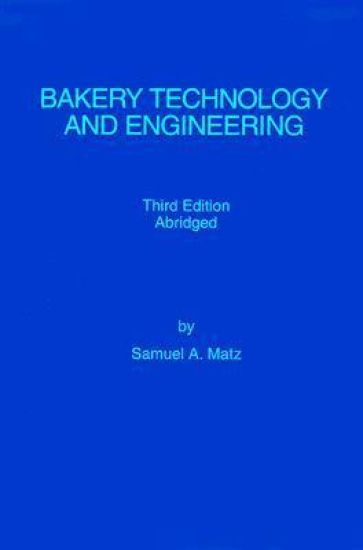
Bakery Technology and Engineering

Bakery Technology and Engineering

Samuel A. Matz

Van Nostrand Reinhold Inc.,U.S.
1991
sidottu
This third edition is completely revised and updated to address the new advances in bakery technology and engineering. The book begins with a lengthy discussion of the materials of baking, as the properties of ingredients are inextricably linked with the processing responses of doughs and batters and with the quality of the finished products. It discusses formulae and procedures, equipment and organizing, and managing technical functions. New ingredients, such as fat and sugar substitutes, are included along with the equipment for new technologies, and quality control/quality assessment.
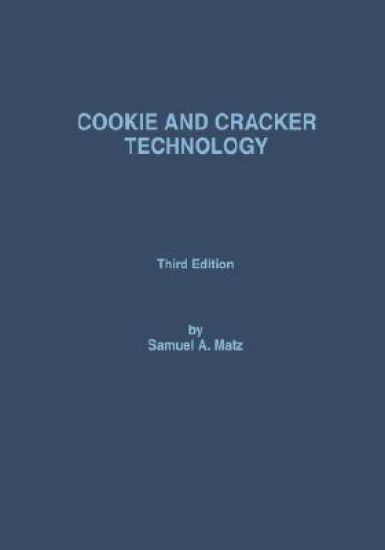
Cookie and Cracker Technology

Cookie and Cracker Technology

Samuel A. Matz

Van Nostrand Reinhold Inc.,U.S.
1993
sidottu
This edition is a practical, how-to book, that discusses ingredients, mixtures, methods, equipment and their functions, machinery and managing technical functions. It examines the ingredients used in cookies and crackers and how they function in doughs, batters, and finished products. It also discusses typical formulas and how variations affect finished product qualities. Other areas covered include product development, quality assurance and the legal responsibilities of technical managers.
Snack Food Technology

Snack Food Technology

Samuel A. Matz

Springer
2012
nidottu
This book fills a need for a technological guide in a field that has experi­ enced an almost explosive increase in the last two decades. No other book available to food scientists provides detailed coverage of the ingredients, processes, products, and equipment of nearly every type of snack food made today. Since publication of the First Edition, many changes have occurred in the snack industry, making necessary a thorough revision of all chapters. The text, illustrations, and bibliographies have all been brought up-to-date. My goal has been to provide an accurate and reasona­ bly detailed description of every major snack processing method and prod­ uct current in the United States. If any reader believes I have omitted an important topic, I would be glad to learn ofit, in the hope that there will be a Third Edition in which I can incorporate the suggested additions. One of the main purposes of this volume is to provide a source for answers to problems that the technologist encounters in the course of his or her daily work. Extensive bibliographies, in which the emphasis is on recent publications (extending into 1983), should permit the reader to resolve more complex or new questions. With these bibliographies as guides, the food technologist can delve as deeply as he or she wishes into specialized aspects ofthe subject, while at the same time the reader who is interested in the broad overall picture will not be distracted by excess detail.