Kirjahaku
Etsi kirjoja tekijän nimen, kirjan nimen tai ISBN:n perusteella.
29 kirjaa tekijältä Samuel Alexander

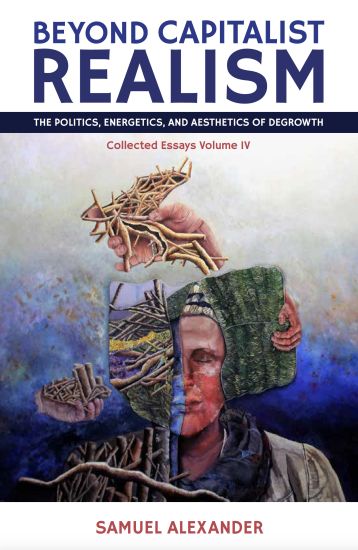
This collection of essays presents an aesthetics of existence called the 'Will to Art'. Readers will be invited to consider the possibility that the universe is fundamentally an aesthetic phenomenon, understood as a process of creative evolution that is moving, albeit agonistically, towards ever-increasing opportunities for artistic expression and aesthetic experience. Art is defined broadly and openly as the meaningful and pleasurable expression of creative labour, and human experience can be considered 'aesthetic' if it flows from the sensuous engagement with art or nature. To speak of the Will to Art is to interpret the world as having an underlying tendency toward artistic and aesthetic flourishing, even though the outcome of this evolutionary process, due to its indeterminate nature, is unknowable in advance.Two premises guide the development of this vision: first, that material sufficiency is all that is needed for human beings to live rich, meaningful, and artful lives; and second, that material sufficiency is all that is possible, over the long term, on a finite planet in an age of environmental limits. Based on those premises, Samuel Alexander proposes and defends a conception of ecological civilisation which he calls SMPLCTY. This is not a utopian prediction about what is a likely future for our species. Rather, it is an orienting vision, one in which individuals and communities thrive in humble conditions of material sufficiency but cultural richness, meaningfully engaged in pleasurable and creative labour in collaboration with others. According to this vision, life itself would become an aesthetic project, a never-ending process of creative activity, sensuous experience, aesthetic engagement, and spiritual exploration. Such a society would be structured with the aim of sustainably providing opportunities for all people to find meaning and pleasure through creative labour and aesthetic experience.

This collection of essays presents an aesthetics of existence called the 'Will to Art'. Readers will be invited to consider the possibility that the universe is fundamentally an aesthetic phenomenon, understood as a process of creative evolution that is moving, albeit agonistically, towards ever-increasing opportunities for artistic expression and aesthetic experience. Art is defined broadly and openly as the meaningful and pleasurable expression of creative labour, and human experience can be considered 'aesthetic' if it flows from the sensuous engagement with art or nature. To speak of the Will to Art is to interpret the world as having an underlying tendency toward artistic and aesthetic flourishing, even though the outcome of this evolutionary process, due to its indeterminate nature, is unknowable in advance.Two premises guide the development of this vision: first, that material sufficiency is all that is needed for human beings to live rich, meaningful, and artful lives; and second, that material sufficiency is all that is possible, over the long term, on a finite planet in an age of environmental limits. Based on those premises, Samuel Alexander proposes and defends a conception of ecological civilisation which he calls SMPLCTY. This is not a utopian prediction about what is a likely future for our species. Rather, it is an orienting vision, one in which individuals and communities thrive in humble conditions of material sufficiency but cultural richness, meaningfully engaged in pleasurable and creative labour in collaboration with others. According to this vision, life itself would become an aesthetic project, a never-ending process of creative activity, sensuous experience, aesthetic engagement, and spiritual exploration. Such a society would be structured with the aim of sustainably providing opportunities for all people to find meaning and pleasure through creative labour and aesthetic experience.
Calling for a sufficiency-based culture of 'simple living' to underpin a macroeconomic framework of 'degrowth', Samuel Alexander draws on a remarkable breadth of economic, political, ecological, and sociological literature to explore the radical implications of living in an age of limits. Written with clarity, rigour, and insight, this book will both challenge and inspire. 'Prosperous Descent is a creative and important contribution to a movement with surprising momentum, one that challenges the very notions of progress and wellbeing on which our societies are constructed. It is a radical challenge in the best sense of the term. We can all learn a great deal from Samuel Alexander, both about our societies and about how to live our lives.' - Clive Hamilton, author of Affluenza: When Too Much is Never Enough and Growth Fetish'This timely book reminds us that the good life is the simple life; a life within limits. It is a truly interdisciplinary volume, covering topics from the macroeconomics of a planned degrowth, to the ecology of planetary limits, to the sociology of voluntary simplifiers. A must read.' - Giorgos Kallis, co-editor of Degrowth: A Vocabulary for a New Era'Consumer capitalist society is characterised by a deep feeling of anxiety and isolation. It persists by inculcating a deep sense of disempowerment and diluting our radical imagination. The strength of this book lies in its ability to delicately weave together not only the theory but also the practice of simplicity. It carries with it the moral weight of generations of people who have demonstrated a different way of living and the shallowness of consumer society.'- Peter D. Burdon, author of Earth Jurisprudence and co-editor of Wild Law: In Practice
In this second volume of collected essays, Samuel Alexander develops the provocative ideas contained in "Prosperous Descent: Crisis as Opportunity in an Age of Limits". Industrial civilisation promotes mistaken ideas of freedom and wellbeing, while placing unsupportable burdens on the biosphere. This being so, Alexander argues that the richest nations need to transcend consumer culture and initiate a 'degrowth' process of planned economic contraction. To achieve this, he shows that we need to build a post-capitalist politics and economics from the grassroots up, restructuring our societies to promote far 'simpler' conceptions of the good life, based on notions of sufficiency, frugality, appropriate technology, and local economy. --------'With the vision of a prophet, the eloquence of a poet, the forensic detail of the scholar, and the engaged passion of an activist, Samuel Alexander offers critique, analysis and strategy for a post-growth society beyond carbon-fuelled, consumer capitalism. It is a truism that 'where there is no vision the people perish'. This book in its comprehensive scope presents a challenging, provocative and absolutely necessary vision, synthesising theoretical and practical considerations related to understanding the current crisis of 'the human condition', and offering informed suggestions as to what comes after the unsustainable growth economy. They say knowledge is power, if so, arm yourself by reading and (re)acting to and on this book, notes from the 'front line' of our crisis-ridden but self-transforming present.'- John Barry, author of The Politics of Actually Existing Unsustainability 'Impressively researched, eloquently argued, and deeply engaging, Samuel Alexander's work sits at the forefront of the degrowth movement. More than just a powerful critique of the capitalist growth economy, this book highlights the promise - and the necessity - of localised, ecological economies as the only means of adequately confronting the crises that are converging upon us. At times his vision of the future may be challenging, but it is never despairing, and ultimately the reader comes away uplifted and inspired. Alexander convinces us that less can indeed be more.'- Helena Norberg-Hodge, author of Ancient Futures and producer of The Economics of Happiness
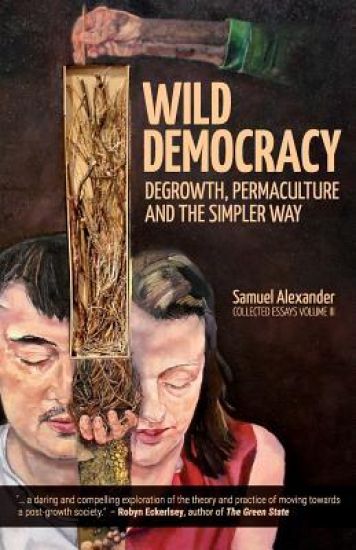
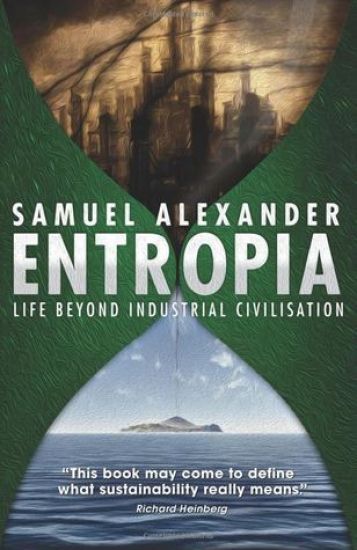
'Wild Democracy is a daring and compelling collection of essays that explores the theory and practice of moving towards an equitable, post-growth society, and defends an alternative, post-consumerist account of human flourishing. Thoreau believed that 'in wildness lies the preservation of the world' and Samuel Alexander has shown us how we do this in our backyards, our local communities and our everyday practices. He has done Thoreau proud.'- Robyn Eckersley, author of 'The Green State: Rethinking Democracy and Sovereignty' 'Building bridges between different schools of thought, Samuel Alexander outlines an alternative to the nightmare of a growth society racing towards collapse, articulating various post-capitalist approaches, between anarcho-marxism, wild democracy and spirituality. In doing so this book attempts to overcome the old divide between reformism and revolution.'- Serge Latouche, author of 'Farewell to Growth' 'Wild Democracy: Degrowth, Permaculture, and the Simpler Way' is Samuel Alexander's third volume of collected essays, following the publication of 'Prosperous Descent: Crisis as Opportunity in an Age of Limits' (2015) and 'Sufficiency Economy: Enough, for Everyone, Forever' (2015). He is also author of 'Deface the Currency: The Lost Dialogues of Diogenes' (2016), 'Just Enough is Plenty: Thoreau's Alternative Economics' (2016), and 'Entropia: Life Beyond Industrial Civilisation' (2013), as well as being editor of 'Voluntary Simplicity: The Poetic Alternative to Consumer Culture' (2009) and co-editor of 'Simple Living in History: Pioneers of the Deep Future' (2014) and 'Words for Awakening: Voices of Inspired Revolt' (2017). For more details see: www.samuelalexander.info
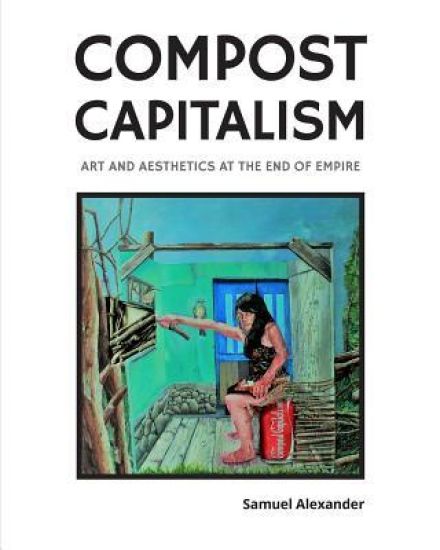
What role might art need to play in the transition beyond consumer capitalism? Can 'culture jamming' contribute to the necessary revolution in consciousness? And might art be able to provoke social change in ways that rational argument and scientific evidence cannot? In this stimulating new book, "Compost Capitalism: Art and Aesthetics at the End of Empire," degrowth scholar Samuel Alexander explores these questions by curating a stunning array of 'culture jamming' images from a range of counter-cultural artists. By turns provocative and inspiring, the reader is exposed to art and images that challenge the status quo and expand the horizons of what alternatives are possible. This book is an abridged, image-based version of "Art Against Empire: Toward an Aesthetics of Degrowth," in which Samuel Alexander advances the degrowth movement by establishing the theoretical foundations of degrowth aesthetics.
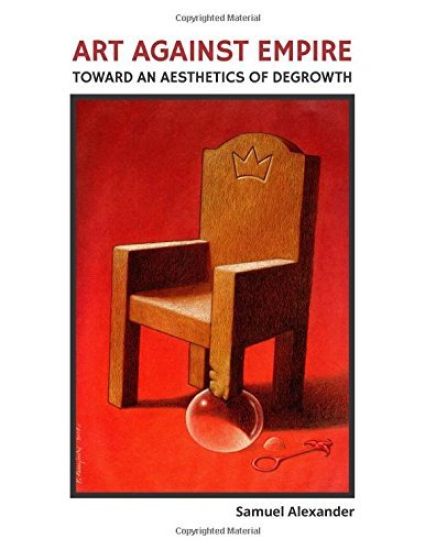
What role might art need to play in the transition beyond consumer capitalism? Can 'culture jamming' contribute to the necessary revolution in consciousness? And might art be able to provoke social change in ways that rational argument and scientific evidence cannot? In this stimulating new book, "Art Against Empire: Toward an Aesthetics of Degrowth", degrowth scholar Samuel Alexander explores these questions, both in theory and practice. He begins with a novel theoretical defence of art and aesthetic interventions as activity that is necessary to effective social and political activism, and concludes by presenting over one hundred 'culture jamming' artworks from a range of contributors that challenge the status quo and expand the horizons of what alternatives are possible.

Dario suffers from anxiety and depression mixed with a toxic desire to please his parents. Although an overachiever in all things, he can't get the approval he craves; never believing he could be good enough for them. His friends try to help him realise he's okay as is, but nothing they do works. Eventually, something beyond his control forces Dario to the conclusion that all he'd worked for no longer mattered. Will the damage of Dario's past stop him from full acceptance or will he push through to find the man he buried.

What if these hands I have aren't mineThese lips, these eyes, my arrival to lifeIf I didn't write with my right but instead with my leftIf the secrets I hold aren't mine to be keptWhat if my life belonged to someone elseGREY is a collection of poems paired with semi-nude photography dealing with the darker times in life. How we sometimes doubt ourselves, question our own existence, and even create fantasy worlds to escape from the depressive states we find ourselves in.
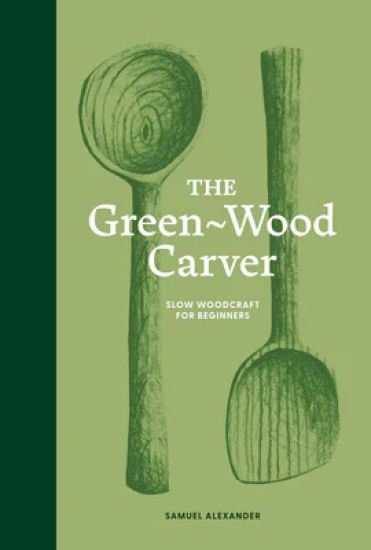
Discover the absorbing art of whittling. An immersive and peaceful craft that rewards calm focus with beautiful objects. Samuel Alexander quickly built a strong following sharing his own compelling story about the healing power of carving. Now, in his first book he introduces this calm and gentle craft. Teaching beginners how to responsibly source fresh green wood, master the basic techniques for using a knife and sharing a range of step-by-step projects to work through at your own pace, The Green-Wood Carver is an important reminder of the therapeutic benefits of exploring a new craft. After learning the basics of how to get started, you can work through projects as varied as spoons, vases, simple buttons and household hooks. Working with the grain, you'll create tactile curves and textures, slowly revealing the character of each piece as you whittle. With Samuel's thoughtful reflections on the joy of small movements and personal creativity charmingly woven throughout this how-to guide, his aim is not only to teach you how to create a beautiful object but to find the beauty in the process itself.