Kirjojen hintavertailu. Mukana 11 244 527 kirjaa ja 12 kauppaa.

Kirjahaku

Etsi kirjoja tekijän nimen, kirjan nimen tai ISBN:n perusteella.

129 kirjaa tekijältä Samuel Beckett

The Letters of Samuel Beckett: Volume 1, 1929–1940

The Letters of Samuel Beckett: Volume 1, 1929–1940

Samuel Beckett

Cambridge University Press
2009
sidottu
The letters written by Samuel Beckett between 1929 and 1940 provide a vivid and personal view of Western Europe in the 1930s, and mark the gradual emergence of Beckett's unique voice and sensibility. The Cambridge University Press edition of The Letters of Samuel Beckett offers for the first time a comprehensive range of letters of one of the greatest literary figures of the twentieth century. Selected for their bearing on his work from over 15,000 extant letters, the letters published in this four-volume edition encompass sixty years of Beckett's writing life (1929–1989), and include letters to friends, painters and musicians, as well as to students, publishers, translators, and colleagues in the world of literature and theatre. For anyone interested in twentieth-century literature and theatre this edition is essential reading, offering not only a record of Beckett's achievements but a powerful literary experience in itself.

The Letters of Samuel Beckett: Volume 2, 1941–1956

The Letters of Samuel Beckett: Volume 2, 1941–1956

Samuel Beckett

Cambridge University Press
2011
sidottu
This second volume of The Letters of Samuel Beckett opens with the war years, when it was often impossible or too dangerous to correspond. The surge of letters beginning in 1945, and their variety, are matched by the outpouring and the range of Beckett's published work. Primarily written in French and later translated by the author, the work includes stories, a series of novels (Molloy, Malone meurt and L'Innommable), essays and plays – most notably En attendant Godot. The letters chronicle a passionately committed but little known writer evolving into a figure of international reputation, and his response to such fame. The volume provides detailed introductions which discuss Beckett's situation during the war and his crucial move into the French language, as well as translations of the letters, explanatory notes, year-by-year chronologies, profiles of correspondents and other contextual information.
The Letters of Samuel Beckett: Volume 3, 1957–1965

The Letters of Samuel Beckett: Volume 3, 1957–1965

Samuel Beckett

Cambridge University Press
2014
sidottu
This third volume of The Letters of Samuel Beckett focuses on the years when Beckett is striving to find a balance between the demands put upon him by his growing international fame, and his need for the peace and silence from which new writing might emerge. This is the period in which Beckett launches into work for radio, film and, later, into television. It also marks his return to writing fiction, with his first major piece for a decade, Comment c'est (How It Is). Where hitherto he has been reticent about the writing process, now he devotes letter after letter to describing and explaining his work in progress. For the first time Beckett has a woman as his major correspondent: a relationship shown in his intense and abundant letters to Barbara Bray. The volume also provides critical introductions, chronologies, explanatory notes and profiles of Beckett's main correspondents.
The Letters of Samuel Beckett: Volume 4, 1966–1989

The Letters of Samuel Beckett: Volume 4, 1966–1989

Samuel Beckett

Cambridge University Press
2016
sidottu
This fourth and final volume, which completes the Cambridge edition of The Letters of Samuel Beckett, covers the final twenty-four years of what was, as Beckett saw it, a surprisingly long life. During these years he produced many of his finest and most concentrated works for theatre, plays that included Not I, Ohio Impromptu, and Catastrophe; for television he wrote Eh Joe and Ghost Trio; while in prose, he produced the late 'trilogy' that comprises Company, Ill Seen Ill Said, and Worstward Ho. In 1969, Beckett was awarded the Nobel Prize in Literature, and the letters from this period show him struggling to cope with the pressures created by his ever-growing international fame. The letters reveal how, later, he turned his mind to his legacy, as seen through his interactions with biographers and archivists. This volume also provides chronologies, explanatory notes, translations, and profiles of Beckett's chief correspondents.
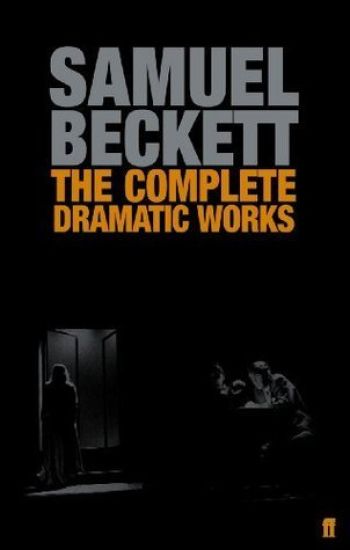
The Complete Dramatic Works of Samuel Beckett
The present volume gathers all of Beckett's texts for theatre, from 1955 to 1984. It includes both the major dramatic works and the short and more compressed texts for the stage and for radio.'He believes in the cadence, the comma, the bite of word on reality, whatever else he believes; and his devotion to them, he makes clear, is a sufficient focus for the reader's attention. In the modern history of literature he is a unique moral figure, not a dreamer of rose-gardens but a cultivator of what will grow in the waste land, who can make us see the exhilarating design that thorns and yucca share with whatever will grow anywhere.' - Hugh KennerContents: Waiting for Godot, Endgame, Happy Days, All That Fall, Acts Without Words, Krapp's Last Tape, Roughs for the Theatre, Embers, Roughs for the Radio, Words and Music, Cascando, Play, Film, The Old Tune, Come and Go, Eh Joe, Breath, Not I, That Time, Footfalls, Ghost Trio,...but the clouds..., A Piece of Monologue, Rockaby, Ohio Impromptu, Quad, Catastrophe, Nacht und Traume, What Where.
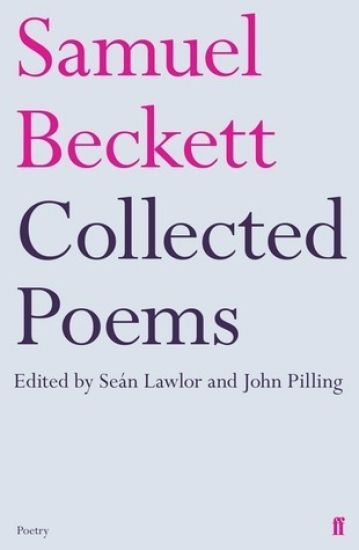
Collected Poems of Samuel Beckett

Collected Poems of Samuel Beckett

Samuel Beckett

Faber Faber
2013
pokkari
It was as a poet that Samuel Beckett launched himself in the little reviews of 1930s Paris, and as a poet that he ended his career.The Collected Poems is the most complete edition of Beckett's poetry and verse translations ever to be published, as well as the first critical edition. It establishes a significant new canon, and the commentary draws on a wide range of published sources, manuscripts and Beckett's extensive correspondence. The notes place each poem in context, detailing the history and circumstances of its composition; they indicate significant variants and help explain obscure turns of phrase and allusions (frequently sourced to Beckett's notebooks); they also identify resonances between poems and across Beckett's work as a whole. The commentary is written in a lively and engaging style and is intended equally for the general reader, the student of modernism and the Beckett specialist.
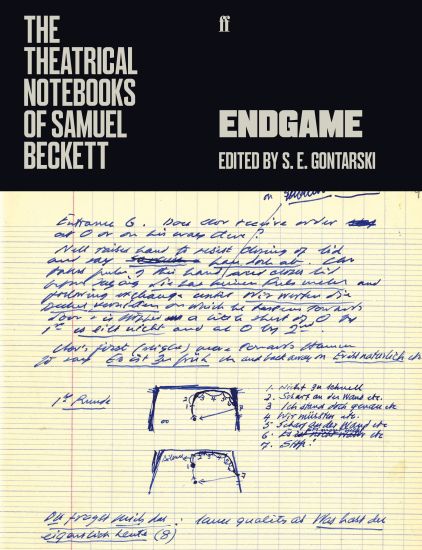
The Theatrical Notebooks of Samuel Beckett
'Pattern is as crucial to Beckett's eye as to his ear', writes Gontarski, 'and that patterning dominates his theatrical notes: motion is repeated to echo other motion, posture to echo other posture, gestures to echo other gestures, sounds to echo other sounds. The principle of analogy is fundamental.'Samuel Beckett directed two separate productions of Endgame, once with the Schiller Theater Company in Berlin in 1967, and again with the San Quentin Drama Workshop in 1980. For both productions he prepared detailed notes that are reproduced here in facsimile for the first time.Beckett's revisions for both his productions maintain a consistency - with minor variations to allow for strengths or weaknesses of particular actors - that make a 'corrected' (Beckett's word) text not only possible but desirable, a reflection of the substantial amount of thinking and theatrical testing the work has undergone since its publication. No previous edition - English, French or German - includes the complete production-generated changes. This text was approved by Samuel Beckett.
The Theatrical Notebooks of Samuel Beckett
Samuel Beckett directed Krapp's Last Tape on four separate occasions: this volume offers a facsimile of his 1969 Schiller-Theater notebook.Professor Knowlson writes that in these notes 'we see Beckett simplifying, shaping and refining, as he works towards a realization of the play that will function well dramatically. The material reveals a flexibility and openness of approach often considered alien to Beckett's ways of working in the theatre.' The Schiller notebook also contains some of the most explicit analysis by Beckett of his own work ever revealed.The revised text incorporates many of the changes Beckett made in the 1969 Schiller production, as well as subsequent changes in later productions. Professor Knowlson worked closely with Beckett over these revisions - and deviations from the original are noted and explained in detail.
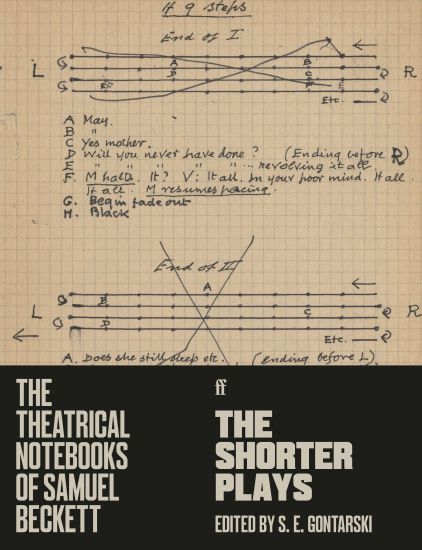
The Theatrical Notebooks of Samuel Beckett
This volume completes the publication of this series of notebooks, the plays in question being Play, Come and Go, Eh Joe, Footfalls, That Time and What Where. Professor Gontarski brings his own experience as a director to editing this book, which provides a continuing revelation of the playwright's approach to the staging of his work. To these 'shorter plays' Samuel Beckett devoted the same care and attention to the details of textual revision and stagecraft as he did to the full-length works, and this book contains revised texts prepared on the same editorial basis as before.
Novels I of Samuel Beckett

Novels I of Samuel Beckett

Samuel Beckett

Grove Press / Atlantic Monthly Press
2006
sidottu
Edited by Paul Auster, this four?volume set of Beckett's canon has been designed by award-winner Laura Lindgren. Available individually, as well as in a boxed set, the four hardcover volumes have been specially bound with covers featuring images central to Beckett's works. Typographical errors that remained uncorrected in the various prior editions have now been corrected in consultation with Beckett scholars C. J. Ackerley and S. E. Gontarski. Beckett was interested in consciousness as a form of comedy close to tragedy and logic as a crime. He loved the tension in 'cogito ergo sum' and took a dim view of the connecting word, the 'ergo' in the equation. Cogitating was the nightmare from which his characters were trying to awake. Being was a sour trick played on them by some force with whom they were trying desperately not to reckon. Beckett produced infinite amounts of comedy about the business of thinking as boring, invalid, and quite unnecessary. His characters did not need to think in order to be, or be in order to think. They knew they existed because of the odd habits and deep discomforts of their bodies. I itch therefore I am." ? Colm Toibin, from his Introduction
Novels II of Samuel Beckett

Novels II of Samuel Beckett

Samuel Beckett

Grove Press / Atlantic Monthly Press
2006
sidottu
Edited by Paul Auster, this four?volume set of Beckett's canon has been designed by award-winner Laura Lindgren. Available individually, as well as in a boxed set, the four hardcover volumes have been specially bound with covers featuring images central to Beckett's works. Typographical errors that remained uncorrected in the various prior editions have now been corrected in consultation with Beckett scholars C. J. Ackerley and S. E. Gontarski. "A man speaking English beautifully chooses to speak in French, which he speaks with greater difficulty, so that he is obliged to choose his words carefully, forced to give up fluency and to find the hard words that come with difficulty, and then after all that finding he puts it all back into English, a new English containing all the difficulty of the French, of the coining of thought in a second language, a new English with the power to change English forever. This is Samuel Beckett. This is his great work. It is the thing that speaks. Surrender." ? Salman Rushdie, from his Introduction
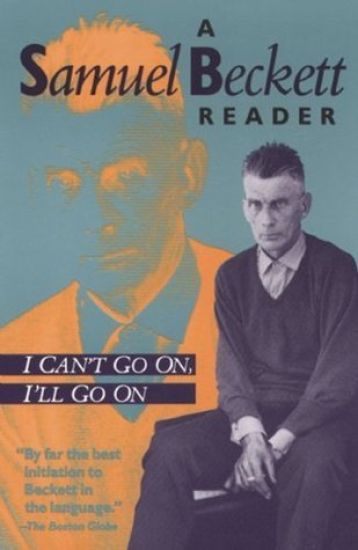
I Can't Go on, I'LL Go on: a Selection from Samuel Beckett's Work

I Can't Go on, I'LL Go on: a Selection from Samuel Beckett's Work

Samuel Beckett

Grove Press / Atlantic Monthly Press
1994
nidottu
Winner of the Nobel Prize for literature and acknowledged as one of the greatest writers of our time, Samuel Beckett has had a profound impact upon the literary landscape of the twentieth century. In this one-volume collection of his fiction, drama, poetry, and critical writings, we get an unsurpassed look at his work. Included, among others, are: - The complete plays Waiting for Godot, Krapp's Last Tape, Cascando, Eh Joe, Not I, and That Time- Selections from his novels Murphy, Watt, Mercier and Camier, Molloy, and The Unnamable- The shorter works "Dante and the Lobster," "The Expelled," Imagination Dead Imagine, and Lessness- A selection of Beckett's poetry and critical writings With an indispensable introduction by editor and Beckett intimate Richard Seaver, and featuring a useful select bibliography, I Can't Go On, I'll Go On is indeed an invaluable introduction to a writer who has changed the face of modern literature.
The Letters of Samuel Beckett 4 Volume Hardback Set

The Letters of Samuel Beckett 4 Volume Hardback Set

Samuel Beckett

Cambridge University Press
2016
muu
The complete, critically acclaimed Cambridge edition of The Letters of Samuel Beckett makes available for the first time a comprehensive range of letters by one of the twentieth century's greatest literary figures. The four volumes, spanning the period from 1929 to 1989, follow Beckett from his early writings, though the pivotal points in his personal life and career as he achieved ever-growing international fame, to his later work and life where he turned his mind to his legacy. Each volume provides detailed introductions, as well as translations of the letters, explanatory notes, year-by-year chronologies, profiles of correspondents and other contextual information.
Samuel Beckett Trilogy

Samuel Beckett Trilogy

Samuel Beckett

Everyman's Library
2015
sidottu
Samuel Beckett is the greatest Irish novelist of the later twentieth century, and this trilogy of novels is his masterpiece -which makes it perhaps the outstanding literary work of our time. Because Beckett has a reputation for being difficult, even obscure, readers of the trilogy are bound to be struck not only by the verbal brilliance and inventiveness of the three novels, but also by their extraordinary humour which ranges from wit to broad comedy and even farce in a recognizably Irish way. Each story records an episode of human endurance in the face of metaphysical adversity with compassion and wisdom and each is a compelling narrative in itself in the great tradition of European fiction from Flaubert to Joyce.
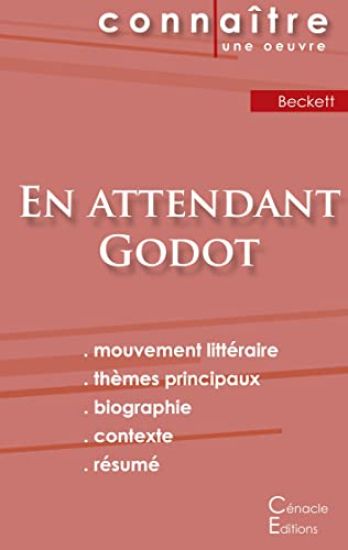
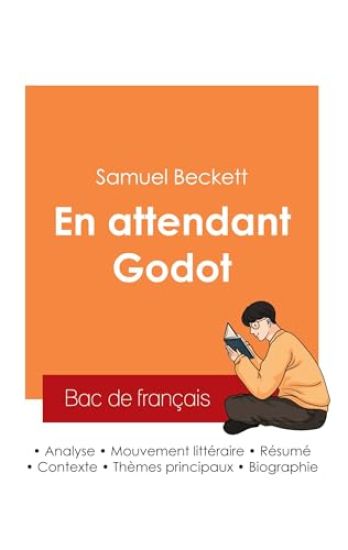
Fiche de lecture En attendant Godot de Samuel Beckett (Analyse littéraire de référence et résumé complet)
La collection Conna tre une oeuvre vous offre la possibilit de tout savoir de la pi ce de th tre En attendant Godot, de Samuel Beckett, gr ce une fiche de lecture aussi compl te que d taill e. La r daction, claire et accessible, a t confi e un sp cialiste universitaire. Cette fiche de lecture r pond une charte qualit mise en place par une quipe d'enseignants. Ce livre contient la biographie de Samuel Beckett, la pr sentation de l'oeuvre, le r sum d taill , les raisons du succ s, les th mes principaux et l' tude du mouvement litt raire de l'auteur.
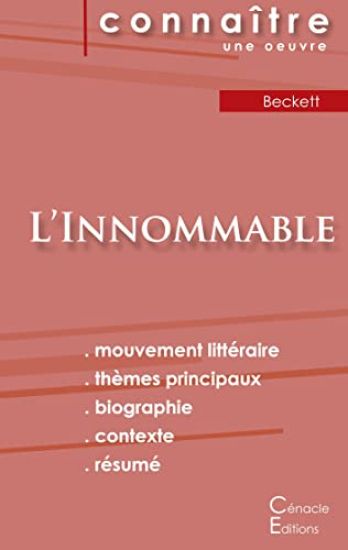
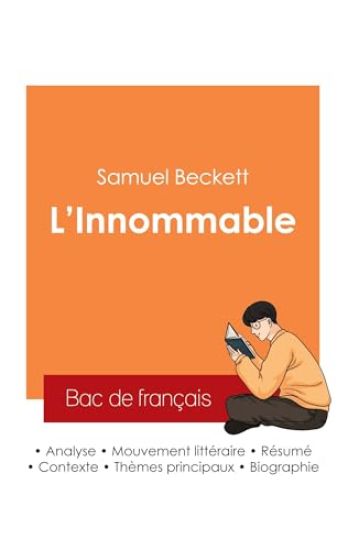
Fiche de lecture L'Innommable de Samuel Beckett (Analyse littéraire de référence et résumé complet)
La collection Conna tre une oeuvre vous offre la possibilit de tout savoir de L'Innommable de Samuel Beckett gr ce une fiche de lecture aussi compl te que d taill e. La r daction, claire et accessible, a t confi e un sp cialiste universitaire. Cette fiche de lecture r pond une charte qualit mise en place par une quipe d'enseignants. Ce livre contient la biographie de Samuel Beckett, la pr sentation de L'Innomable, le r sum d taill , les raisons du succ s, les th mes principaux et l' tude du mouvement litt raire de l'auteur