Kirjahaku
Etsi kirjoja tekijän nimen, kirjan nimen tai ISBN:n perusteella.
23 tulosta hakusanalla "Unconscious Memory"
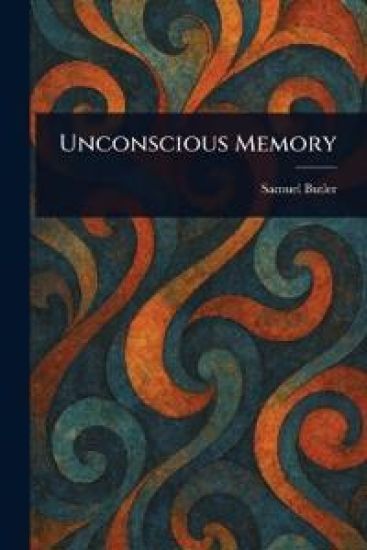
Explore the fascinating realm of the subconscious with Samuel Butler's "Unconscious Memory," a thought-provoking exploration of the hidden depths of the human mind. This meticulously prepared edition delves into the intricacies of unconscious memory and its profound influence on our thoughts and actions. Butler examines the interplay between biology and psychology, venturing into the historical perspectives of cognitive function and cognition. Drawing upon the principles of evolution, this book investigates the enduring questions surrounding the nature of consciousness and the power of the subconscious. A seminal work for those interested in the history of psychology, "Unconscious Memory" offers enduring insights into the biological and psychological forces that shape our being. Discover the timeless exploration of the mind that continues to intrigue readers today.This work has been selected by scholars as being culturally important, and is part of the knowledge base of civilization as we know it.This work is in the public domain in the United States of America, and possibly other nations. Within the United States, you may freely copy and distribute this work, as no entity (individual or corporate) has a copyright on the body of the work.Scholars believe, and we concur, that this work is important enough to be preserved, reproduced, and made generally available to the public. We appreciate your support of the preservation process, and thank you for being an important part of keeping this knowledge alive and relevant.
Explore the fascinating realm of the subconscious with Samuel Butler's "Unconscious Memory," a thought-provoking exploration of the hidden depths of the human mind. This meticulously prepared edition delves into the intricacies of unconscious memory and its profound influence on our thoughts and actions. Butler examines the interplay between biology and psychology, venturing into the historical perspectives of cognitive function and cognition. Drawing upon the principles of evolution, this book investigates the enduring questions surrounding the nature of consciousness and the power of the subconscious. A seminal work for those interested in the history of psychology, "Unconscious Memory" offers enduring insights into the biological and psychological forces that shape our being. Discover the timeless exploration of the mind that continues to intrigue readers today.This work has been selected by scholars as being culturally important, and is part of the knowledge base of civilization as we know it.This work is in the public domain in the United States of America, and possibly other nations. Within the United States, you may freely copy and distribute this work, as no entity (individual or corporate) has a copyright on the body of the work.Scholars believe, and we concur, that this work is important enough to be preserved, reproduced, and made generally available to the public. We appreciate your support of the preservation process, and thank you for being an important part of keeping this knowledge alive and relevant.

Butler tells ("Life and Habit," p. 33) that he sometimes hoped "that this book would be regarded as a valuable adjunct to Darwinism." He was bitterly disappointed in the event, for the book, as a whole, was received by professional biologists as a gigantic joke - a joke, moreover, not in the best possible taste. True, its central ideas, largely those of Lamarck, had been presented by Hering in 1870 (as Butler found shortly after his publication); they had been favourably received, developed by Haeckel, expounded and praised by Ray Lankester. Coming from Butler, they met with contumely, even from such men as Romanes, who, as Butler had no difficulty in proving, were unconsciously inspired by the same ideas - "Nur mit ein bischen ander'n W rter." It is easy, looking back, to see why "Life and Habit" so missed its mark.
Samuel Butler (4 December 1835 - 18 June 1902) was the iconoclastic English author of the Utopian satirical novel Erewhon (1872) and the semi-autobiographical Bildungsroman The Way of All Flesh, published posthumously in 1903. Both have remained in print ever since. In other studies he examined Christian orthodoxy, evolutionary thought, and Italian art, and made prose translations of the Iliad and Odyssey that are still consulted today. He was also an artist.

Reproduction of the original. The publishing house Megali specialises in reproducing historical works in large print to make reading easier for people with impaired vision.
Reproduction of the original. The publishing house Megali specialises in reproducing historical works in large print to make reading easier for people with impaired vision.