Kirjojen hintavertailu. Mukana 11 627 623 kirjaa ja 12 kauppaa.

Kirjahaku

Etsi kirjoja tekijän nimen, kirjan nimen tai ISBN:n perusteella.

25 kirjaa tekijältä Samuel Hazo

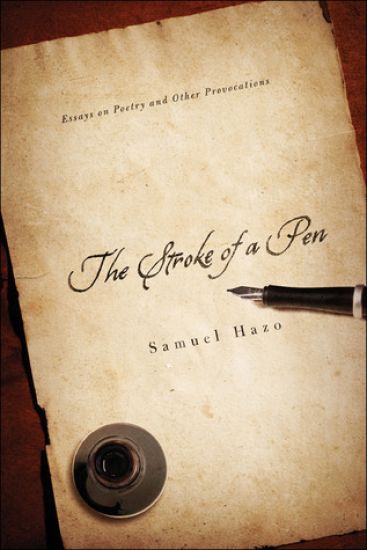
The Stroke of a Pen

The Stroke of a Pen

Samuel Hazo

University of Notre Dame Press
2011
nidottu
For over five decades, Samuel Hazo has taught his readers about literature and life with generosity and awareness, taking everyday experiences and translating them into songs at once familiar and surprising. In his poetry, fiction, essays, and plays, Hazo, in a style that is unmistakably his own, extols the wonderment and discovery that emerge in the act of writing, in the movement toward wisdom that results from the expression of feeling. The Stroke of a Pen is a collection of the occasional essays on a variety of subjects, from the relationship between poetry and public speech, to the pursuit of the literary life, to reading within a cultural context governed by power relations. Two essays focus on religion and literature, and the final five include a literary travel essay on Provence, a counterpointing one on the virtues of not traveling but remaining home, a lighter essay that extends the discussion of home to houses, a memory piece on the actor Gregory Peck, and a personal reflection on the author's retirement. Throughout, Hazo is belletristic in his approach, calling on such writers as T. S. Eliot, Wilfred Owen, Jacques Maritain, and Nathan A. Scott, Jr., who deeply influences Hazo's thinking and writing in this entertaining collection.
The Stroke of a Pen

The Stroke of a Pen

Samuel Hazo

UNIVERSITY OF NOTRE DAME PRESS
2022
sidottu
For over five decades, Samuel Hazo has taught his readers about literature and life with generosity and awareness, taking everyday experiences and translating them into songs at once familiar and surprising. In his poetry, fiction, essays, and plays, Hazo, in a style that is unmistakably his own, extols the wonderment and discovery that emerge in the act of writing, in the movement toward wisdom that results from the expression of feeling. The Stroke of a Pen is a collection of the occasional essays on a variety of subjects, from the relationship between poetry and public speech, to the pursuit of the literary life, to reading within a cultural context governed by power relations. Two essays focus on religion and literature, and the final five include a literary travel essay on Provence, a counterpointing one on the virtues of not traveling but remaining home, a lighter essay that extends the discussion of home to houses, a memory piece on the actor Gregory Peck, and a personal reflection on the author's retirement. Throughout, Hazo is belletristic in his approach, calling on such writers as T. S. Eliot, Wilfred Owen, Jacques Maritain, and Nathan A. Scott, Jr., who deeply influences Hazo's thinking and writing in this entertaining collection.
Sexes

Sexes

Samuel Hazo

Northwestern University Press
2014
nidottu
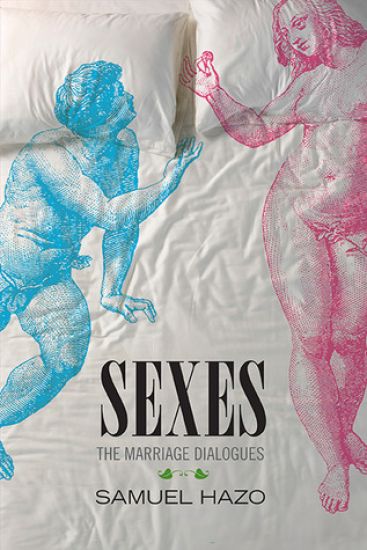
The poems in Samuel Hazo’s Sexes: The Marriage Dialogues are concerned with how husbands and wives confront each other at life’s various intersections sometimes casually, sometimes profoundly. It is at these points that the most interesting differences in gender reveal themselves. From the first poem (“Banterers”) to the last (“Ballad of the Old Lovers”) Hazo’s attuned ear picks up quotidian conversational exchanges, but the words are never window dressing. They hint at inevitable insights and misunderstandings born out of conjugal love. Each poem is a vignette of the moving and surprising moments that are married life.
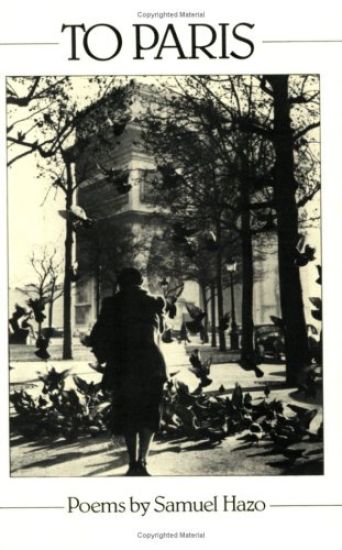
To Paris: Poetry

To Paris: Poetry

Samuel Hazo

New Directions Publishing Corporation
1981
nidottu
Reading To Paris, Samuel Hazo’s newest book of poems, is an act of exploration, a search for an American-ness that can be felt in one’s self only while abroad. And what is discovered is not the alienation born of internal exile but a widening sense of humanity defined by tensions between time and place: now and then, here and now. “The Paris in this book,” Hazo explains, “is not merely a matter of geography, it is also what Paris means in history and, above all, what it can be imagined to mean. Call it the Paris of the mind or even the Paris in the blood—a certain freedom for the arts, for poetry, for life itself regardless of contradiction or even of consequence. In this sense To Paris for me is both a directional signal and a toast.” Here then are honest and courageous poems whose straightforward cadences are attuned to the familiar modulations of American speech. Hazo’s voice, in the words of Archibald MacLeish, “has found the ease to speak the ’You’ who is both ’He’ and ’I’”––reminding us of what we always knew about ourselves but had forgotten to remember.
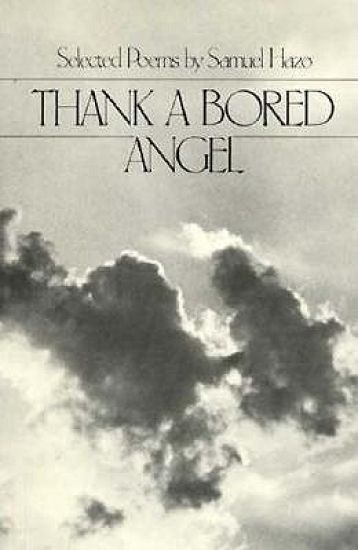
Thank a Bored Angel: Selected Poems

Thank a Bored Angel: Selected Poems

Samuel Hazo

New Directions Publishing Corporation
1986
nidottu
Thank a Bored Angel: Selected Poems by Samuel Hazo brings together the poetry of twenty-two years, drawn from eight previous volumes. Assembled here are selections from Discovery (1959), The Quiet Wars (1962), Listen with the Eye (1964), My Sons in God (1965), Blood Rights (1968), Once for the Last Bandit (1972), Quartered (1974), and To Paris (New Directions, 1981). In his preface, Hazo affirms that “each of these poems touches on themes that are still alive in me–-alive in that they seem inexhaustible”; all are rendered in the poet’s own voice, not “in what is irritatingly called a ’persona,’” and none, he says, either when originally composed or now, could be expressed differently. Casting back to the adventures and attachments of half a century, Thank a Bored Angel presents varied, colorful portraits from the poet’s life––as father, son, brother, husband, traveler, army lieutenant, university professor, writer. It is emotion, fancy, speculation––the reflections cast in his mind by events and “accidents of place”––that give them weight. Likewise, Hazo’s considerable passion and stylistic range are not flaunted but, measured by conscience and intent, constitute the poems’ inimitable, penetrating lyricism.
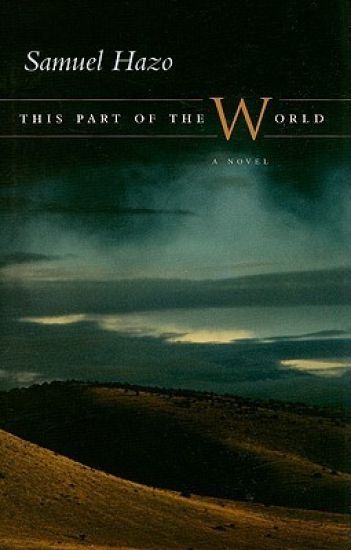
This Part of the World

This Part of the World

Samuel Hazo

Syracuse University Press
2008
sidottu
Premier Caseres rules his country with a ruthlessness that puts him in the elite category of Truijillo, Mugabe, and Kim Jong II. A potent orator with a martinet style of leadership, Caseres' ability to instill fear and reverence in his people has secured his place in power. However, the dictator's human frailties run as deep as his stoicism. He is plagued with a heart condition that keeps him popping 'pills like pistachios' and a son and heir to his leadership who has a taste for fast cars and little else. Finally, his devotion to Magdalena, his mistress, threatens to disrupt his unchallenged autocracy.""This Part of the World"" traces a new path into the heart of darkness. Samuel Hazo offers the reader an intrepid portrait of conscience, charisma, and the slow corruption of the human spirit. Hazo writes with a steely clarity and sharp satirical edge, bringing to life his tragic subject and illuminating the fate of a nation.
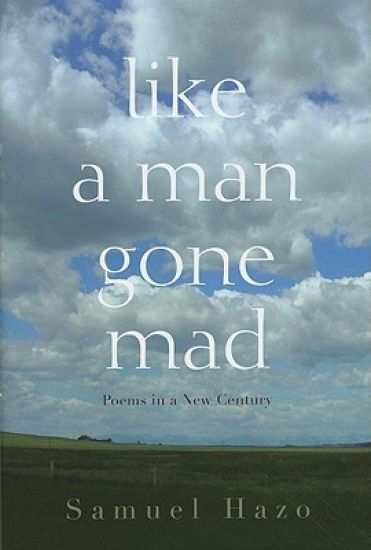
Like a Man Gone Mad

Like a Man Gone Mad

Samuel Hazo

Syracuse University Press
2010
sidottu
Hazo, National Book Award finalist and former State Poet of Pennsylvania, transports the reader with poems of both lament and celebration in his sensual new collection. Like a Man Gone Mad features much of the spare yet precise imagery of his earlier work. Searing portraits, a deft use of allegorical language, and a wry sense of humor are all signatures of Hazo’s unique voice. Taking up the theme of time, the poems carry the reader back and forth through personal and historical time, offering glimpses of a wide range of figures, from Pascal and Heraclitus to John F. Kennedy and Clark Gable. From each vantage point, Hazo meditates on themes of vitality and longevity, legacy and oblivion, and the enduring folly of both the individual and society. Accessible and eminently readable, the poems in Like a Man Gone Mad embody a rich intellectual and emotional curiosity.
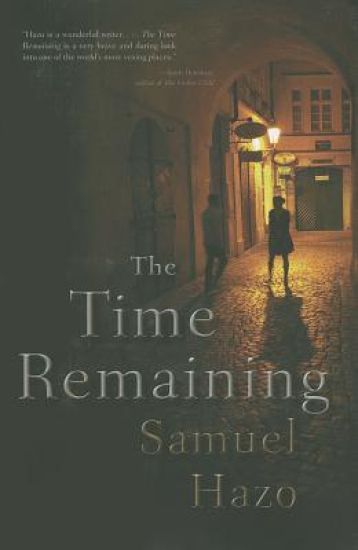
The Time Remaining

The Time Remaining

Samuel Hazo

Syracuse University Press
2012
nidottu
A modern-day political thriller, The Time Remaining grapples with murder, romance, and international politics. Dodge Didier Gilchrist, a Pulitzer Prize–winning journalist and consummate ladies’ man, finds himself embroiled in an international conflict when his former college roommate, Palestinian scholar Sharif Tabry, is killed under mysterious circumstances. Tabry’s niece, Raya, who has been recently released from incarceration in Israel, begins working for Gilchrist in Washington, DC. When she is injured while trying to save Tabry, Gilchrist quickly discovers he has deep feelings for her. Gilchrist embarks on a wild ride from Washington to Israel and Palestine as he learns from both Israelis and Palestinians of the suffering of Palestinians under occupation. This spurs an investigation that leads him up the ranks of the Israeli government and into a series of dangerous events. A fast-paced, suspenseful novel, The Time Remaining will keep readers absorbed in Gilchrist and Raya’s growing romance and intrigued by the exciting political drama that wrestles with the complexities of the Israeli-Palestinian conflict.
And the Time Is

And the Time Is

Samuel Hazo

Syracuse University Press
2014
sidottu
In this work, Hazo casts his eye back over a career devoted to poetry. With works that are arranged loosely under the themes of love, family, and aging, this volume affirms Hazo's status as one of the most compelling and enduring poets of his generation. Poems appearing in this collection include works that have appeared in the Hudson Review, Prairie Schooner, the and the Saturday Review.
They Rule the World

They Rule the World

Samuel Hazo

Syracuse University Press
2016
nidottu
For over fifty years, Hazo’s poetry has meditated on themes of mortality and love, passion and art, and courage and grace in a style that is unmistakably his own. In this new collection, he offers his most candid reflections on the passage of time and the tenderness of the present moment.By turns convivial and introspective, these poems explore the complex synchronicity between life and art, and the connections between the personal and the political. With sharp clarity and deep emotion, Hazo continues his pursuitof wisdom and discovery through the act of expression.
And the Time Is

And the Time Is

Samuel Hazo

SYRACUSE UNIVERSITY PRESS
2022
pokkari
In this work, Hazo casts his eye back upon a career devoted to poetry. With works that are arranged loosely under the themes of love, family, and aging, this volume affirms Hazo’s status as one of the most compelling and enduring poets of his generation. Poems appearing in this collection include works which have appeared in the Hudson Review, Prairie Schooner, the New York Times, and the Saturday Review.
The Less Said, the Truer

The Less Said, the Truer

Samuel Hazo

SYRACUSE UNIVERSITY PRESS
2022
nidottu
In Hazo’s latest collection, The Less Said, the Truer, he brings together new poems as well as selections from three previous books—They Rule the World (2016), When Not Yet is Now (2019), and The Next Time We Saw Paris (2020). The author’s poignant reflections on life and death, love and loss, and age and memory allow the poems to be deeply personal while also connecting with the everyday experiences of readers. Influenced by America’s incessant wars since 2003 and the militaristic influence they have had on society, Hazo offers insight that disrupts complacency and returns us to our true natures. In keeping with his poetic style, there are no "passenger words" in these poems. Every word counts.
They Rule the World

They Rule the World

Samuel Hazo

Syracuse University Press
2016
sidottu
For over fifty years, Hazo’s poetry has meditated on themes of mortality and love, passion and art, and courage and grace in a style that is unmistakably his own. In this new collection, he offers his most candid reflections on the passage of time and the tenderness of the present moment.By turns convivial and introspective, these poems explore the complex synchronicity between life and art, and the connections between the personal and the political. With sharp clarity and deep emotion, Hazo continues his pursuitof wisdom and discovery through the act of expression.
The Less Said, the Truer

The Less Said, the Truer

Samuel Hazo

SYRACUSE UNIVERSITY PRESS
2022
sidottu
In Hazo’s latest collection, The Less Said, the Truer, he brings together new poems as well as selections from three previous books—They Rule the World (2016), When Not Yet is Now (2019), and The Next Time We Saw Paris (2020). The author’s poignant reflections on life and death, love and loss, and age and memory allow the poems to be deeply personal while also connecting with the everyday experiences of readers. Influenced by America’s incessant wars since 2003 and the militaristic influence they have had on society, Hazo offers insight that disrupts complacency and returns us to our true natures. In keeping with his poetic style, there are no "passenger words" in these poems. Every word counts.
The World within the Word

The World within the Word

Samuel Hazo

Franciscan Academic Press
2018
sidottu
This book, written in 1957, arises from the encounter of two men: the American poet Samuel Hazo and the French philosopher Jacques Maritain. They met on September 12, 1956, at Maritain’s home in Princeton, New Jersey. Hazo sought to engage Maritain’s diffuse writings in aesthetics by bringing them into conversation with the great voices of the English literary tradition, especially Samuel Taylor Coleridge, Gerard Manley Hopkins, and John Keats.Hazo was also striving to understand and articulate his own experience of the creative process. Then at the beginning of his writing life, he would later emerge as a leading voice in American poetry. He is the author of more than thirty collections, the winner of many awards, the founder of the International Poetry Forum, and a National Book Award finalist.The World within the Word is the only book about Jacques Maritain for which Maritain himself wrote a foreword.
Holy Surprise of Right Now (C)

Holy Surprise of Right Now (C)

Samuel Hazo

University of Arkansas Press
1996
sidottu
From his first book, through the National Book award finalist Once for the Last Bandit, to his newest poems, Samuel Hazo has written poetry that celebrates and solemnly honors art and mortality in the midst of vibrant living and the value of love in all our relations.
As They Sail

As They Sail

Samuel Hazo

University of Arkansas Press
1999
nidottu
With each new collection of poems, Samuel Hazo explores themes of mortality and love, passion and art, courage and grace in a style that is unmistakably his own. In As They Sail, he writes with equal feeling and clarity about political and artistic figures and the complex synchronicity between life and art. He is extremely interested in the wonderment and discovery that emerges in the act of writing, in the movement toward wisdom that results from expression of feeling.Questioning is always more important in his writing than answering. Hazo has the ability to accomplish what he attributes to another poet, Charles Causley, in “When Nothing’s Happening, Everything’s Happening”: “. . . the poems borne of his pen / . . . help us to feel what we think.” He is able to achieve this “felt thought” without any trace of self-absorption or sentimentality.Whether Hazo is writing about Nixon, Hemingway, or Brando or simply about walking in France, he finds the essence of language that gives rise to an emotional response. In a time when poetry without emotion is praised and language is said to make sense simply because it exists on the page, Hazo’s clear voice and concern with the nature of love, time, change, and the meaning of the past is uniquely refreshing.
The Power of Less

The Power of Less

Samuel Hazo

Franciscan Academic Press
2019
sidottu
These essays focus on the absence of the poetic imagination in much contemporary poetry and criticism. The retreat of poets into craft, gender, race, and so on has made poetry seem more like sociology than literature. Such lack of insight can be attributed to forces in American society that place undue emphasis on technique and identity rather than talent and vision, currently evident as well in contemporary popular music, dance, and art. There is a similar imaginative deficiency in the teaching of literature and in political oratory and social commentary.The consequence where poetry is concerned is the acceptance and anthologizing of work that relies on novelty or shock for notice. We are left with mere appearances instead of essences. In this collection, Samuel Hazo calls for a return to forms of expression in which poet and reader engage in a conversation that speaks to the human condition, where less is more—The Power of Less.