Kirjojen hintavertailu. Mukana 11 342 296 kirjaa ja 12 kauppaa.

Kirjahaku

Etsi kirjoja tekijän nimen, kirjan nimen tai ISBN:n perusteella.

6 kirjaa tekijältä Samuel M. Powell

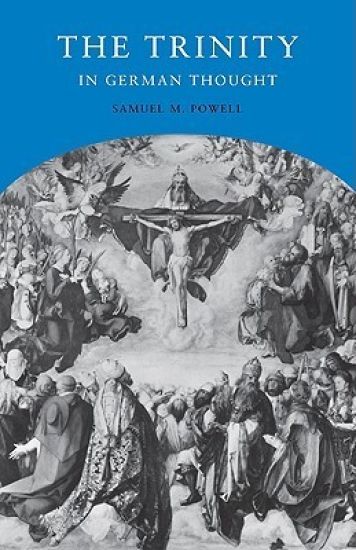
The Trinity in German Thought

The Trinity in German Thought

Samuel M. Powell

Cambridge University Press
2009
pokkari
The Trinity in German Thought, published in 2000, describes the three ideas that govern modern German Trinitarian thought: the ideas of reflective selfhood, of revelation and of history. 'Reflective selfhood' designates the attempt at finding an analogy between the Trinity and the structure of the human self. Such attempts, following the lead of Augustine, typically see the structure of self-consciousness as an especially apt analogy of the Trinity. 'Revelation' points to two questions: what is the Word of God? and can the idea of the Trinity be derived from the Word? From Martin Luther to the present, Trinitarian thought has depended on the way in which theologians conceived of the Word. 'History' designates the impact that historical modes of thought have had on Trinitarian thought. For some, 'history' has meant a critical approach to Scripture and creeds; for others, it has meant God's own participation in history.
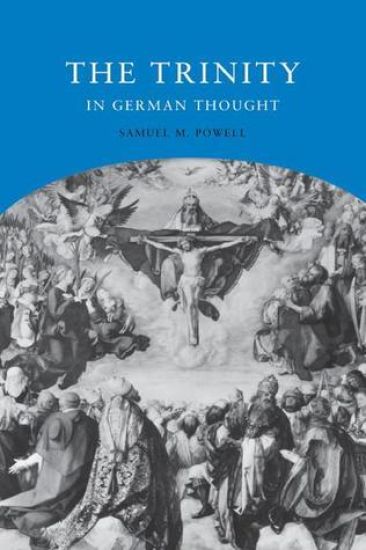
The Trinity in German Thought

The Trinity in German Thought

Samuel M. Powell

Cambridge University Press
2000
sidottu
The Trinity in German Thought, published in 2000, describes the three ideas that govern modern German Trinitarian thought: the ideas of reflective selfhood, of revelation and of history. 'Reflective selfhood' designates the attempt at finding an analogy between the Trinity and the structure of the human self. Such attempts, following the lead of Augustine, typically see the structure of self-consciousness as an especially apt analogy of the Trinity. 'Revelation' points to two questions: what is the Word of God? and can the idea of the Trinity be derived from the Word? From Martin Luther to the present, Trinitarian thought has depended on the way in which theologians conceived of the Word. 'History' designates the impact that historical modes of thought have had on Trinitarian thought. For some, 'history' has meant a critical approach to Scripture and creeds; for others, it has meant God's own participation in history.
A Theology of Christian Spirituality

A Theology of Christian Spirituality

Samuel M. Powell

Abingdon Press
2005
pokkari
While many would argue that spirituality is a necessary component of authentic human living, there is a lot of confusion over what spirituality is. According to Powell Christian spirituality has five aspects: Christian living is inescapably corporate, and it is inseparable from the Christian community; it is inescapably corporeal - it cannot be separated from specific and embodied practices; it is participation in the Trinitarian life of God, and thus Christian living reflects both upon us and God; it has an eschatological existence; and, it is marked by our essential finitude under the conditions of sin.
Participating in God

Participating in God

Samuel M. Powell

Augsburg Fortress
2003
pokkari
In this exciting work, Samuel Powell offers a new constructive and systematic vision of creation by interpreting it in terms of contemporary science and trinitarian theology.Powell's work unfolds in three stages, building on the multiple ways the doctrine of creation actually functions for Christians. He first analyzes its regulative dimension. Even in all the multiplicity of historical Christianity, he shows, the doctrine commits Christians to a particular set of normative beliefs about the world and God's relation to it. Second, Powell builds on the doctrine's hermeneutical potential. It allows Christians both to interpret the meaning of creation in terms of other prevalent philosophical, religious, or scientific ideas and also to interpret the world, as disclosed by scientific theory, in theological terms. In the heart of his book, Powell correlates creaturely characteristics with their participation in God through the trinitarian persons. Finally, in light of his findings, Powell drives home the often ignored ethical dimension of the doctrine, especially in relation to the environment, our consumerist lifestyle, and eschatology.Powell's bold proposal harvests from two of the most fruitful fields of recent theology -- trinitarian theory and religion-and-science -- and crafts a creative new vision of how we and all creation participate in the life and work of the triune God.
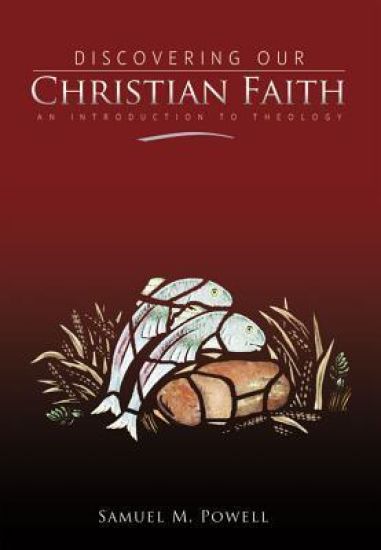
Discovering Our Christian Faith: An Introduction to Theology

Discovering Our Christian Faith: An Introduction to Theology

Samuel M. Powell

Beacon Hill Press of Kansas City
2008
sidottu
Theology is the knowledge of God; but unlike other types of information, which simply provide a broader understanding of a topic, theology is intimately connected to how we exist and conduct ourselves in the world. With this in mind, it's important that we, as Christians, understand our beliefs in order to value their impact and practice them effectively.Discovering Our Christian Faith is an introduction to Christian theology. It explores the Bible's amazing story, beginning with creation and ending with the return of Christ. Dr. Samuel Powell presents the leading doctrines of Christianity and explores how they have been shaped throughout the centuries. With thorough examination and academic scholarship, he outlines the creedal statements of Wesleyan-holiness churches and explores the importance of eschatology in every doctrine, seeking to maintain the coherence and systematic character of Christian belief. In addition to a section on ethical dimensions of the doctrines discussed, each chapter includes a hymn by John and/or Charles Wesley that expresses the theme of the chapter.Discovering Our Christian Faith offers students, scholars, pastors, and teachers the opportunity to engage and unite their faith and intellect in an act of worship. With challenging insight and enriching evidence, it brings readers face to face with the beginning and end of our being by seeking to understand and encounter the knowledge of God.Check out this review of Discovering Our Christian Faith by The Arminian Magazine
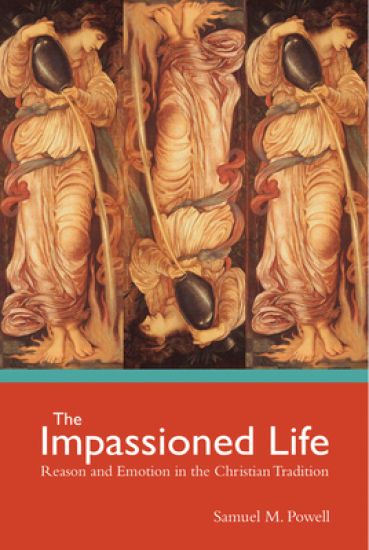
The Impassioned Life

The Impassioned Life

Samuel M. Powell

Fortress Press,U.S.
2016
sidottu
The Impassioned Life argues that theology's task today is to rethink the nature of the emotions and their relation to human reason. Such rethinking is necessary because the Christian tradition feels ambivalently about the emotions. Armed with a commitment to body-soul dualism, many writers have equated the image of God with rationality and wondered whether emotion is an essential feature of human nature; however, the tradition has also affirmed the value of emotions such as love and compassion and has sometimes asserted the value of so-called negative emotions such as anger. The question, then, is whether the tradition's pastoral insight into the importance of moderation and control of the emotions requires us to think dualistically about soul (identified with reason) and body (the seat of emotions). To answer this question, The Impassioned Life explores the vital resources of the Christian theological tradition and also of contemporary scientific and psychological research in order to achieve a more adequate theological understanding of the emotions and reason.