Kirjojen hintavertailu. Mukana 12 002 957 kirjaa ja 12 kauppaa.

Kirjahaku

Etsi kirjoja tekijän nimen, kirjan nimen tai ISBN:n perusteella.

155 kirjaa tekijältä Samuel Pepys

The Diary of Samuel Pepys

The Diary of Samuel Pepys

Samuel Pepys

HarperCollins Publishers Ltd
1995
nidottu
The first volume of the complete Diary of Samuel Pepys in its most authoritative and acclaimed edition. This complete edition of the Diary of Samuel Pepys comprises eleven volumes -- nine volumes of text and footnotes (with an introduction of 120 pages in Volume I), a tenth volume of commentary (The Companion) and an eleventh volume of Index. Each of the first eight volumes contains one whole calendar year of the diary, from January to December. The ninth volume runs from January 1668 to May 1669. The Diary was first published in abbreviated form in 1825. A succession of new editions, re-issues and selections, published in the Victorian era, made the Diary one of the best-known books, and Pepys one of the best-known figures, of English history. But in none of these versions -- not even in the Wheatley, which for long stood as the standard edition -- was there a reliable, still less a full text, and in none of them was there a commentary with any claim to completeness. This edition was in preparation for many years, and remains the first in which the entire Diary is printed and in which an attempt has been made at systematic comment on it. The primary aim of the principal editors was to see that the Diary was presented in a manner suitable to the historical and literary importance of its contents. At the same time they had in mind the interests of the wide public of English-speaking people to whom the diarist himself, rather than the importance of what he wrote, is what matters.
The Diary of Samuel Pepys

The Diary of Samuel Pepys

Samuel Pepys

HarperCollins Publishers Ltd
1995
nidottu
The second volume of the complete Diary of Samuel Pepys in its most authoritative and acclaimed edition. This complete edition of the Diary of Samuel Pepys comprises eleven volumes -- nine volumes of text and footnotes (with an introduction of 120 pages in Volume I), a tenth volume of commentary (The Companion) and an eleventh volume of Index. Each of the first eight volumes contains one whole calendar year of the diary, from January to December. The ninth volume runs from January 1668 to May 1669. The Diary was first published in abbreviated form in 1825. A succession of new editions, re-issues and selections, published in the Victorian era, made the Diary one of the best-known books, and Pepys one of the best-known figures, of English history. But in none of these versions -- not even in the Wheatley, which for long stood as the standard edition -- was there a reliable, still less a full text, and in none of them was there a commentary with any claim to completeness. This edition was in preparation for many years, and remains the first in which the entire Diary is printed and in which an attempt has been made at systematic comment on it. The primary aim of the principal editors was to see that the Diary was presented in a manner suitable to the historical and literary importance of its contents. At the same time they had in mind the interests of the wide public of English-speaking people to whom the diarist himself, rather than the importance of what he wrote, is what matters.

The Diary of Samuel Pepys

The Diary of Samuel Pepys

Samuel Pepys

HarperCollins Publishers Ltd
1995
nidottu
The third volume of the complete Diary of Samuel Pepys in its most authoritative and acclaimed edition. This complete edition of the Diary of Samuel Pepys comprises eleven volumes -- nine volumes of text and footnotes (with an introduction of 120 pages in Volume I), a tenth volume of commentary (The Companion) and an eleventh volume of Index. Each of the first eight volumes contains one whole calendar year of the diary, from January to December. The ninth volume runs from January 1668 to May 1669. The Diary was first published in abbreviated form in 1825. A succession of new editions, re-issues and selections, published in the Victorian era, made the Diary one of the best-known books, and Pepys one of the best-known figures, of English history. But in none of these versions -- not even in the Wheatley, which for long stood as the standard edition -- was there a reliable, still less a full text, and in none of them was there a commentary with any claim to completeness. This edition was in preparation for many years, and remains the first in which the entire Diary is printed and in which an attempt has been made at systematic comment on it. The primary aim of the principal editors was to see that the Diary was presented in a manner suitable to the historical and literary importance of its contents. At the same time they had in mind the interests of the wide public of English-speaking people to whom the diarist himself, rather than the importance of what he wrote, is what matters.
The Diary of Samuel Pepys

The Diary of Samuel Pepys

Samuel Pepys

HarperCollins Publishers Ltd
1995
nidottu
The fifth volume of the complete Diary of Samuel Pepys in its most authoritative and acclaimed edition. This complete edition of the Diary of Samuel Pepys comprises eleven volumes – nine volumes of text and footnotes (with an introduction of 120 pages in Volume I), a tenth volume of commentary (The Companion) and an eleventh volume of Index. Each of the first eight volumes contains one whole calendar year of the diary, from January to December. The ninth volume runs from January 1668 to May 1669. The Diary was first published in abbreviated form in 1825. A succession of new editions, re-issues and selections, published in the Victorian ear, made the diary one of the best-known books, and Pepys one of the best-known figures, of English history. But in none of these versions – not even in the Wheatley, which for long stood as the standard edition – was there a reliable, still less a full text, and in none of them was there a commentary with any claim to completeness. This edition was in preparation for many years, and remains the first in which the entire diary is printed and in which an attempt has been made at systematic comment on it. The primary aim of the principal editors was to see that the diary was presented in a manner suitable to the historical and literary importance of its contents. At the same time they had in mind the interests of the wide public of English-speaking people to whom the diarist himself, rather than the importance of what he wrote, is what matters.

The Diary of Samuel Pepys

The Diary of Samuel Pepys

Samuel Pepys

HarperCollins Publishers Ltd
1995
nidottu
The sixth volume of the complete Diary of Samuel Pepys in its most authoritative and acclaimed edition. This complete edition of the Diary of Samuel Pepys comprises eleven volumes – nine volumes of text and footnotes (with an introduction of 120 pages in Volume I), a tenth volume of commentary (The Companion) and an eleventh volume of Index. Each of the first eight volumes contains one whole calendar year of the diary, from January to December. The ninth volume runs from January 1668 to May 1669. The Diary was first published in abbreviated form in 1825. A succession of new editions, re-issues and selections, published in the Victorian ear, made the diary one of the best-known books, and Pepys one of the best-known figures, of English history. But in none of these versions – not even in the Wheatley, which for long stood as the standard edition – was there a reliable, still less a full text, and in none of them was there a commentary with any claim to completeness. This edition was in preparation for many years, and remains the first in which the entire diary is printed and in which an attempt has been made at systematic comment on it. The primary aim of the principal editors was to see that the diary was presented in a manner suitable to the historical and literary importance of its contents. At the same time they had in mind the interests of the wide public of English-speaking people to whom the diarist himself, rather than the importance of what he wrote, is what matters.

The Diary of Samuel Pepys

The Diary of Samuel Pepys

Samuel Pepys

HarperCollins Publishers Ltd
1995
nidottu
The seventh volume of the complete Diary of Samuel Pepys in its most authoritative and acclaimed edition. This complete edition of the Diary of Samuel Pepys comprises eleven volumes – nine volumes of text and footnotes (with an introduction of 120 pages in Volume I), a tenth volume of commentary (The Companion) and an eleventh volume of Index. Each of the first eight volumes contains one whole calendar year of the diary, from January to December. The ninth volume runs from January 1668 to May 1669. The Diary was first published in abbreviated form in 1825. A succession of new editions, re-issues and selections, published in the Victorian ear, made the diary one of the best-known books, and Pepys one of the best-known figures, of English history. But in none of these versions – not even in the Wheatley, which for long stood as the standard edition – was there a reliable, still less a full text, and in none of them was there a commentary with any claim to completeness. This edition was in preparation for many years, and remains the first in which the entire diary is printed and in which an attempt has been made at systematic comment on it. The primary aim of the principal editors was to see that the diary was presented in a manner suitable to the historical and literary importance of its contents. At the same time they had in mind the interests of the wide public of English-speaking people to whom the diarist himself, rather than the importance of what he wrote, is what matters.

The Diary of Samuel Pepys

The Diary of Samuel Pepys

Samuel Pepys

HarperCollins Publishers Ltd
1995
nidottu
The eighth volume of the complete Diary of Samuel Pepys in its most authoritative and acclaimed edition. This complete edition of the Diary of Samuel Pepys comprises eleven volumes -- nine volumes of text and footnotes (with an introduction of 120 pages in Volume I), a tenth volume of commentary (The Companion) and an eleventh volume of Index. Each of the first eight volumes contains one whole calendar year of the diary, from January to December. The ninth volume runs from January 1668 to May 1669. The Diary was first published in abbreviated form in 1825. A succession of new editions, re-issues and selections, published in the Victorian ear, made the diary one of the best-known books, and Pepys one of the best-known figures, of English history. But in none of these versions -- not even in the Wheatley, which for long stood as the standard edition -- was there a reliable, still less a full text, and in none of them was there a commentary with any claim to completeness. This edition was in preparation for many years, and remains the first in which the entire diary is printed and in which an attempt has been made at systematic comment on it. The primary aim of the principal editors was to see that the diary was presented in a manner suitable to the historical and literary importance of its contents. At the same time they had in mind the interests of the wide public of English-speaking people to whom the diarist himself, rather than the importance of what he wrote, is what matters.
The Diary of Samuel Pepys

The Diary of Samuel Pepys

Samuel Pepys

HarperCollins Publishers Ltd
1995
nidottu
The final volume of the complete Diary of Samuel Pepys in its most authoritative and acclaimed edition. This complete edition of the Diary of Samuel Pepys comprises eleven volumes -- nine volumes of text and footnotes (with an introduction of 120 pages in Volume I), a tenth volume of commentary (The Companion) and an eleventh volume of Index. Each of the first eight volumes contains one whole calendar year of the diary, from January to December. The ninth volume runs from January 1668 to May 1669. The Diary was first published in abbreviated form in 1825. A succession of new editions, re-issues and selections, published in the Victorian ear, made the diary one of the best-known books, and Pepys one of the best-known figures, of English history. But in none of these versions -- not even in the Wheatley, which for long stood as the standard edition -- was there a reliable, still less a full text, and in none of them was there a commentary with any claim to completeness. This edition was in preparation for many years, and remains the first in which the entire diary is printed and in which an attempt has been made at systematic comment on it. The primary aim of the principal editors was to see that the diary was presented in a manner suitable to the historical and literary importance of its contents. At the same time they had in mind the interests of the wide public of English-speaking people to whom the diarist himself, rather than the importance of what he wrote, is what matters.
The Diary of Samuel Pepys

The Diary of Samuel Pepys

Samuel Pepys

HarperCollins Publishers Ltd
1995
nidottu
The Index to the complete Diary of Samuel Pepys in its most authoritative and acclaimed edition. This renowned edition of The Diary of Samuel Pepys, edited by Robert Latham and William Matthews, is the first to present a newly transcribed text of the famous Diary and to equip it with a systematic commentary. Published in eleven volumes (nine of the Diary itself, followed by a Companion volume and this Index), it has justly become regarded as the definitive edition. The Index, compiled by Robert Latham, gives the essential key to the nine volumes of the Diary text, including the introduction and the footnotes. It makes it possible to retrieve a massive variety of information, whether the user wishes to trace successive references to individual people, places and events, or to follow through a general topic, or even to locate specific references and phrases from amongst the wealth of subject matter covered by the Diary. The entries are made readily accessible by the use of sub-headings, and are also valuably detailed – often reflecting the style of the Diary itself by borrowing from Pepys’s own phraseology. As a result the Index becomes more than merely functional, and offers opportunities for much enjoyable exploration. In many instances references are gathered together under important group headings that can be used to build up a composite picture of different aspects of seventeenth-century England. General topics such as books, dress, food, ships and taverns are afforded detailed entries which include, where necessary, editorial information to identify or elaborate on Pepys’s own references. The Index volume completes the set, and maintains the exemplary standards of this great work of scholarship, which was hailed by The Times as ‘one of the glories of contemporary English publishing’.
The Diary of Samuel Pepys

The Diary of Samuel Pepys

Samuel Pepys

HarperCollins Publishers Ltd
2000
nidottu
The perfect introduction to the Diary of Samuel Pepys, with Diary extracts arranged by subject. In this short anthology, selected from Samuel Pepys’s famous Diary, passages are collected together by subject, providing a fresh look at some of the themes that run through the massive complete work. Robert and Linnet Latham’s lively and skilful presentation allows the reader to become absorbed in a single topic without interruption, often providing new insight into Pepys’s private and public life. We see Pepys the man of fashion, the booklover, the musician, the theatre-goer, Pepys the husband and Pepys the public servant, at work and at leisure. From festivals such as Christmas and Twelfth Night, enjoyed with family and friends, to the great events such as the Fire and the Plague described so vividly in the Diary, Pepys’s life and times are revealed in all their richness and variety. And for the first time, we can read as continuous narrative some of the stories interwoven with daily events – the long entangled saga of his affair with Deb Willet and the tale of the Dancing Master. For anyone unfamiliar with Pepys, this anthology will serve as a delightful introduction, while lovers of the Diary will take pleasure in rediscovering favourite passages.
The Diary of Samuel Pepys: A Selection

The Diary of Samuel Pepys: A Selection

Samuel Pepys

Penguin Classics
2003
pokkari
Previously published as The Shorter Pepys, Samuel Pepys' The Diary of Samuel Pepys: A Selection is a collection of scintillating first-hand accounts of Restoration England, from the most tumultuous events to the simplest domestic pleasures, selected and edited by Robert Latham.The 1660s represent a turning point in English history, and for the main events - the Restoration, the Dutch War, the Great Plague, the Fire of London - Pepys provides a definitive eyewitness account. As well as recording public and historical events, Pepys paints a vivid picture of his personal life, from his socializing and amorous entanglements, to his theatre-going and his work at the Navy Board. Unequalled for its frankness, high spirits and sharp observations, the diary is both a literary masterpiece and a marvellous portrait of seventeenth-century life.Samuel Pepys (1633-1703) achieved fame as a naval administrator and a friend and colleague of the powerful and learned. For nearly ten years he kept a private diary in which he recorded life in Restoration London, commenting on politics, public events, and private matters.If you enjoyed The Diary of Samuel Pepys, you might like Alexander Pope's The Rape of the Lock and Other Major Writings, also available in Penguin Classics.''For anyone who wants to get to grips with Pepys but quails at more than a million words, here is the solution: Robert Latham's beautifully judged abridgment of the Diary. Pure pleasure'Clare Tomalin, author of Samuel Pepys: The Unequalled Self'This prince of Diarists, this most amiable and admirable of men, has at last been worthily served'Paul Johnson, Spectator
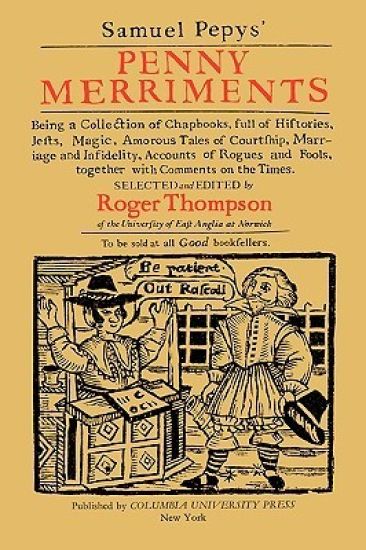
Samuel Pepys' Penny Merriments

Samuel Pepys' Penny Merriments

Samuel Pepys

Columbia University Press
1977
sidottu
Though collections of Chinese fiction, poetry, and drama abound, there have been no English-language anthologies of Chinese essays on the market. Now, veteran sinologist David Pollard has selected and translated the best and most representative examples of Chinese prose writing from the third century to the contemporary period. Succinctly tracing the history of the genre in China in his introduction, Pollard then wittily and informatively introduces each writer chosen. The selections themselves include Ye Shengtao's ruminations of making a boat trip to visit his ancestors' graves, Fan Bao on life in prison, Gui Yougang's reminiscence of his mother, Yuan Mei's essay on borrowing books, and more. These writings not only give us marvelous little sketches of everyday life, lifting the curtain to a past world, they reveal still more about the minds of the writers and how they saw the world they lived in. Though the compositions span the past 1,800 years, the bulk of the selections are from the twentieth century and range from early masters of the form, such as Lu Xun and Zhou Zuoren, to the major writers of the middle generation, such as Ye Chengtao, Zhu Ziqing, Feng Zikai, Liang Shiqiu, and Liang Yuchun, and conclude with living writers who publish in both Taiwan and the mainland.Pollard's aim has been to translate examples that are both good in and of themselves and also contribute something to the essay form. The classical selections represent the native tradition that the modern essayists either imitated or reacted against. Taken together, these writings illuminate Chinese attitudes and reactions to the world they inhabit and provide a vast amount of information about the details of everyday life, social intercourse, and man's reaction to his environment.
Samuel Pepys' Penny Merriments

Samuel Pepys' Penny Merriments

Samuel Pepys

Columbia University Press
1977
pokkari
Though collections of Chinese fiction, poetry, and drama abound, there have been no English-language anthologies of Chinese essays on the market. Now, veteran sinologist David Pollard has selected and translated the best and most representative examples of Chinese prose writing from the third century to the contemporary period. Succinctly tracing the history of the genre in China in his introduction, Pollard then wittily and informatively introduces each writer chosen. The selections themselves include Ye Shengtao's ruminations of making a boat trip to visit his ancestors' graves, Fan Bao on life in prison, Gui Yougang's reminiscence of his mother, Yuan Mei's essay on borrowing books, and more. These writings not only give us marvelous little sketches of everyday life, lifting the curtain to a past world, they reveal still more about the minds of the writers and how they saw the world they lived in. Though the compositions span the past 1,800 years, the bulk of the selections are from the twentieth century and range from early masters of the form, such as Lu Xun and Zhou Zuoren, to the major writers of the middle generation, such as Ye Chengtao, Zhu Ziqing, Feng Zikai, Liang Shiqiu, and Liang Yuchun, and conclude with living writers who publish in both Taiwan and the mainland.Pollard's aim has been to translate examples that are both good in and of themselves and also contribute something to the essay form. The classical selections represent the native tradition that the modern essayists either imitated or reacted against. Taken together, these writings illuminate Chinese attitudes and reactions to the world they inhabit and provide a vast amount of information about the details of everyday life, social intercourse, and man's reaction to his environment.
The Diary of Samuel Pepys

The Diary of Samuel Pepys

Samuel Pepys

Modern Library Inc
2003
pokkari
Richard Le Gallienne's elegant abridgment of the Diary captures the essential writings of Samuel Pepys (1633-1703), a remarkable man who witnessed the coronation of Charles II, the Great Plague of 1665, and the Great Fire of 1666. Originally scribbled in a cryptic shorthand, Pepys's quotidian journal of life in Restoration London provides an astonishingly frank and diverting account of political intrigues; naval, church, and cultural affairs; and the sexual escapades and domestic strife of a man with a voracious, childlike appetite for living. "As a human document the Diary is literally unique," notes Le Gallienne. "It will have a still greater value for its historical importance."
The Diary Of Samuel Pepys

The Diary Of Samuel Pepys

Samuel Pepys

Hutson Street Press
2025
sidottu
Delve into the intimate world of 17th-century London with "The Diary Of Samuel Pepys, Volume 9." This remarkable journal offers an unparalleled glimpse into the life and times of Samuel Pepys, a prominent naval administrator and social observer during the Restoration period. With vivid detail and engaging prose, Pepys chronicles significant historical events, personal triumphs and tribulations, and the vibrant tapestry of daily life in London. Volume 9 continues to capture the essence of Pepys's astute observations and candid reflections, providing invaluable insights into the political, social, and cultural landscape of the era. His entries offer a unique perspective on major events such as the Second Anglo-Dutch War and the Great Fire of London, alongside intimate details of his family, friends, and professional life. This enduring diary remains a captivating window into a pivotal moment in history and a testament to the enduring power of personal narrative. This work has been selected by scholars as being culturally important, and is part of the knowledge base of civilization as we know it. This work was reproduced from the original artifact, and remains as true to the original work as possible. Therefore, you will see the original copyright references, library stamps (as most of these works have been housed in our most important libraries around the world), and other notations in the work. This work is in the public domain in the United States of America, and possibly other nations. Within the United States, you may freely copy and distribute this work, as no entity (individual or corporate) has a copyright on the body of the work. As a reproduction of a historical artifact, this work may contain missing or blurred pages, poor pictures, errant marks, etc. Scholars believe, and we concur, that this work is important enough to be preserved, reproduced, and made generally available to the public. We appreciate your support of the preservation process, and thank you for being an important part of keeping this knowledge alive and relevant.