Kirjojen hintavertailu. Mukana 11 699 587 kirjaa ja 12 kauppaa.

Kirjahaku

Etsi kirjoja tekijän nimen, kirjan nimen tai ISBN:n perusteella.

3 kirjaa tekijältä Samuel R. Wolff

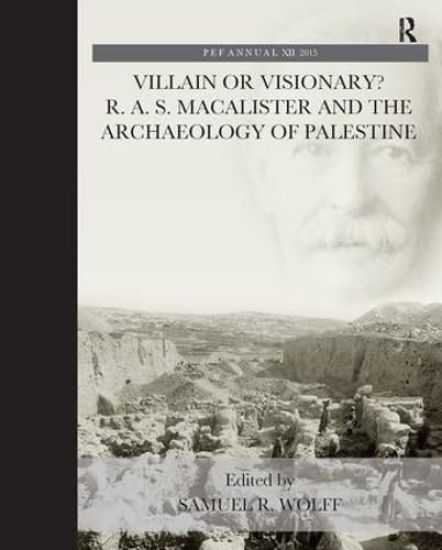
Villain or Visionary?

Villain or Visionary?

Samuel R. Wolff

Routledge
2019
nidottu
The author is an important but controversial figure in the history of Palestinian archaeology. This volume celebrates the centennial of the publication of his excavations at Tel Gezer (1912), conducted under the auspices of the PEF. This excavation was the most ambitious one of its time in the land, yielding important architectural remains and thousands of artefacts, including the well-known Gezer Calendar. The contributions of several eminent scholars reflect on the man and his work, and also report on how his work influenced the understanding of the sites he excavated in Palestine, all of which are currently being re-investigated. It is also richly illustrated with images from the PEF archives.Evaluations of Macalister's work vary tremendously and are reflected here. Many learnt from him, others deplored his methods and record keeping. As one contributor puts it, 'an industrious archaeologist but an awful excavator', and a man who was both admired and intensely disliked: regarded as both a villain and a visionary. But it is generally agreed that he is a figure who cannot be ignored, and anyone interested in Palestinian archaeology will find a great deal to learn from this book.
Studies in the Archaeology of Israel and Neighboring Lands in Memory of Douglas L. Esse

Studies in the Archaeology of Israel and Neighboring Lands in Memory of Douglas L. Esse

Samuel R. Wolff

Oriental Institute of the University of Chicago
2001
nidottu
The studies in this impressive volume of over 700 pages are presented in memory of Douglas L. Esse, an archaeologist and assistant professor at the Oriental Institute of the University of Chicago until his untimely death at the age of forty-two on October 13, 1992. The majority of the thirty-four chapters in this volume are concerned with the study of the Early Bronze Age, and some chapters deal with periods and issues that pre-date and post-date the Early Bronze Age, as all of the forty-six authors selected to contribute to this volume were either colleagues or students of Esse and some were not primarily Early Bronze Age specialists. Chapter One includes three "Tributes" to Esse by L. E. Stager, A. Ben-Tor, and D. Saltz that assess the impact of Esse's scholarship, excellence in fieldwork, and the friendship he showed to all of those with whom he worked. Many of the chapters are concerned with ceramic studies from various historical periods, while other chapters deal with burial customs, cult, chronology, social organization, cylinder seal impressions, faunal studies, metrology, architecture, radiocarbon determinations, and maritime trade. The Israelite sites that figure prominently in these studies include Tel Maahaz, Tel Dor, Megiddo, Arad, Ai, Tel Yaqush, Nahal Tillah, Beit Yerah, Illin Tahtit, and Ashkelon. The geographical areas that are investigated include the Soreq Basin, the Akko Plain, the Jezreel Valley, the Dead Sea Plain, and the Carmel Coast and Ramat Menashe regions in Israel and Jordan; external studies are concerned with material from Egypt, the site of Alishar Höyuek in Turkey, Tell el-Umeiri in Jordan as well as with pottery connections in Arabia. One chapter is concerned with the latest historical periods, which discusses the Persian and Muslim conquests in Palestinian archaeology.
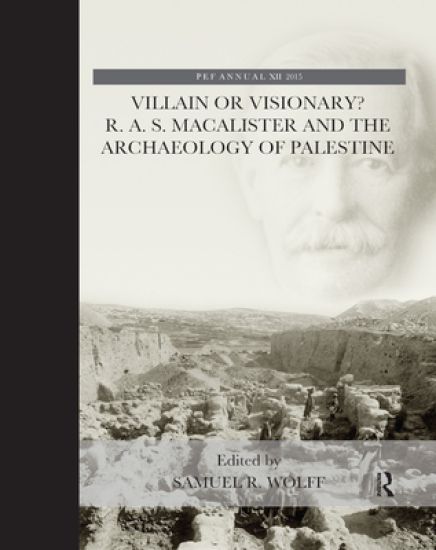
Villain or Visionary?

Villain or Visionary?

Samuel R. Wolff

Legenda
2015
sidottu
The author is an important but controversial figure in the history of Palestinian archaeology. This volume celebrates the centennial of the publication of his excavations at Tel Gezer (1912), conducted under the auspices of the PEF. This excavation was the most ambitious one of its time in the land, yielding important architectural remains and thousands of artefacts, including the well-known Gezer Calendar. The contributions of several eminent scholars reflect on the man and his work, and also report on how his work influenced the understanding of the sites he excavated in Palestine, all of which are currently being re-investigated. It is also richly illustrated with images from the PEF archives.Evaluations of Macalister's work vary tremendously and are reflected here. Many learnt from him, others deplored his methods and record keeping. As one contributor puts it, 'an industrious archaeologist but an awful excavator', and a man who was both admired and intensely disliked: regarded as both a villain and a visionary. But it is generally agreed that he is a figure who cannot be ignored, and anyone interested in Palestinian archaeology will find a great deal to learn from this book.