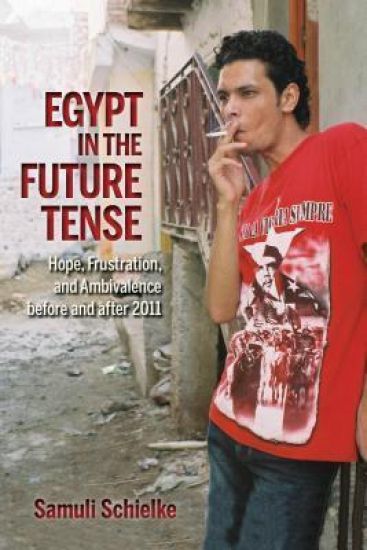
Against the backdrop of the revolutionary uprisings of 2011–2013, Samuli Schielke asks how ordinary Egyptians confront the great promises and grand schemes of religious commitment, middle class respectability, romantic love, and political ideologies in their daily lives, and how they make sense of the existential anxieties and stalled expectations that inevitably accompany such hopes. Drawing on many years of study in Egypt and the life stories of rural, lower-middle-class men before and after the revolution, Schielke views recent events in ways that are both historically deep and personal. Schielke challenges prevailing views of Muslim piety, showing that religious lives are part of a much more complex lived experience.
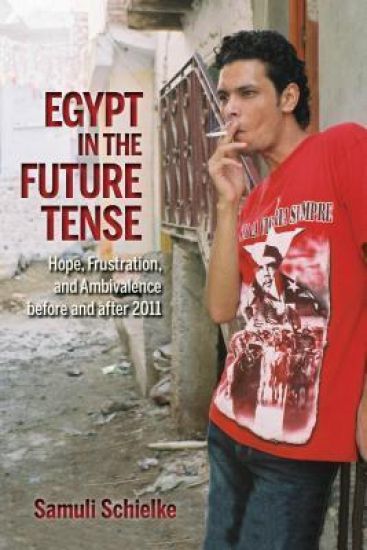
Against the backdrop of the revolutionary uprisings of 2011–2013, Samuli Schielke asks how ordinary Egyptians confront the great promises and grand schemes of religious commitment, middle class respectability, romantic love, and political ideologies in their daily lives, and how they make sense of the existential anxieties and stalled expectations that inevitably accompany such hopes. Drawing on many years of study in Egypt and the life stories of rural, lower-middle-class men before and after the revolution, Schielke views recent events in ways that are both historically deep and personal. Schielke challenges prevailing views of Muslim piety, showing that religious lives are part of a much more complex lived experience.
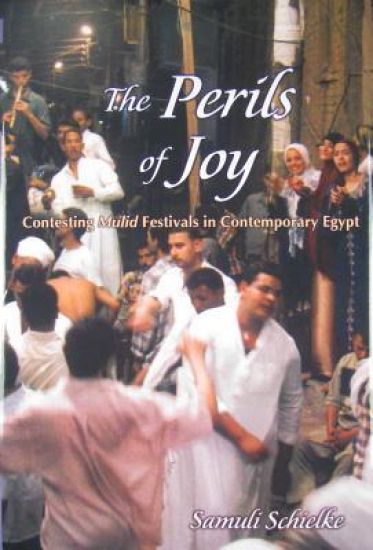
Mulids, festivals in honor of Muslim ""friends of God,"" have been part of Muslim religious and cultural life for close to a thousand years. While many Egyptians see mulids as an expression of joy and love for the Prophet Muhammad and his family, many others see them as opposed to Islam, a sign of a backward mentality, a piece of folklore at best. What is it about a mulid that makes it a threat to Islam and modernity in the eyes of some, and an indication of pious devotion in the eyes of others? What makes the celebration of a saint’s festival appear in such dramatically different contours? The Perils of Joy offers a rich investigation, both historical and ethnographic, of conflicting and transforming attitudes toward festivals in contemporary Egypt. Schielke argues that mulids are characterized by a utopian momentum of the extraordinary that troubles the grand schemes of order and perfection that have become hegemonic in Egypt since the twentieth century. Not an opposition between state and civil society, nor a division between Islamists and secularists, but rather the competition between different perceptions of what makes up a complete life forms the central line of conflict in the contestation of festive culture.
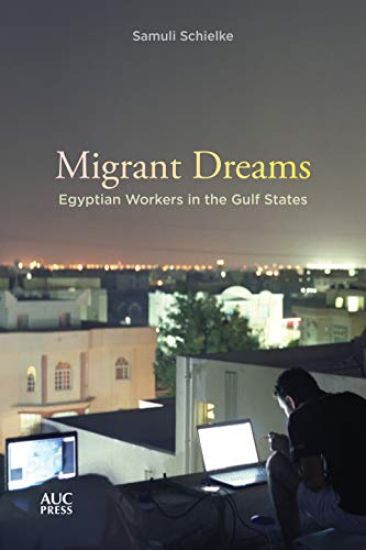
A vivid ethnography of Egyptian migrants to the Arab Gulf states, Migrant Dreams is about the imagination which migration thrives on, and the hopes and ambitions generated by the repeated experience of leaving and returning home. What kind of dreams for a good or better life drives labor migrants? What does being a migrant worker do to one’s hopes and ambitions? How does the experience of migration to the Gulf, with its attendant economic and legal precarities, shape migrants’ particular dreams of a better life? What do those dreams—be they realistic and productive, or fantastic and unlikely—do to the social worlds of the people who pursue them, and to their families and communities back home upon their return? Based on ten years of ethnographic fieldwork and conversations with Egyptian men from mostly low-income rural backgrounds who migrated as workers to the Gulf, returned home, and migrated again over a period of about a decade, this fine-grained study explores and engages with these questions and more, as the men reflect on their strivings and the dreams they hope to fulfill. Throughout the book, Samuli Schielke highlights the story of one man, Tawfiq, who is particularly gifted at analyzing his own situation and struggles, resulting in a richly nuanced account that will appeal not only to Middle East scholars, but to anyone interested in the lived lives of labor migrants and what their experiences ultimately mean to them.
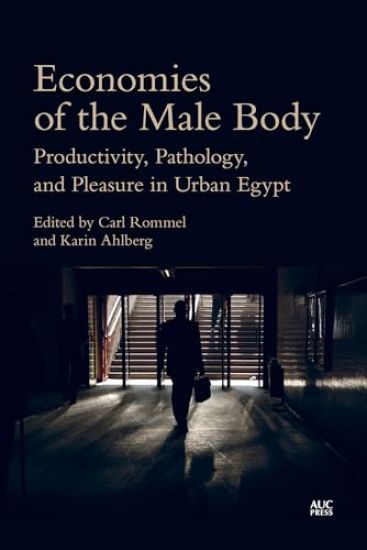
An intimate portrayal of masculinity in Egypt from lively, grounded, and fresh perspectives Based on long-term research in Cairo and Alexandria and grounded in ethnographic stories and intimate portrayals, Economies of the Male Body takes up masculinity in Egypt from an important new angle: male bodies in conditions of overwork, illness, as well as pleasure and recreation. The contributors to this volume center bottom-up everyday perspectives, in which the men appear as real flesh-and-blood human beings, embodying both their society’s gendered ideals as well as their own personal trajectories and idiosyncrasies. They set out to substantiate how underlying economic and social conditions undermine non-elite men’s ability to eat a varied diet, get proper rest, participate in sports, be loving and present husbands, and, more generally, lead rich, full, and worthwhile lives. Economies of the Male Body shows how the health of Egyptian men, many of whom are overweight and overworked, and Egypt’s grim health statistics of high premature male mortality among men of lower socioeconomic classes should be read not as a result of substandard awareness among the population, but as a record of visceral inequalities generated by late capitalism and a global economic system that disproportionately burdens underprivileged bodies. Contributors: Carl Rommel, Uppsala University. Uppsala Sweden Karin Ahlberg, Stockholm University, Stockholm Sweden and University of Bremen, Germany Mariz Kelada, American University of Beirut, Beirut, Lebanon Mustafa Abdalla, The Robert Koch Institute, Berlin, Germany Youssef Ramez Boktor, The City University of New York, New York, USA Noha Fikry, University of Toronto, Toronto, Canada