Kirjojen hintavertailu. Mukana 12 016 292 kirjaa ja 12 kauppaa.

Kirjahaku

Etsi kirjoja tekijän nimen, kirjan nimen tai ISBN:n perusteella.

4 kirjaa tekijältä Sandra Fredman

Women and the Law

Women and the Law

Sandra Fredman

Clarendon Press
1998
sidottu
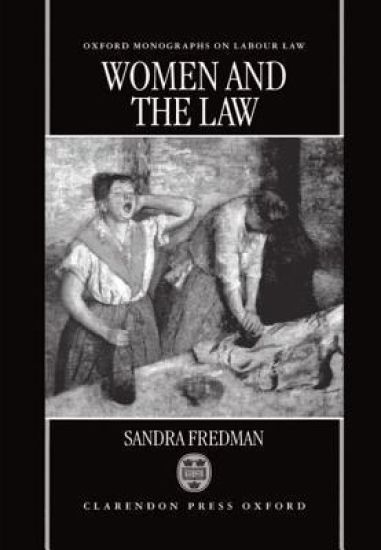
As the millennium draws to a close, it is clear that equality between men and women remains a pipe-dream. Thus argues Sandra Fredman in her stimulating, new book on women and the law. Women's pay still lags significantly behind that of men; and women continue to congregate in low status, low paid jobs. Yet men and women are now formally equal before the law: indeed, legislation positively outlawing discrimination has been in force for over two decades both in the UK and the European Union. The key question asked by the author is: Why has the law had so little impact? The answer, the author argues, lies in the structure of the law itself. In a wide-ranging examination of sources drawn from political theory, social history and law, the first part of the book develops a critical framework to illuminate the limitations of the law in addressing women's disadvantaged status. In particular, the author unmask the apparent objectivity and neutrality of law, exposing the assumptions which have systematically impeded women's progress. Part II of the book applies this critique to a detailed examination of key legal issues in the UK and EU, with illuminating references to the law in North America and Australia. The result is an original and incisive analysis of pressing legal issues ranging from low pay, sexual harassment and flexible working to parenting rights and reverse discrimination. The book locates women's role in the family as a key contributory factor to their continued disadvantage within the paid workforce. Yet, in signalling the way forward, the author rejects the notion that the aim is simply to slot more women into existing structures. Instead of expecting women to conform to structures which exclude and devalue caring responsibilities, she argues, real change will only occur if paid work is restructured so that both men and women can be active participants in family life as well as in the paid workforce. The book does not, however, offer single dimensional solutions. In particular, the very difficult conflicts of interest which can arise between women, on grounds such as class or race, are directly confronted.
Women and the Law

Women and the Law

Sandra Fredman

Clarendon Press
1998
nidottu
As the millennium draws to a close, it is clear that equality between men and women remains a pipe-dream. Thus argues Sandra Fredman in her stimulating, new book on women and the law. Women's pay still lags significantly behind that of men; and women continue to congregate in low status, low paid jobs. Yet men and women are now formally equal before the law: indeed, legislation positively outlawing discrimination has been in force for over two decades both in the UK and the European Union. The key question asked by the author is: Why has the law had so little impact? The answer, the author argues, lies in the structure of the law itself. In a wide-ranging examination of sources drawn from political theory, social history and law, the first part of the book develops a critical framework to illuminate the limitations of the law in addressing women's disadvantaged status. In particular, the author unmask the apparent objectivity and neutrality of law, exposing the assumptions which have systematically impeded women's progress. Part II of the book applies this critique to a detailed examination of key legal issues in the UK and EU, with illuminating references to the law in North America and Australia. The result is an original and incisive analysis of pressing legal issues ranging from low pay, sexual harassment and flexible working to parenting rights and reverse discrimination. The book locates women's role in the family as a key contributory factor to their continued disadvantage within the paid workforce. Yet, in signalling the way forward, the author rejects the notion that the aim is simply to slot more women into existing structures. Instead of expecting women to conform to structures which exclude and devalue caring responsibilities, she argues, real change will only occur if paid work is restructured so that both men and women can be active participants in family life as well as in the paid workforce. The book does not, however, offer single dimensional solutions. In particular, the very difficult conflicts of interest which can arise between women, on grounds such as class or rase, are directly confronted.
Comparative Human Rights Law

Comparative Human Rights Law

Sandra Fredman

Oxford University Press
2018
sidottu
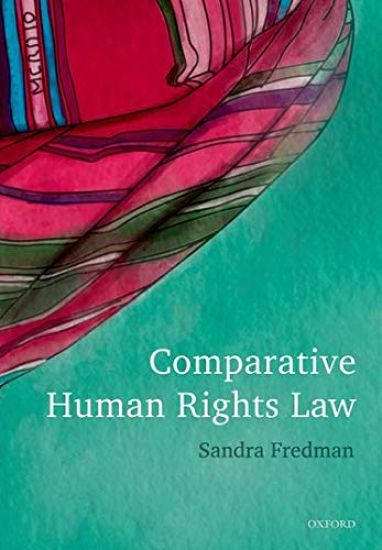
Courts in different jurisdictions face similar human rights questions. Does the death penalty breach human rights? Does freedom of speech include racist speech? Is there a right to health? This book uses the prism of comparative law to examine the fascinating ways in which these difficult questions are decided. On the one hand, the shared language of human rights suggests that there should be similar solutions to comparable problems. On the other hand, there are important differences. Constitutional texts are worded differently; courts have differing relationships with the legislature; and there are divergences in socio-economic development, politics, and history. Nevertheless, there is a growing transnational conversation between courts, with cases in one jurisdiction being cited in others. Part I sets out the cross-cutting themes which shape the ways judges respond to challenging human rights issues. It examines when it is legitimate to refer to foreign materials; how universality and cultural relativity are balanced in human rights law; the appropriate role of courts in adjudicating human rights in a democracy; and the principles judges use to interpret human rights texts. The book is unusual in transcending the distinction between socio-economic rights and civil and political rights. Part II applies these cross-cutting themes to comparing human rights law in the US, UK, South Africa, Canada, and India. Its focus is on seven particularly challenging issues: the death penalty, abortion, housing, health, speech, education and religion, with the aim of inspiring further comparative examination of other pressing human rights issues.
Comparative Human Rights Law

Comparative Human Rights Law

Sandra Fredman

Oxford University Press
2018
nidottu
Courts in different jurisdictions face similar human rights questions. Does the death penalty breach human rights? Does freedom of speech include racist speech? Is there a right to health? This book uses the prism of comparative law to examine the fascinating ways in which these difficult questions are decided. On the one hand, the shared language of human rights suggests that there should be similar solutions to comparable problems. On the other hand, there are important differences. Constitutional texts are worded differently; courts have differing relationships with the legislature; and there are divergences in socio-economic development, politics, and history. Nevertheless, there is a growing transnational conversation between courts, with cases in one jurisdiction being cited in others. Part I sets out the cross-cutting themes which shape the ways judges respond to challenging human rights issues. It examines when it is legitimate to refer to foreign materials; how universality and cultural relativity are balanced in human rights law; the appropriate role of courts in adjudicating human rights in a democracy; and the principles judges use to interpret human rights texts. The book is unusual in transcending the distinction between socio-economic rights and civil and political rights. Part II applies these cross-cutting themes to comparing human rights law in the US, UK, South Africa, Canada, and India. Its focus is on seven particularly challenging issues: the death penalty, abortion, housing, health, speech, education and religion, with the aim of inspiring further comparative examination of other pressing human rights issues.