Kirjojen hintavertailu. Mukana 11 342 296 kirjaa ja 12 kauppaa.

Kirjahaku

Etsi kirjoja tekijän nimen, kirjan nimen tai ISBN:n perusteella.

5 kirjaa tekijältä Sandra Halperin

Re-Envisioning Global Development

Re-Envisioning Global Development

Sandra Halperin

Routledge
2013
sidottu
Re-Envisioning Global Development offers an original conceptualisation of capitalist development from its origins to the present day.Most approaches to understanding contemporary development assume that industrial capitalism was achieved through a process of nationally organised economic growth, and that in recent years its organisation has become increasingly trans-local or global. However, Halperin shows that nationally organised economic growth has rarely been the case – it has only recently come to characterise a few countries and for only a few decades. This innovative text elaborates an alternative ontology and way of thinking about global development during the last two centuries – one linked, not to nations and regions, but to a set of essentially trans-national relations and connections. It argues that capitalist development has, everywhere and from the start, involved—not whole nations or societies–but only sectors or geographical areas within states. By bringing this aspect of historically ‘normal’ capitalist development into clearer focus, the book clarifies the specific conditions and circumstances that enabled European economies to pursue a more broad-based development following World War II, and what prevented a similar outcome in the contemporary ‘third world’. It also clarifies the nature, spatial extent, and circumstances of current globalising trends. Wide-ranging and provocative, this book is required reading for advanced level students and scholars in development studies, development economics and political science.

Re-Envisioning Global Development

Re-Envisioning Global Development

Sandra Halperin

Routledge
2013
nidottu
Re-Envisioning Global Development offers an original conceptualisation of capitalist development from its origins to the present day.Most approaches to understanding contemporary development assume that industrial capitalism was achieved through a process of nationally organised economic growth, and that in recent years its organisation has become increasingly trans-local or global. However, Halperin shows that nationally organised economic growth has rarely been the case – it has only recently come to characterise a few countries and for only a few decades. This innovative text elaborates an alternative ontology and way of thinking about global development during the last two centuries – one linked, not to nations and regions, but to a set of essentially trans-national relations and connections. It argues that capitalist development has, everywhere and from the start, involved—not whole nations or societies–but only sectors or geographical areas within states. By bringing this aspect of historically ‘normal’ capitalist development into clearer focus, the book clarifies the specific conditions and circumstances that enabled European economies to pursue a more broad-based development following World War II, and what prevented a similar outcome in the contemporary ‘third world’. It also clarifies the nature, spatial extent, and circumstances of current globalising trends. Wide-ranging and provocative, this book is required reading for advanced level students and scholars in development studies, development economics and political science.

War and Social Change in Modern Europe

War and Social Change in Modern Europe

Sandra Halperin

Cambridge University Press
2003
pokkari
Halperin traces the persistence of traditional class structures during the development of industrial capitalism in Europe, and the way in which these structures shaped states and state behavior and generated conflict. She documents European conflicts between 1789 and 1914, including small and medium scale conflicts often ignored by researchers and links these conflicts to structures characteristic of industrial capitalist development in Europe before 1945. This book revisits the historical terrain of Karl Polanyi’s The Great Transformation (1944), however, it argues that Polanyi’s analysis is, in important ways, inaccurate and misleading. Ultimately, the book shows how and why the conflicts both culminated in the world wars and brought about a ‘great transformation’ in Europe. Its account of this period challenges not only Polanyi’s analysis, but a variety of influential perspectives on nationalism, development, conflict, international systems change, and globalization.
War and Social Change in Modern Europe

War and Social Change in Modern Europe

Sandra Halperin

Cambridge University Press
2003
sidottu
Halperin traces the persistence of traditional class structures during the development of industrial capitalism in Europe, and the way in which these structures shaped states and state behavior and generated conflict. She documents European conflicts between 1789 and 1914, including small and medium scale conflicts often ignored by researchers and links these conflicts to structures characteristic of industrial capitalist development in Europe before 1945. This book revisits the historical terrain of Karl Polanyi's The Great Transformation (1944), however, it argues that Polanyi's analysis is, in important ways, inaccurate and misleading. Ultimately, the book shows how and why the conflicts both culminated in the world wars and brought about a 'great transformation' in Europe. Its account of this period challenges not only Polanyi's analysis, but a variety of influential perspectives on nationalism, development, conflict, international systems change, and globalization.
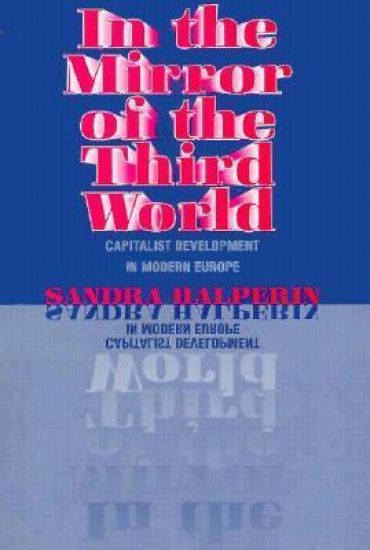
In the Mirror of the Third World

In the Mirror of the Third World

Sandra Halperin

Cornell University Press
1997
pokkari
In Marx's familiar dictum, the more-developed country shows the less developed an image of its own future. Turning this idea upside down, In the Mirror of the Third World looks to the contemporary Third World for a reflection of European history. The resulting view challenges standard accounts of European social, economic, and political development. Sandra Halperin's analysis of the European experience begins where studies of Third World development often start: considering the legacies of colonial domination. Europe also had a colonial past, she reminds us, and the states of Europe, like those of today's Third World, were the product of colonialism and imperialism. From this starting point, Halperin traces features characteristic of Third World development through the history of European capitalism: enclave economies oriented to foreign markets; weak middle classes; alliances among the state, traditional landowning elites, and new industrial classes; unstable and partial democracy; sharp inequalities; and increasing poverty—all as much a part of European society on the eve of World War I as they are of developing countries today. Halperin also emphasizes the emergence of a militant, literal religion in Europe and its critical role in the class struggles of the nineteenth century.