Kirjojen hintavertailu. Mukana 11 464 284 kirjaa ja 12 kauppaa.

Kirjahaku

Etsi kirjoja tekijän nimen, kirjan nimen tai ISBN:n perusteella.

6 kirjaa tekijältä Sandra Harding

Objectivity and Diversity

Objectivity and Diversity

Sandra Harding

University of Chicago Press
2015
sidottu
Worries about scientific objectivity seem never-ending. Social critics and philosophers of science have argued that invocations of objectivity are often little more than attempts to boost the status of a claim, while calls for value neutrality may be used to suppress otherwise valid dissenting positions. Objectivity is used sometimes to advance democratic agendas, at other times to block them; sometimes for increasing the growth of knowledge, at others to resist it. Sandra Harding is not ready to throw out objectivity quite yet. For all of its problems, she contends that objectivity is too powerful a concept simply to abandon. In Objectivity and Diversity, Harding calls for a science that is both more epistemically adequate and socially just, a science that would ask: How are the lives of the most economically and politically vulnerable groups affected by a particular piece of research? Do they have a say in whether and how the research is done? Should empirically reliable systems of indigenous knowledge count as "real science"? Ultimately, Harding argues for a shift from the ideal of a neutral, disinterested science to one that prizes fairness and responsibility.
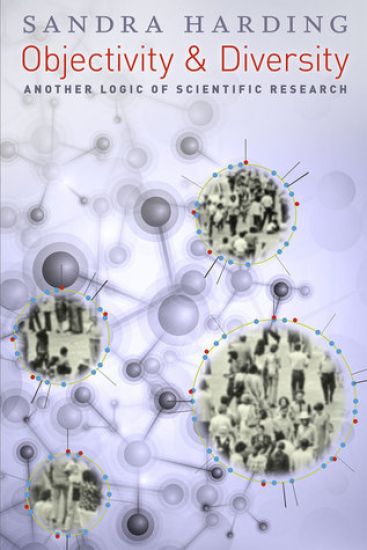
Objectivity and Diversity

Objectivity and Diversity

Sandra Harding

University of Chicago Press
2015
nidottu
Worries about scientific objectivity seem never-ending. Social critics and philosophers of science have argued that invocations of objectivity are often little more than attempts to boost the status of a claim, while calls for value neutrality may be used to suppress otherwise valid dissenting positions. Objectivity is used sometimes to advance democratic agendas, at other times to block them; sometimes for increasing the growth of knowledge, at others to resist it. Sandra Harding is not ready to throw out objectivity quite yet. For all of its problems, she contends that objectivity is too powerful a concept simply to abandon. In Objectivity and Diversity, Harding calls for a science that is both more epistemically adequate and socially just, a science that would ask: How are the lives of the most economically and politically vulnerable groups affected by a particular piece of research? Do they have a say in whether and how the research is done? Should empirically reliable systems of indigenous knowledge count as "real science"? Ultimately, Harding argues for a shift from the ideal of a neutral, disinterested science to one that prizes fairness and responsibility.
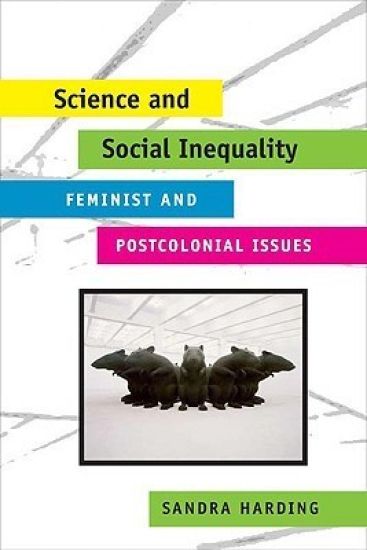
Science and Social Inequality

Science and Social Inequality

Sandra Harding

University of Illinois Press
2006
nidottu
In Science and Social Inequality, Sandra Harding makes the provocative argument that the philosophy and practices of today's Western science, contrary to its Enlightenment mission, work to insure that more science will only worsen existing gaps between the best and worst off around the world. She defends this claim by exposing the ways that hierarchical social formations in modern Western sciences encode antidemocratic principles and practices, particularly in terms of their services to militarism, the impoverishment and alienation of labor, Western expansion, and environmental destruction. The essays in this collection--drawing on feminist, multicultural, and postcolonial studies--propose ways to reconceptualize the sciences in the global social order. At issue here are not only social justice and environmental issues but also the accuracy and comprehensiveness of our understandings of natural and social worlds. The inadvertent complicity of the sciences with antidemocratic projects obscures natural and social realities and thus blocks the growth of scientific knowledge. Scientists, policy makers, social justice movements and the consumers of scientific products (that is, the rest of us) can work together and separately to improve this situation.
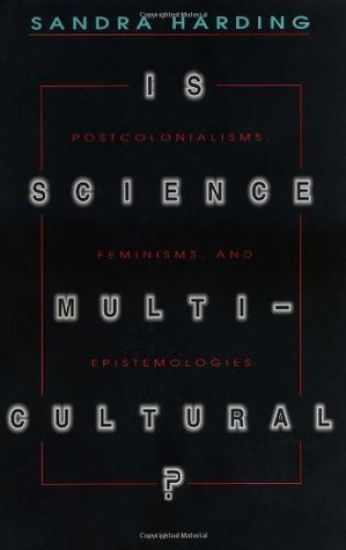
Is Science Multicultural?

Is Science Multicultural?

Sandra Harding

Indiana University Press
1998
pokkari
Is Science Multicultural? explores what the last three decades of European/American, feminist, and postcolonial science and technology studies can learn from each other. Sandra Harding introduces and discusses an array of postcolonial science studies, and their implications for "northern" science. All three science studies strains have developed in the context of post-World War II science and technology projects. They illustrate how technoscientific projects mean different things to different groups. The meaning attached by the culture of the West may not be shared or may be diametrically opposite in the cultures in other parts of the world. All, however, would agree that scientific projects—modern science included—are "local knowledge systems." The interests and discursive resources that the various science studies bring groups to their projects, and the ways that they organize the production of their kind of science studies, are distinctively culturally-local also. While their projects may be unintentionally converging, they also conflict in fundamental respects. How is this inevitable cultural-situatedness of knowledge both an invaluable resource as well as a limitation on the advance of knowledge about nature? What are the distinctive resources that the feminist and postcolonial science theorists offer in thinking about the history of modern science; the diversity of "scientific" traditions in non-European as well as in European cultures; and the directions that might be taken by less androcentric and Eurocentric scientific projects? How might modern sciences' projects be linked more firmly to the prodemocratic yearnings that are so widely voiced in contemporary life? Carefully balancing poststructuralist and conventional epistemological resources, this study concludes by proposing new directions for thinking about objectivity, method, and reflexivity in light of the new understandings developed in the post-World War II world.
Sciences from Below

Sciences from Below

Sandra Harding

Duke University Press
2008
sidottu
In Sciences from Below, the esteemed feminist science studies scholar Sandra Harding synthesizes modernity studies with progressive tendencies in science and technology studies to suggest how scientific and technological pursuits might be more productively linked to social justice projects around the world. Harding illuminates the idea of multiple modernities as well as the major contributions of post-Kuhnian Western, feminist, and postcolonial science studies. She explains how these schools of thought can help those seeking to implement progressive social projects refine their thinking to overcome limiting ideas about what modernity and modernization are, the objectivity of scientific knowledge, patriarchy, and Eurocentricity. She also reveals how ideas about gender and colonialism frame the conventional contrast between modernity and tradition. As she has done before, Harding points the way forward in Sciences from Below.Describing the work of the post-Kuhnian science studies scholars Bruno Latour, Ulrich Beck, and the team of Michael Gibbons, Helga Nowtony, and Peter Scott, Harding reveals how, from different perspectives, they provide useful resources for rethinking the modernity versus tradition binary and its effects on the production of scientific knowledge. Yet, for the most part, they do not take feminist or postcolonial critiques into account. As Harding demonstrates, feminist science studies and postcolonial science studies have vital contributions to make; they bring to light not only the male supremacist investments in the Western conception of modernity and the historical and epistemological bases of Western science but also the empirical knowledge traditions of the global South. Sciences from Below is a clear and compelling argument that modernity studies and post-Kuhnian, feminist, and postcolonial sciences studies each have something important, and necessary, to offer to those formulating socially progressive scientific research and policy.
Sciences from Below

Sciences from Below

Sandra Harding

Duke University Press
2008
pokkari
In Sciences from Below, the esteemed feminist science studies scholar Sandra Harding synthesizes modernity studies with progressive tendencies in science and technology studies to suggest how scientific and technological pursuits might be more productively linked to social justice projects around the world. Harding illuminates the idea of multiple modernities as well as the major contributions of post-Kuhnian Western, feminist, and postcolonial science studies. She explains how these schools of thought can help those seeking to implement progressive social projects refine their thinking to overcome limiting ideas about what modernity and modernization are, the objectivity of scientific knowledge, patriarchy, and Eurocentricity. She also reveals how ideas about gender and colonialism frame the conventional contrast between modernity and tradition. As she has done before, Harding points the way forward in Sciences from Below.Describing the work of the post-Kuhnian science studies scholars Bruno Latour, Ulrich Beck, and the team of Michael Gibbons, Helga Nowtony, and Peter Scott, Harding reveals how, from different perspectives, they provide useful resources for rethinking the modernity versus tradition binary and its effects on the production of scientific knowledge. Yet, for the most part, they do not take feminist or postcolonial critiques into account. As Harding demonstrates, feminist science studies and postcolonial science studies have vital contributions to make; they bring to light not only the male supremacist investments in the Western conception of modernity and the historical and epistemological bases of Western science but also the empirical knowledge traditions of the global South. Sciences from Below is a clear and compelling argument that modernity studies and post-Kuhnian, feminist, and postcolonial sciences studies each have something important, and necessary, to offer to those formulating socially progressive scientific research and policy.