Kirjojen hintavertailu. Mukana 11 627 220 kirjaa ja 12 kauppaa.

Kirjahaku

Etsi kirjoja tekijän nimen, kirjan nimen tai ISBN:n perusteella.

7 kirjaa tekijältä Sandra Laugier

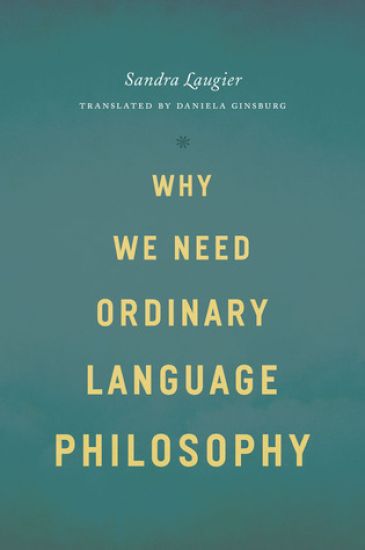
Why We Need Ordinary Language Philosophy

Why We Need Ordinary Language Philosophy

Sandra Laugier

University of Chicago Press
2013
sidottu
Sandra Laugier has long been a key liaison between American and European philosophical thought, responsible for bringing American philosophers such as Ralph Waldo Emerson, Henry David Thoreau, and Stanley Cavell to French readers - but until now her books have never been published in English. "Why We Need Ordinary Language Philosophy" rights that wrong with a topic perfect for English-language readers: the idea of analytic philosophy. Focused on clarity and logical argument, analytic philosophy has dominated the discipline in the United States, Australia, and Britain over the past one hundred years, and it is often seen as a unified, coherent, and inevitable advancement. Laugier questions this assumption, rethinking the very grounds that drove analytic philosophy to develop and uncovering its inherent tensions and confusions. Drawing on J. L. Austin and the later works of Ludwig Wittgenstein, she argues for the solution provided by ordinary language philosophy - a philosophy that trusts and utilizes the everyday use of language and the clarity of meaning it provides - and in doing so offers a major contribution to the philosophy of language and twentieth- and twenty-first-century philosophy as a whole.

Wittgenstein

Wittgenstein

Sandra Laugier

THE UNIVERSITY OF CHICAGO PRESS
2025
sidottu
A holistic introduction to Wittgenstein’s philosophy that approaches him as a philosopher of ordinary life. One of philosopher Ludwig Wittgenstein’s most consequential claims was that the meaning of the word, its sense, is its use in language. This deceptively simple claim, the foundation of what became known as ordinary language philosophy, has animated thinkers across disciplinary bounds from metaphysics to ethics and more. In The Senses of Use, Sandra Laugier embarks on a fresh journey through Wittgenstein’s corpus that emphasizes the place of ordinary life and language in its thought. Through his Tractatus Logico-Philosophicus, Philosophical Investigations, and rich posthumously published works, Laugier offers a compelling new look at Wittgenstein as a philosopher of mind.
Why We Need Ordinary Language Philosophy

Why We Need Ordinary Language Philosophy

Sandra Laugier

THE UNIVERSITY OF CHICAGO PRESS
2023
nidottu
Now in paperback, Sandra Laugier's reconsideration of analytic philosophy and ordinary language. Sandra Laugier has long been a key liaison between American and European philosophical thought, responsible for bringing American philosophers such as Ralph Waldo Emerson, Henry David Thoreau, and Stanley Cavell to French readers—but until now her books have never been published in English. Why We Need Ordinary Language Philosophy rights that wrong with a topic perfect for English-language readers: the idea of analytic philosophy. Focused on clarity and logical argument, analytic philosophy has dominated the discipline in the United States, Australia, and Britain over the past one hundred years, and it is often seen as a unified, coherent, and inevitable advancement. Laugier questions this assumption, rethinking the very grounds that drove analytic philosophy to develop and uncovering its inherent tensions and confusions. Drawing on J. L. Austin and the later works of Ludwig Wittgenstein, she argues for the solution provided by ordinary language philosophy—a philosophy that trusts and utilizes the everyday use of language and the clarity of meaning it provides—and in doing so offers a major contribution to the philosophy of language and twentieth- and twenty-first-century philosophy as a whole.
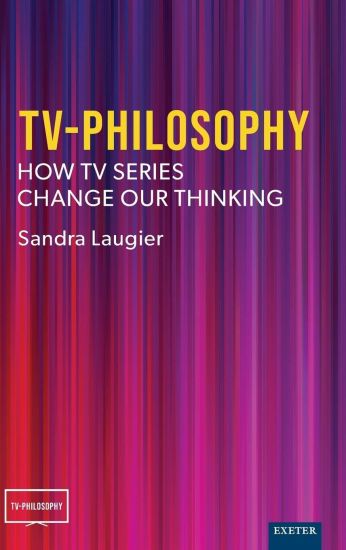
TV-Philosophy

TV-Philosophy

Sandra Laugier

UNIVERSITY OF EXETER PRESS
2023
sidottu
This is the first book to explore the hold of TV series on our lives from a philosophical and ethical perspective. Sandra Laugier argues that this vital and ubiquitous expression of popular culture throughout the world is transformative in its effects on the activity of philosophy in everyday life. Drawing on Stanley Cavell’s work on film and ordinary experience, Laugier contends that we are deeply affected by the formative role played by the TV series we watch, and by the ways they become interconnected with our daily lives. The philosophical thinking embodied in series empowers individuals in their capacity to experience, understand and appropriate elements of the world, and to educate themselves. Through our relationships with TV series, we develop our own tastes and competences, which are constitutive of our distinct experience of life. ‘Series-philosophy’ is thus a democratizing force. It also offers us a new ethics, for morality can be found not in general rules and abstract principles but in the narrative texture of characters in everyday situations facing particular ethical problems, and with whom we form attachments that result in our moral education—in sometimes surprising ways.
TV-Philosophy in Action

TV-Philosophy in Action

Sandra Laugier

UNIVERSITY OF EXETER PRESS
2023
sidottu
TV-Philosophy in Action is inspired by philosopher and series-devotee Sandra Laugier’s monthly columns published in the French journal Libération. It is her contribution to the collective reflection on TV series produced by critics, theorists, and the vast mass of individual watchers who evaluate and discuss these programmes every day. The book brings together a selection of articles from Libération, as well as longer pieces, to demonstrate ‘TV-Philosophy in action’: Laugier’s response as a philosopher-viewer to a range of particularly salient TV shows from the last 20 years, and their relationship to social and political issues of our times. Arranged under a number of important themes—relating to politics, identity, and the stories we tell ourselves about our world—the book shows how TV series provide a rich resource for thinking about our lives, and places them centre-stage as works of art, and of thought, in their own right.
TV-Philosophy

TV-Philosophy

Sandra Laugier

UNIVERSITY OF EXETER PRESS
2025
nidottu
This is the first book to explore the hold of TV series on our lives from a philosophical and ethical perspective. Sandra Laugier argues that this vital and ubiquitous expression of popular culture throughout the world is transformative in its effects on the activity of philosophy in everyday life. Drawing on Stanley Cavell’s work on film and ordinary experience, Laugier contends that we are deeply affected by the formative role played by the TV series we watch, and by the ways they become interconnected with our daily lives. The philosophical thinking embodied in series empowers individuals in their capacity to experience, understand and appropriate elements of the world, and to educate themselves. Through our relationships with TV series, we develop our own tastes and competences, which are constitutive of our distinct experience of life. ‘Series-philosophy’ is thus a democratizing force. It also offers us a new ethics, for morality can be found not in general rules and abstract principles but in the narrative texture of characters in everyday situations facing particular ethical problems, and with whom we form attachments that result in our moral education—in sometimes surprising ways.
TV-Philosophy in Action

TV-Philosophy in Action

Sandra Laugier

UNIVERSITY OF EXETER PRESS
2025
nidottu
TV-Philosophy in Action is inspired by philosopher and series-devotee Sandra Laugier’s monthly columns published in the French journal Libération. It is her contribution to the collective reflection on TV series produced by critics, theorists, and the vast mass of individual watchers who evaluate and discuss these programmes every day. The book brings together a selection of articles from Libération, as well as longer pieces, to demonstrate ‘TV-Philosophy in action’: Laugier’s response as a philosopher-viewer to a range of particularly salient TV shows from the last 20 years, and their relationship to social and political issues of our times. Arranged under a number of important themes—relating to politics, identity, and the stories we tell ourselves about our world—the book shows how TV series provide a rich resource for thinking about our lives, and places them centre-stage as works of art, and of thought, in their own right.