Kirjojen hintavertailu. Mukana 11 505 711 kirjaa ja 12 kauppaa.

Kirjahaku

Etsi kirjoja tekijän nimen, kirjan nimen tai ISBN:n perusteella.

2 kirjaa tekijältä Sandra Lindemann Summers

Ogling Ladies

Ogling Ladies

Sandra Lindemann Summers

University Press of Florida
2013
sidottu
The love of looking, or scopophilia, is a common motif among female figures in medieval art and literature where it is usually expressed as a motherly or sexually interested gaze—one sanctioned, the other forbidden.Sandra Summers investigates these two major variants of female voyeurism in exemplary didactic and courtly literature by medieval German authors. Setting the motif against the period’s dominant patriarchal ethos and its almost exclusive pattern of male authorship, Summers argues that the maternal gaze was endorsed as a stabilising influence while the erotic gaze was condemned as a threat to medieval order.Summers brings to her analysis a consideration of several fascinating questions. Did medieval artists and writers invent the idea of “ogling,” or did they record a behavioural practice common at the time? How did the act of ogling alter a female character’s narrative trajectory? How did this effect figure into the regulation and restriction of women during Europe’s Middle Ages?Drawing upon contemporary gender studies, women’s studies, film studies, and psychology, Summers argues that the female gaze ultimately governs social formation. Her provocative, relevant use of modern critical theory helps win new insights for the field of medieval literature.
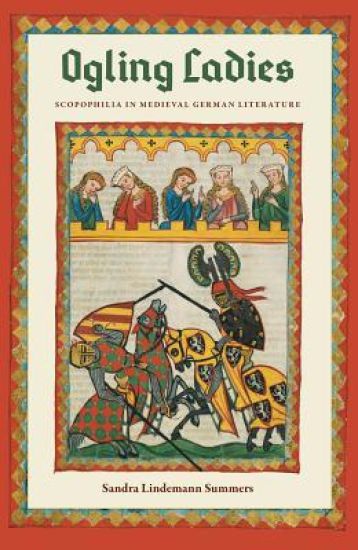
Ogling Ladies

Ogling Ladies

Sandra Lindemann Summers

University Press of Florida
2019
nidottu
In the European Middle Ages, the harm a person's gaze could cause was greatly feared. A stare was considered an act of aggression; intense gazing was believed to exert immense power over the individual observed.The love of looking, or scopophilia, is a common motif among female figures in medieval art and literature where it is usually expressed as a motherly or sexually interested gaze--one sanctioned, the other forbidden. Sandra Summers investigates these two major variants of female voyeurism in exemplary didactic and courtly literature by medieval German authors. Setting the motif against the period's dominant patriarchal ethos and its almost exclusive pattern of male authorship, Summers argues that the maternal gaze was endorsed as a stabilizing influence while the erotic gaze was condemned as a threat to medieval order.Summers examines whether medieval artists and writers invented the idea of ""ogling,"" or whether they were simply recording a behavioral practice common at the time. She investigates how the act of ogling altered the narrative trajectory of female characters, and she also considers how it may have affected the regulation and restriction of women during Europe's Middle Ages.Drawing upon contemporary gender studies, women's studies, film studies, and psychology, Summers argues that the female gaze ultimately governs social formation. The exploration of the female gaze in period literature transcends medieval scholarship and impacts our understanding of the broader problem of gender perceptions and social structuring in Western civilization.