Kirjojen hintavertailu. Mukana 11 699 587 kirjaa ja 12 kauppaa.

Kirjahaku

Etsi kirjoja tekijän nimen, kirjan nimen tai ISBN:n perusteella.

11 kirjaa tekijältä Sandra Opdycke

No One Was Turned Away

No One Was Turned Away

Sandra Opdycke

Oxford University Press Inc
1999
sidottu
For more than a century, New York City's public hospitals have played a major role in ensuring that people of every class have had a place to turn for care. This comparison of the history of Bellevue Hospital with that of the private New York Hospital illuminates the unique contribution that public hospitals have made to the city and confirms their continued value today. Portraying the hospital as an urban institution that reflects the social, political, economic, demographic, and physical changes of the surrounding city, this book links the role of public hospitals to the ongoing debate about the place of public institutions in American society.
No One Was Turned Away

No One Was Turned Away

Sandra Opdycke

Oxford University Press Inc
2000
nidottu
No One Was Turned Away is a book about the importance of public hospitals to New York City. At a time when less and less value seems to be placed on public institutions, argues author Sandra Opdycke, it is both useful and prudent to consider what this particular set of public institutions has meant to this particular city over the last hundred years, and to ponder what its loss might mean as well. Opdycke suggests that if these public hospitals close or convert to private management--as is currently being discussed--then a vital element of the civic life of New York City will be irretrievably lost. The story is told primarily through the history of Bellevue Hospital, the largest public hospital in the city and the oldest in the nation. Following Bellevue through the twentieth century, Opdycke meticulously charts the fluctuating fortunes of the city's public hospital system. Readers will learn how medical technology, urban politics, changing immigration patterns, economic booms and busts, labor unions, health insurance, Medicaid, and managed care have interacted to shape both the social and professional environments of New York's public hospitals. Having entered the twentieth century with high hopes for a grand expansion, Bellevue now faces financial and political pressures so acute that its very future is in doubt. In order to give context to the Bellevue experience, Opdycke also tracks the history of a private facility over the same century: New York Hospital. By noting the points at which the paths of these two mighty institutions have overlapped--as well as the ways in which they have diverged--this book clearly and persuasively highlights the significance of public hospitals to the city. No One Was Turned Away shows that private facilities like New York Hospital have generally provided superb care for their patients, but that in every era they have also excluded certain groups. This exclusion has occurred for various reasons, such as patients' diagnoses, their social characteristics, behavior, or financial status--or simply because of a lack of unoccupied beds. Fortunately, however, year in and year out, Bellevue and its fellow public facilities have acted as the city's medical safety net. Opdycke's book maintains that public hospitals will be as essential in the future as they have been in the past. This is a thoughtful and well-written study that will appeal to anyone interested in the history of medicine, public policy, urban affairs, or the City of New York.
Jane Addams and Her Vision of America
Jane Addams and Her Vision of America brings Addams' life and work alive in a way that no account has before. The book is a presentation of Jane Addams' story in clear, non-technical language, focusing primarily on her philosophy and achievements as well as their significance in her own time and ours. Paperback, brief and inexpensive, each of the titles in the Library of American Biography series focuses on a figure whose actions and ideas significantly influenced the course of American history and national life. In addition, each biography relates the life of its subject to the broader themes and developments of the times.
The Flu Epidemic of 1918

The Flu Epidemic of 1918

Sandra Opdycke

Routledge
2014
sidottu
In 1918, a devastating world-wide influenza epidemic hit the United States. Killing over 600,000 Americans and causing the national death rate to jump 30% in a single year, the outbreak obstructed the country's participation in World War I and imposed terrible challenges on communities across the United States.This epidemic provides an ideal lens for understanding the history of infectious disease in the United States. The Flu Epidemic of 1918 examines the impact of the outbreak on health, medicine, government, and individual people's lives, and also explores the puzzle of Americans' decades-long silence about the experience once it was over. In a concise narrative bolstered by primary sources including newspaper articles, eye-witness accounts, and government reports, Sandra Opdycke provides undergraduates with an unforgettable introduction to the 1918 epidemic and its after-effects.Critical Moments in American History is a series of short texts designed to familiarize students with events or issues critical to the American experience. Through the use of narrative and primary documents, these books help instructors deconstruct an important moment in American history with the help of timelines, glossaries, textboxes, and a robust companion website.
The Flu Epidemic of 1918

The Flu Epidemic of 1918

Sandra Opdycke

Routledge
2014
nidottu
In 1918, a devastating world-wide influenza epidemic hit the United States. Killing over 600,000 Americans and causing the national death rate to jump 30% in a single year, the outbreak obstructed the country's participation in World War I and imposed terrible challenges on communities across the United States.This epidemic provides an ideal lens for understanding the history of infectious disease in the United States. The Flu Epidemic of 1918 examines the impact of the outbreak on health, medicine, government, and individual people's lives, and also explores the puzzle of Americans' decades-long silence about the experience once it was over. In a concise narrative bolstered by primary sources including newspaper articles, eye-witness accounts, and government reports, Sandra Opdycke provides undergraduates with an unforgettable introduction to the 1918 epidemic and its after-effects.Critical Moments in American History is a series of short texts designed to familiarize students with events or issues critical to the American experience. Through the use of narrative and primary documents, these books help instructors deconstruct an important moment in American history with the help of timelines, glossaries, textboxes, and a robust companion website.
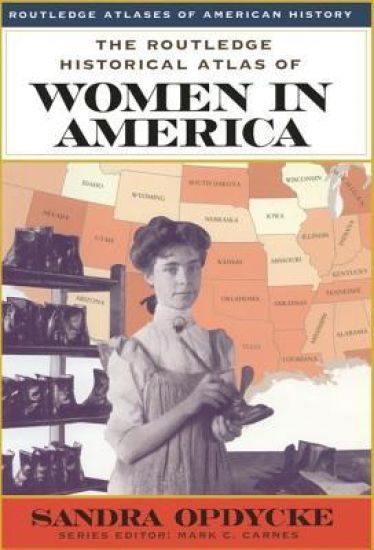
The Routledge Historical Atlas of Women in America
Looking at general trends and specific items such as life in a tenement, women working overseas in World War I, the production of cosmetics in the 1920s, and new female immigration, this atlas portrays the history of American women from a vivid geographical and demographic perspective. In a variety of colorful maps and charts, this important new work documents milestones in the evolution of the social and political rights of women. Coverage includes the rise of reform movements such as temperance, women's suffrage, and abolition during the 19th century, and contraception, abortion rights, and the Equal Rights Amendment in the 20th. Also inlcludes 50 color maps.
The Routledge Historical Atlas of Women in America
Looking at general trends and specific items such as life in a tenement, women working overseas in World War I, the production of cosmetics in the 1920s, and new female immigration, this atlas portrays the history of American women from a vivid geographical and demographic perspective. In a variety of colorful maps and charts, this important new work documents milestones in the evolution of the social and political rights of women. Coverage includes the rise of reform movements such as temperance, women's suffrage, and abolition during the 19th century, and contraception, abortion rights, and the Equal Rights Amendment in the 20th. Also inlcludes 50 color maps.
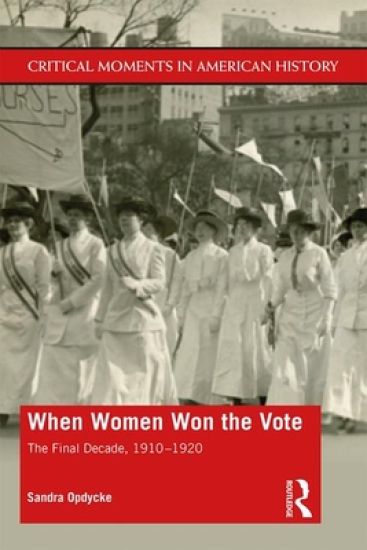
When Women Won The Vote

When Women Won The Vote

Sandra Opdycke

Routledge
2019
sidottu
When Women Won the Vote focuses on the final decade (1910–1920) of American women’s fight for the vote—a fight that had already been underway for more than sixty years, and which culminated in the passage of the 19th amendment in 1920. Sandra Opdycke reveals how woman suffragists campaigned in communities across the country, building a mass movement and tirelessly publicizing their cause. Meanwhile, in Washington DC, the main suffrage organization led by Carrie Chapman Catt courted the President and Congress with diplomatic skill, while the smaller National Woman’s Party, headed by Alice Paul, intensified political pressure with confrontational picketing and demonstrations. Supported by primary documents and online eResources, this book adds context by describing the historical events that shaped this crucial decade in American women’s fight for the vote.The story of how American women won the vote is a compelling chapter in US women’s history and in the story of American democracy. This book is essential reading for students of American Political or Women’s History, Gender Studies, or Progressivism.
When Women Won The Vote

When Women Won The Vote

Sandra Opdycke

Routledge
2019
nidottu
When Women Won the Vote focuses on the final decade (1910–1920) of American women’s fight for the vote—a fight that had already been underway for more than sixty years, and which culminated in the passage of the 19th amendment in 1920. Sandra Opdycke reveals how woman suffragists campaigned in communities across the country, building a mass movement and tirelessly publicizing their cause. Meanwhile, in Washington DC, the main suffrage organization led by Carrie Chapman Catt courted the President and Congress with diplomatic skill, while the smaller National Woman’s Party, headed by Alice Paul, intensified political pressure with confrontational picketing and demonstrations. Supported by primary documents and online eResources, this book adds context by describing the historical events that shaped this crucial decade in American women’s fight for the vote.The story of how American women won the vote is a compelling chapter in US women’s history and in the story of American democracy. This book is essential reading for students of American Political or Women’s History, Gender Studies, or Progressivism.
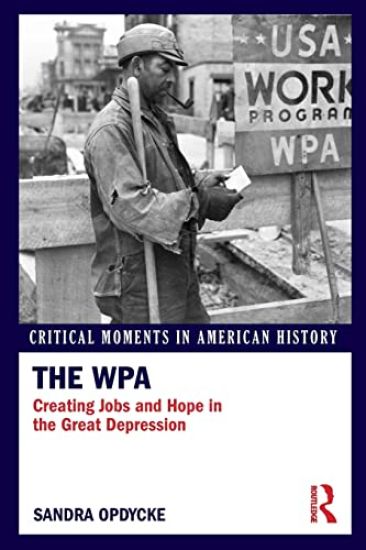
The WPA

The WPA

Sandra Opdycke

Routledge
2016
sidottu
Established in 1935 in the midst of the Great Depression, the Works Progress Administration (WPA) was one of the most ambitious federal jobs programs ever created in the U.S. At its peak, the program provided work for almost 3.5 million Americans, employing more than 8 million people across its eight-year history in projects ranging from constructing public buildings and roads to collecting oral histories and painting murals. The story of the WPA provides a perfect entry point into the history of the Great Depression, the New Deal, and the early years of World War II, while its example remains relevant today as the debate over government's role in the economy continues.In this concise narrative, supplemented by primary documents and an engaging companion website, Sandra Opdycke explains the national crisis from which the WPA emerged, traces the program's history, and explores what it tells us about American society in the 1930s and 1940s. Covering central themes including the politics, race, class, gender, and the coming of World War II, The WPA: Creating Jobs During the Great Depression introduces readers to a key period of crisis and change in U.S. history.
The WPA

The WPA

Sandra Opdycke

Routledge
2016
nidottu
Established in 1935 in the midst of the Great Depression, the Works Progress Administration (WPA) was one of the most ambitious federal jobs programs ever created in the U.S. At its peak, the program provided work for almost 3.5 million Americans, employing more than 8 million people across its eight-year history in projects ranging from constructing public buildings and roads to collecting oral histories and painting murals. The story of the WPA provides a perfect entry point into the history of the Great Depression, the New Deal, and the early years of World War II, while its example remains relevant today as the debate over government's role in the economy continues.In this concise narrative, supplemented by primary documents and an engaging companion website, Sandra Opdycke explains the national crisis from which the WPA emerged, traces the program's history, and explores what it tells us about American society in the 1930s and 1940s. Covering central themes including the politics, race, class, gender, and the coming of World War II, The WPA: Creating Jobs During the Great Depression introduces readers to a key period of crisis and change in U.S. history.