Kirjojen hintavertailu. Mukana 11 342 296 kirjaa ja 12 kauppaa.

Kirjahaku

Etsi kirjoja tekijän nimen, kirjan nimen tai ISBN:n perusteella.

5 kirjaa tekijältä Sandra Postel

Last Oasis

Last Oasis

Sandra Postel

WW Norton Co
1997
pokkari
We have taken for granted seemingly endless supplies of water flowing from reservoirs wells, and diversion projects; access to water has been key to food security, industrialization, and the growth of cities. In this book from the Worldwatch Institute, Sandra Postel explains that decades of profligacy and mismanagement of the world's water resources have produced signs of shortages and environmental destruction. She writes with authority and clarity of the limits-ecological, economic, and political-of this vital natural resource. She explores the potential for conflict over water between nations, and between urban and rural residents. And she offers a sensible way out of such struggles. Last Oasis makes clear that the technologies and know-how exist to increase the productivity of every liter of water. But citizens must first understand the issues and insist on policies, laws, and institutions that promote the sustainable use of water.
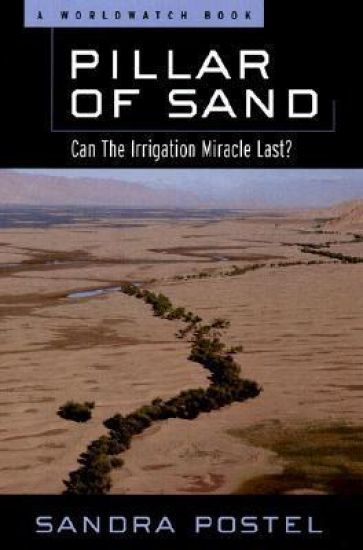
Pillar of Sand: Can the Irrigation Miracle Last?

Pillar of Sand: Can the Irrigation Miracle Last?

Sandra Postel

W. W. Norton Company
1999
nidottu
For 6,000 years, irrigation has ranked among the most powerful tools of human advancement. The story of settled agriculture, the growth of cities, and the rise of early empires is, to no small degree, a story of controlling water to make the land more prosperous and habitable. Pillar of Sand examines the history, challenges, and pitfalls of irrigated agriculture from ancient Egypt and Mesopotamia to twentieth-century India and the United States. By unmasking the risks faced by irrigation-based societies including water scarcity, soil salinization, and conflicts over rivers water specialist Sandra Postel connects the lessons of the past with the challenge of making irrigation thrive into the twenty-first century and beyond. Protecting rivers and vital ecosystems as the world aims to feed 8 billion people will require a doubling of water productivity getting twice as much benefit from each gallon removed from rivers, lakes, and aquifers. Pillar of Sand points the way toward managing the growing competition for scarce water. And it lays out a strategy for correcting a startling flaw of the modern irrigation age its failure to better the lives of the majority of the world's poorest farmers."
The Last Oasis

The Last Oasis

Sandra Postel

Routledge
2017
sidottu
For decades now we have wasted and mismanaged the world’s water supplies. Today, 27 countries are short of water, a quarter of the world’s population has no safe water, 46 per cent have no proper sanitation and each year four million children die of water-borne diseases. As most of the world’s major river systems cross several national boundaries, the scope disputes and the threat to international security is becoming more and more real.In The Last Oasis, Sandra Postel examines the economic, ecological and political factors affecting fresh water supply. She confronts the issues of mismanagement and profligacy and analyses and dangers of confrontation, both between nations and between rural and urban users. She also emphasises that the technology and know-how for effective water husbandry does exist. With methods already in use, farmers could cut their demand for water by 40-90 per cent, and cities by one-third, without sacrificing economic output or quality of life.Investing in water efficiency, recycling and conservation help meet rising demands and stave off disaster. But the priority is a common recognition of the gravity of the position, and with that a widespread push for institutions to manage sustainable use of water.
Replenish

Replenish

Sandra Postel

Island Press
2020
nidottu
We have disrupted the natural water cycle for centuries in an effort to control water for our own prosperity. Yet every year, recovery from droughts and floods costs billions of dollars, and we spend billions more on dams, diversions, levees, and other feats of engineering. These massive projects not only are risky financially and environmentally, they often threaten social and political stability. What if the answer was not further control of the water cycle, but repair and replenishment? Sandra Postel takes readers around the world to explore water projects that work with, rather than against, nature’s rhythms. In New Mexico, forest rehabilitation is safeguarding drinking water; along the Mississippi River, farmers are planting cover crops to reduce polluted runoff; and in China, “sponge cities” are capturing rainwater to curb urban flooding. Efforts like these will be essential as climate change disrupts both weather patterns and the models on which we base our infrastructure. We will be forced to adapt. The question is whether we will continue to fight the water cycle or recognise our place in it and take advantage of the inherent services nature offers. Water, Postel writes, is a gift, the source of life itself. How will we use this greatest of gifts?
The Last Oasis

The Last Oasis

Sandra Postel

Earthscan Ltd
1992
nidottu
For decades now we have wasted and mismanaged the world?s water supplies. Today, 27 countries are short of water, a quarter of the world?s population has no safe water, 46 per cent have no proper sanitation and each year four million children die of water-borne diseases. As most of the world?s major river systems cross several national boundaries, the scope disputes and the threat to international security is becoming more and more real. In The Last Oasis, Sandra Postel examines the economic, ecological and political factors affecting fresh water supply. She confronts the issues of mismanagement and profligacy and analyses and dangers of confrontation, both between nations and between rural and urban users. She also emphasises that the technology and know-how for effective water husbandry does exist. With methods already in use, farmers could cut their demand for water by 40-90 per cent, and cities by one-third, without sacrificing economic output or quality of life. Investing in water efficiency, recycling and conservation help meet rising demands and stave off disaster. But the priority is a common recognition of the gravity of the position, and with that a widespread push for institutions to manage sustainable use of water.