Kirjojen hintavertailu. Mukana 12 016 292 kirjaa ja 12 kauppaa.

Kirjahaku

Etsi kirjoja tekijän nimen, kirjan nimen tai ISBN:n perusteella.

3 kirjaa tekijältä Sandy Barnard

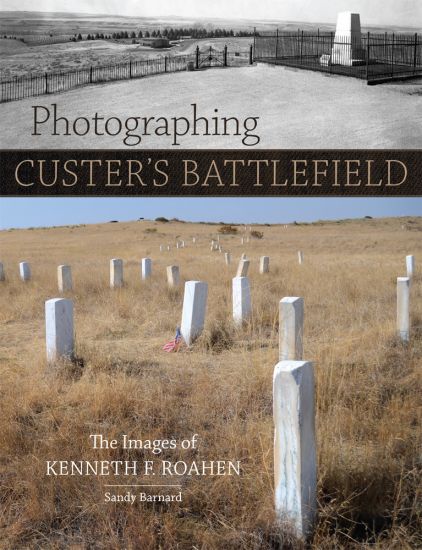
Photographing Custer's Battlefield

Photographing Custer's Battlefield

Sandy Barnard

University of Oklahoma Press
2016
sidottu
In the 140 years since the defeat of George Armstrong Custer and his troops at the Battle of the Little Big Horn, scholars and other visitors have combed the site of today's Little Bighorn Battlefield National Monument for evidence that might clarify the controversial events of June 1876. In Photographing Custer's Battlefield, Sandy Barnard, an expert on Custer and the Little Big Horn, presents the work of the site's most dedicated photographer, U.S. Fish and Game agent Kenneth F. Roahen (1888-1976), revealing further mysteries of the battlefield and showing how it has changed. Barnard opens by introducing readers to Roahen, who spent the last phase of his career and his retirement years in Montana, where he made it his personal mission from the 1930s to the 1970s to photograph what was then called Custer Battlefield. Among Roahen's most useful images are his photographs of the Crow's Nest, the Morass, and Girard's Knoll - places whose precise locations have long been debated. He also made a series of pioneering aerial photographs of the Little Big Horn and its surrounding landscape. When paired with Barnard's modern-day photographs, maps, and thorough analysis, Roahen's images provide valuable information for visitors to the monument as well as for historians, biologists, engineers, and other government employees who interpret, preserve, and protect the battlefield and its surrounding terrain. In addition to showing sites associated with the fighting, Roahen's photographs depict mid-twentieth-century roadwork, archaeological surveys and restorations, and construction of the visitor center, park housing, and maintenance facilities. Barnard's matching photographs, taken in 2012 and 2013, help to identify additional subtle but significant landscape modifications. The numerous debates surrounding the Battle of the Little Big Horn have made on-the-ground evidence especially important. Roahen's photographic legacy, explored here in more than 300 historic and contemporary images, offers fresh insight into the battlefield's ever-changing landscape, helping visitors old and new to better understand the history beneath their feet.
Photographing Custer's Battlefield

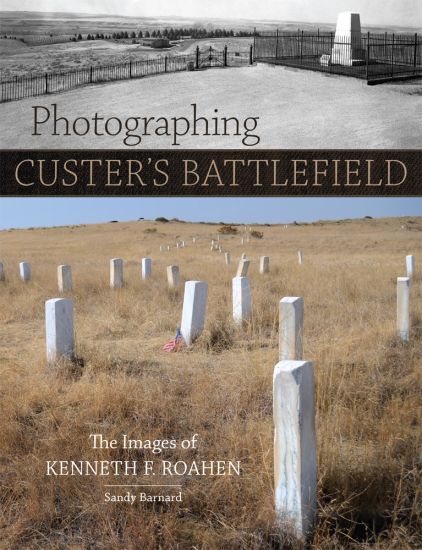
Photographing Custer's Battlefield

Sandy Barnard

UNIVERSITY OF OKLAHOMA PRESS
2023
nidottu
In the 140 years since the defeat of George Armstrong Custer and his troops at the Battle of the Little Big Horn, scholars and other visitors have combed the site of today’s Little Bighorn Battlefield National Monument for evidence that might clarify the controversial events of June 1876. In Photographing Custer’s Battlefield, Sandy Barnard, an expert on Custer and the Little Big Horn, presents the work of the site’s most dedicated photographer, U.S. Fish and Game agent Kenneth F. Roahen (1888–1976), revealing further mysteries of the battlefield and showing how it has changed. Barnard opens by introducing readers to Roahen, who spent the last phase of his career and his retirement years in Montana, where he made it his personal mission from the 1930s to the 1970s to photograph what was then called Custer Battlefield. Among Roahen’s most useful images are his photographs of the Crow’s Nest, the Morass, and Girard’s Knoll—places whose precise locations have long been debated. He also made a series of pioneering aerial photographs of the Little Big Horn and its surrounding landscape. When paired with Barnard’s modern-day photographs, maps, and thorough analysis, Roahen’s images provide valuable information for visitors to the monument as well as for historians, biologists, engineers, and other government employees who interpret, preserve, and protect the battlefield and its surrounding terrain. In addition to showing sites associated with the fighting, Roahen’s photographs depict mid-twentieth-century roadwork, archaeological surveys and restorations, and construction of the visitor center, park housing, and maintenance facilities. Barnard’s matching photographs, taken in 2012 and 2013, help to identify additional subtle but significant landscape modifications. The numerous debates surrounding the Battle of the Little Big Horn have made on-the-ground evidence especially important. Roahen’s photographic legacy, explored here in more than 300 historic and contemporary images, offers fresh insight into the battlefield’s ever-changing landscape, helping visitors old and new to better understand the history beneath their feet.
George Armstrong Custer

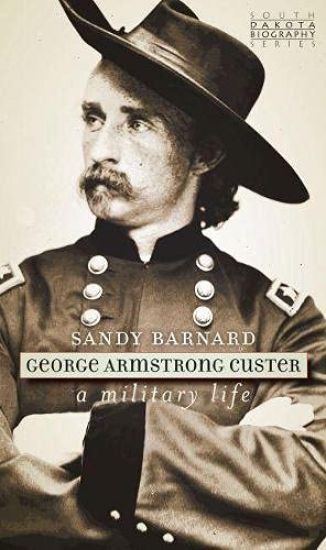
George Armstrong Custer

Sandy Barnard

South Dakota State Historical Society
2021
nidottu
On 25 June 1876, a combined force of Lakotas and Northern Cheyennes defeated the troops of the Seventh United States Cavalry Regiment on the bluffs overlooking the Little Big Horn River in Montana. This disaster for the United States Army resulted in the deaths of 267 cavalrymen, including their famed commander, Lieutenant Colonel George Armstrong Custer.Since his demise at the Battle of the Little Big Horn, Custer has been a symbol for the federal government's bloody conquest of the Great Plains. Custer's military career, however, went beyond the Indian wars of the 1870s. In the Civil War, Custer made his name as a bold and aggressive cavalry commander. After 1865, he led troops during Reconstruction in the South and explored the Black Hills for the federal government in addition to his well-documented conflicts with American Indians.George Armstrong Custer: A Military Life explores Custer's life and highlights the complex nature of his experiences and legacy. Yet as Barnard makes clear, Custer was one of many army officers and soldiers who took part in these struggles. Still, Custer's role in the Indian wars of the late nineteenth century has turned him into a notorious figure. Barnard looks beyond the myths surrounding Custer to reveal the influence he had on the frontier army and the West in addition to his symbolic legacy.