Kirjojen hintavertailu. Mukana 11 699 587 kirjaa ja 12 kauppaa.

Kirjahaku

Etsi kirjoja tekijän nimen, kirjan nimen tai ISBN:n perusteella.

2 kirjaa tekijältä Sanjeev Khagram

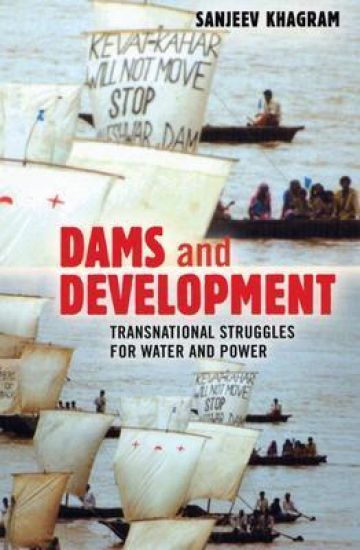
Dams and Development

Dams and Development

Sanjeev Khagram

Cornell University Press
2004
pokkari
Big dams built for irrigation, power, water supply, and other purposes were among the most potent symbols of economic development for much of the twentieth century. Of late they have become a lightning rod for challenges to this vision of development as something planned by elites with scant regard for environmental and social consequences—especially for the populations that are displaced as their homelands are flooded. In this book, Sanjeev Khagram traces changes in our ideas of what constitutes appropriate development through the shifting transnational dynamics of big dam construction. Khagram tells the story of a growing, but contentious, world society that features novel and increasingly efficacious norms of appropriate behavior in such areas as human rights and environmental protection. The transnational coalitions and networks led by nongovernmental groups that espouse such norms may seem weak in comparison with states, corporations, and such international agencies as the World Bank. Yet they became progressively more effective at altering the policies and practices of these historically more powerful actors and organizations from the 1970s on. Khagram develops these claims in a detailed ethnographic account of the transnational struggles around the Narmada River Valley Dam Projects in central India, a huge complex of thirty large and more than three thousand small dams. He offers further substantiation through a comparative historical analysis of the political economy of big dam projects in India, Brazil, South Africa, and China as well as by examining the changing behavior of international agencies and global companies. The author concludes with a discussion of the World Commission on Dams, an innovative attempt in the late 1990s to generate new norms among conflicting stakeholders.

Restructuring World Politics

Restructuring World Politics

Sanjeev Khagram

University of Minnesota Press
2002
nidottu
From the earliest campaign against Augusto Pinochet’s repressive practices to the recent massive demonstrations against the World Trade Organization, transnational collective action involving nongovernmental organizations has been restructuring politics and changing the world. Ranging from Santiago to Seattle and covering more than twenty-five years of transnational advocacy, the essays in Restructuring World Politics offer a clear, richly nuanced picture of this process and its far-reaching implications in an increasingly globalized political economy. The book brings together scholars, activists, and policy makers to show how such advocacy addresses-and reshapes-key issues in the areas of labor, human rights, gender justice, democratization, and sustainable development throughout the world.A primary goal of transnational advocacy is to create, strengthen, implement, and monitor international norms. How transnational networks go about doing this, why and when they succeed, and what problems and complications they face are the main themes of this book. Looking at a wide range of cases where nongovernmental actors attempt to change norms and the practices of states, international organizations, and firms in the private sector-from debt restructuring to protecting human rights, from anti-dam projects in India to the prodemocracy movement in Indonesia-the authors compellingly depict international nongovernmental organizations and transnational social movements as considerable, emerging powers in international politics, initiating, facilitating, and directing the transformation of global norms and practices.Contributors: Karen Brown Thompson, U of Minnesota; Charles T. Call, Brown U; Elizabeth A. Donnelly, Harvard U; Darren Hawkins, Brigham Young U; Thalia G. Kidder; Smitu Kothari; Paul J. Nelson, U of Pittsburgh; August Nimtz, U of Minnesota; Mark Ritchie, Institute for Agriculture and Trade Policy; Jackie Smith, SUNY Stony Brook; Daniel C. Thomas, U of Illinois, Chicago.