Kirjojen hintavertailu. Mukana 11 342 296 kirjaa ja 12 kauppaa.

Kirjahaku

Etsi kirjoja tekijän nimen, kirjan nimen tai ISBN:n perusteella.

4 kirjaa tekijältä Sarah Hermanson Meister

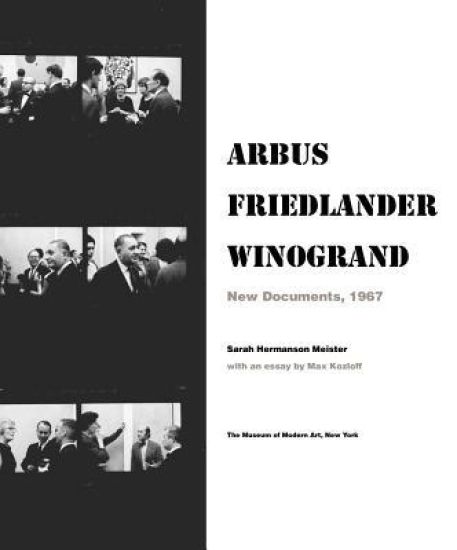
Arbus / Friedlander / Winogrand

Arbus / Friedlander / Winogrand

Sarah Hermanson Meister

Museum of Modern Art
2017
sidottu
In the past decade a new generation of photographers has directed the documentary approach toward more personal ends. Their aim has been not to reform life, but to know it. --John Szarkowski In 1967, The Museum of Modern Art presented New Documents, a landmark exhibition organized by John Szarkowski that brought together a selection of works by three photographers whose individual achievements signaled the artistic potential for the medium in the 1960s and beyond: Diane Arbus, Lee Friedlander and Garry Winogrand.Though largely unknown at the time, these three photographers are now universally acknowledged as artists of singular talent within the history of photography. The exhibition articulated a profound shift in the landscape of 20th-century photography, and interest in the exhibition has only continued to expand. Yet, until now, there has been no publication that captures its content.Published in celebration of the 50th anniversary of the exhibition, Arbus Friedlander Winogrand features full-page reproductions of the 94 photographs included in the exhibition, along with Szarkowski's original wall text, press release, installation views and an abundance of archival material. Essays by curator Sarah Hermanson Meister and critic Max Kozloff, who originally reviewed the exhibition for The Nation in 1967, critically situate the exhibition and its reception, and examine its lasting influence on the field of photography.
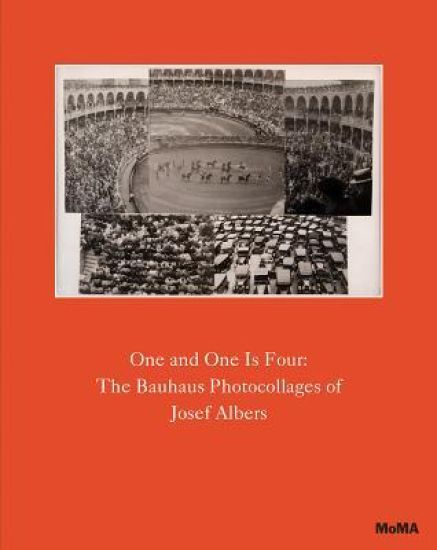
One and One Is Four: The Bauhaus Photocollages of Josef Albers

One and One Is Four: The Bauhaus Photocollages of Josef Albers

Sarah Hermanson Meister

Museum of Modern Art
2016
sidottu
Josef Albers is widely recognized as a crucial figure in 20th-century art, both as an independent practitioner and as a teacher at the Bauhaus, Black Mountain College and Yale University. Albers made paintings, drawings and prints and designed furniture and typography. Arguably the least familiar aspect of his extraordinary career was his inventive engagement with photography, only widely known after his death, including his production of approximately 70 photocollages that feature photographs he made at the Bauhaus between 1928 and 1932. These works anticipate concerns that he would pursue throughout his career--the effects of adjacency, the exploration of color through white, black and gray, and the delicate balance between handcraft and mechanical production.Albers' photographs were first shown at MoMA in a modest exhibition in 1988, when the Museum acquired two photocollages. In 2015 the Museum acquired ten additional photocollages, making its collection the most substantial anywhere outside the Albers Foundation. This publication reproduces each of the photocollages Albers made at the Bauhaus, presenting the scope of this achievement for the first time. An introductory essay by Sarah Hermanson Meister situates them within the contexts of modernist photography, the Bauhaus ethos and of Albers' own practice.
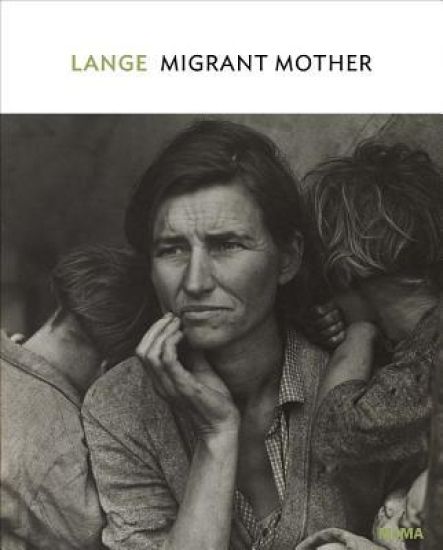
Dorothea Lange: Migrant Mother, Nipomo, California

Dorothea Lange: Migrant Mother, Nipomo, California

Sarah Hermanson Meister

Museum of Modern Art
2019
nidottu
The US was in the midst of the Depression when Dorothea Lange (1895-1965) began documenting its impact through depictions of unemployed men on the streets of San Francisco. Her success won the attention of Roosevelt's Resettlement Administration (later the Farm Security Administration), and in 1935 she started photographing the rural poor under its auspices. One day in Nipomo, California, Lange recalled, she "saw and approached a] hungry and desperate mother, as if drawn by a magnet." The woman's name was Florence Owens Thompson, and the result of their encounter was seven exposures, including Migrant Mother. Curator Sarah Meister's essay provides a fresh context for this iconic work.