Kirjojen hintavertailu. Mukana 11 244 527 kirjaa ja 12 kauppaa.

Kirjahaku

Etsi kirjoja tekijän nimen, kirjan nimen tai ISBN:n perusteella.

5 kirjaa tekijältä Sarah Hutton

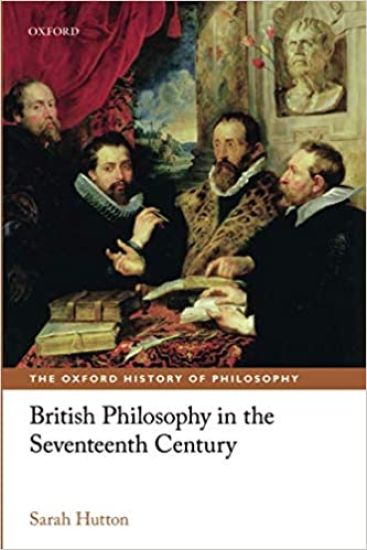
British Philosophy in the Seventeenth Century

British Philosophy in the Seventeenth Century

Sarah Hutton

Oxford University Press
2018
nidottu
Sarah Hutton presents a rich historical study of one of the most fertile periods in modern philosophy. It was in the seventeenth century that Britain's first philosophers of international stature and lasting influence emerged. Its most famous names, Hobbes and Locke, rank alongside the greatest names in the European philosophical canon. Bacon too belongs with this constellation of great thinkers, although his status as a philosopher tends to be obscured by his status as father of modern science. The seventeenth century is normally regarded as the dawn of modernity following the breakdown of the Aristotelian synthesis which had dominated intellectual life since the middle ages. In this period of transformational change, Bacon, Hobbes, Locke are acknowledged to have contributed significantly to the shape of European philosophy from their own time to the present day. But these figures did not work in isolation. Sarah Hutton places them in their intellectual context, including the social, political and religious conditions in which philosophy was practised. She treats seventeenth-century philosophy as an ongoing conversation: like all conversations, some voices will dominate, some will be more persuasive than others and there will be enormous variations in tone from the polite to polemical, matter-of-fact, intemperate. The conversation model allows voices to be heard which would otherwise be discounted. Hutton shows the importance of figures normally regarded as 'minor' players in philosophy (e.g. Herbert of Cherbury, Cudworth, More, Burthogge, Norris, Toland) as well as others who have been completely overlooked, notably female philosophers. Crucially, instead of emphasizing the break between seventeenth-century philosophy and its past, the conversation model makes it possible to trace continuities between the Renaissance and seventeenth century, across the seventeenth century and into the eighteenth century, while at the same time acknowledging the major changes which occurred.
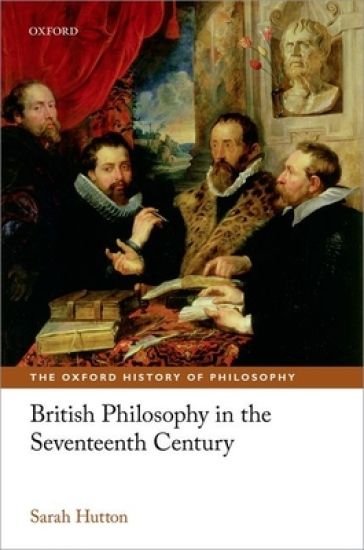
British Philosophy in the Seventeenth Century

British Philosophy in the Seventeenth Century

Sarah Hutton

Oxford University Press
2015
sidottu
Sarah Hutton presents a rich historical study of one of the most fertile periods in modern philosophy. It was in the seventeenth century that Britain's first philosophers of international stature and lasting influence emerged. Its most famous names, Hobbes and Locke, rank alongside the greatest names in the European philosophical canon. Bacon too belongs with this constellation of great thinkers, although his status as a philosopher tends to be obscured by his status as father of modern science. The seventeenth century is normally regarded as the dawn of modernity following the breakdown of the Aristotelian synthesis which had dominated intellectual life since the middle ages. In this period of transformational change, Bacon, Hobbes, Locke are acknowledged to have contributed significantly to the shape of European philosophy from their own time to the present day. But these figures did not work in isolation. Sarah Hutton places them in their intellectual context, including the social, political and religious conditions in which philosophy was practised. She treats seventeenth-century philosophy as an ongoing conversation: like all conversations, some voices will dominate, some will be more persuasive than others and there will be enormous variations in tone from the polite to polemical, matter-of-fact, intemperate. The conversation model allows voices to be heard which would otherwise be discounted. Hutton shows the importance of figures normally regarded as 'minor' players in philosophy (e.g. Herbert of Cherbury, Cudworth, More, Burthogge, Norris, Toland) as well as others who have been completely overlooked, notably female philosophers. Crucially, instead of emphasizing the break between seventeenth-century philosophy and its past, the conversation model makes it possible to trace continuities between the Renaissance and seventeenth century, across the seventeenth century and into the eighteenth century, while at the same time acknowledging the major changes which occurred.
Anne Conway

Anne Conway

Sarah Hutton

Cambridge University Press
2009
pokkari
This 2004 book was the first intellectual biography of one of the very first English women philosophers. At a time when very few women received more than basic education, Lady Anne Conway wrote an original treatise of philosophy, her Principles of the Most Ancient and Modern Philosophy, which challenged the major philosophers of her day - Descartes, Hobbes and Spinoza. Sarah Hutton's study places Anne Conway in her historical and philosophical context, by reconstructing her social and intellectual milieu. She traces her intellectual development in relation to friends and associates such as Henry More, Sir John Finch, F. M. van Helmont, Robert Boyle and George Keith. And she documents Conway's debt to Cambridge Platonism and her interest in religion - an interest which extended beyond Christian orthodoxy to Quakerism, Judaism and Islam. Her book offers an insight into both the personal life of a very private woman, and the richness of seventeenth-century intellectual culture.
Anne Conway

Anne Conway

Sarah Hutton

Cambridge University Press
2004
sidottu
This 2004 book was the first intellectual biography of one of the very first English women philosophers. At a time when very few women received more than basic education, Lady Anne Conway wrote an original treatise of philosophy, her Principles of the Most Ancient and Modern Philosophy, which challenged the major philosophers of her day - Descartes, Hobbes and Spinoza. Sarah Hutton's study places Anne Conway in her historical and philosophical context, by reconstructing her social and intellectual milieu. She traces her intellectual development in relation to friends and associates such as Henry More, Sir John Finch, F. M. van Helmont, Robert Boyle and George Keith. And she documents Conway's debt to Cambridge Platonism and her interest in religion - an interest which extended beyond Christian orthodoxy to Quakerism, Judaism and Islam. Her book offers an insight into both the personal life of a very private woman, and the richness of seventeenth-century intellectual culture.
Cool Physics

Cool Physics

Sarah Hutton

Pavilion Children's Books
2017
sidottu
An amazing guide to the wonders of physics, handily broken down into accessible bite-sized chunks. Cool Physics is a playful, enjoyable guide to the world of physics, from Archimedes saying ‘Eureka!’ (probably not in the bath) to the Higgs Boson. Aimed at older children and curious adults, it covers everything you need to know about some of the most complex scientific ideas the world has ever seen, made accessible and fun – Newton’s Theory of Relativity, quantum physics, nuclear fission and fusion, quarks, Heisenberg’s Uncertainty Principle and that old favourite E=mc2 are all explained here, clearly and entertainingly. There are also 10 practical experiments to give you even more insight into the theories, including making a pinhole camera, a whirlpool in a bottle and electric circuits with Play-Doh. Packed with quirky illustrations and fascinating factual titbits, this book is both an incredibly useful companion to school studies and an absorbing read in its own right.