Kirjojen hintavertailu. Mukana 11 699 587 kirjaa ja 12 kauppaa.

Kirjahaku

Etsi kirjoja tekijän nimen, kirjan nimen tai ISBN:n perusteella.

3 kirjaa tekijältä Sarah K.A. Pfatteicher

Lessons amid the Rubble

Lessons amid the Rubble

Sarah K.A. Pfatteicher

Johns Hopkins University Press
2010
sidottu
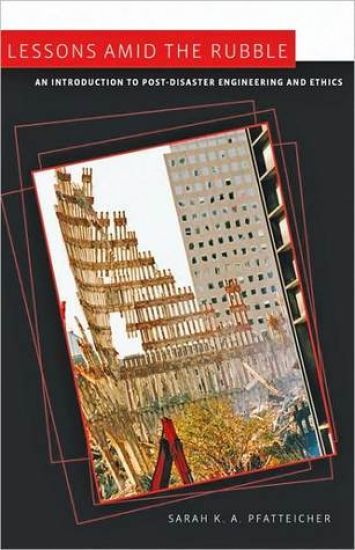
The aftermath of September 11, 2001, brought the subject of engineering-failure forensics to public attention as had no previous catastrophe. In keeping with the engineering profession's long tradition of building a positive future out of disasters, Lessons amid the Rubble uses the collapse of the World Trade Center towers to explore the nature and future of engineering education in the United States. Sarah K. A. Pfatteicher draws on historical and current practice in engineering design, construction, and curricula to discuss how engineers should conceive, organize, and execute a search for the reasons behind the failure of man-made structures. Her survey traces the analytical journey engineers take after a disaster and discusses the technical, social, and moral implications of their work. After providing an overview of the investigations into the collapse of the Twin Towers, Pfatteicher explores six related events to reveal deceptively simple lessons about the engineering enterprise, each of which embodies an ethical dilemma at the heart of the profession. In tying these themes together, Pfatteicher highlights issues of professionalism and professional identity infused in engineering education and encourages an explicit, direct conversation about their meaning. Sophisticated and engagingly written, this volume combines history, engineering, ethics, and philosophy to provoke a deep discussion about the symbolic meaning of buildings and other structures and the nature of engineering.
Lessons amid the Rubble

Lessons amid the Rubble

Sarah K.A. Pfatteicher

Johns Hopkins University Press
2010
pokkari
The aftermath of September 11, 2001, brought the subject of engineering-failure forensics to public attention as had no previous catastrophe. In keeping with the engineering profession's long tradition of building a positive future out of disasters, Lessons amid the Rubble uses the collapse of the World Trade Center towers to explore the nature and future of engineering education in the United States. Sarah K. A. Pfatteicher draws on historical and current practice in engineering design, construction, and curricula to discuss how engineers should conceive, organize, and execute a search for the reasons behind the failure of man-made structures. Her survey traces the analytical journey engineers take after a disaster and discusses the technical, social, and moral implications of their work. After providing an overview of the investigations into the collapse of the Twin Towers, Pfatteicher explores six related events to reveal deceptively simple lessons about the engineering enterprise, each of which embodies an ethical dilemma at the heart of the profession. In tying these themes together, Pfatteicher highlights issues of professionalism and professional identity infused in engineering education and encourages an explicit, direct conversation about their meaning. Sophisticated and engagingly written, this volume combines history, engineering, ethics, and philosophy to provoke a deep discussion about the symbolic meaning of buildings and other structures and the nature of engineering.
Collaborative Thinking

Collaborative Thinking

Sarah K.A. Pfatteicher

Johns Hopkins University Press
2025
pokkari
A blueprint for what's possible when higher education institutions embrace collaboration over competition.In Collaborative Thinking, Sarah K. A. Pfatteicher offers an insightful guide to the transformative potential of consortial thinking in higher education. With extensive experience leading one of the largest and oldest higher education consortia, Pfatteicher presents a framework for fostering collaboration that transcends the competitive mindset dominating many campuses today.The book examines how consortial partnerships—whether sharing academic resources, administrative functions, or cultural programs—can amplify institutional strengths, promote cost efficiencies, and tackle enormous societal challenges like climate change and social inequality. Combining real-world examples with practical guidance, Pfatteicher explores the structures, funding models, and leadership strategies that drive successful collaboration. She emphasizes the skills and motivations needed to create and sustain these partnerships, from building trust and shared purpose to committing resources and adapting to evolving needs. The book also offers cautionary tales of attempted collaborations gone awry—and how to avoid such missteps.Collaborative Thinking provides a blueprint for creating effective consortia and also demonstrates how the principles of collaborative leadership can strengthen stand-alone campuses. In an era of rising costs, demographic shifts, and global challenges, this book makes a compelling case for the power of working together to reimagine the future of higher education.