Kirjojen hintavertailu. Mukana 11 627 623 kirjaa ja 12 kauppaa.

Kirjahaku

Etsi kirjoja tekijän nimen, kirjan nimen tai ISBN:n perusteella.

53 kirjaa tekijältä Sarah Wilson

Todd & Wilson's Textbook on Trusts & Equity

Todd & Wilson's Textbook on Trusts & Equity

Sarah Wilson

Oxford University Press
2015
nidottu
Now in its twelfth edition, Todd & Wilson's Textbook on Trusts & Equity continues to strike the balance between introductory and more challenging texts. Carefully written with the student in mind, the text provides an accessible, yet intellectually stimulating, introduction to the subject. Sarah Wilson excels at writing in a clear and enthusiastic way, enlightening the more complex issues of trusts law without undue simplifications. The book is structured to reflect the content of a typical LLB course, and offers in-depth coverage of trusts law. Students are encouraged to critically engage with the material through real-life examples, key scholarship and current contextual and theoretical perspectives, including related commercial settings. Todd & Wilson's Textbook on Trusts & Equity engages with wider considerations, drawn from trusts scholarship and beyond, to provide an analysis of the subject which is not only rounded, but also designed to be stimulating and revelatory. Rigorously revised every two years, this book can be relied upon as one of the most up-to-date trusts texts available.
This One Wild and Precious Life

This One Wild and Precious Life

Sarah Wilson

Dey Street Books, an imprint of HarperCollins US
2021
sidottu
As seen in USA Today's hottest releases and The Washington Post's 10 New Books Spotlight“Sarah Wilson is a force of nature – quite literally. She has taken her pain and grief about our sick and troubled world and alchemized it into action, advocacy, adventure, poetry, and true love.” — ELIZABETH GILBERTWake up and reclaim your one wild and precious life. New York Times bestselling author Sarah Wilson shows you how in this radical spiritual guidebook, the book we need NOW.Many of us are living with the sense that things are not right with the world and are in a state of spiritual PTSD. We have retreated, morally and psychologically; we are experiencing a crisis of disconnection—from one another, from our true values, from joy, and from life as we feel we are meant to be living it. Sarah Wilson argues that this sense of despair and disconnection is ironically what unites us—that deep down, we are all feeling that same itch for a new way of living. Drawing on science, literature, philosophy and the wisdom of some of the world’s leading experts, and her personal journey, Wilson offers a hopeful path forward to the life we love. En route, she shows us how to wake up and reconnect with life using “wild practices” that include:· Hike. Embrace the “walking cure” as great minds throughout history have.· Go to your edge. Do what scares you and embrace discomfort daily.· #Buylesslivemore. Break the cycle of mindless consumption and get light with your life.· Become a soul nerd. Light up your intellect with the arts.· Get “full-fat spiritual”. Have an active practice and use it to change the world.· Practice wild activism. Through sustained, non-violent protest we can create our better world. The time has come to boldly, wildly imagine better. We are being called upon, individually and as a society, to forge a new path and to find a new way of living. Will you join the journey?
The Origins of Modern Financial Crime
The recent global financial crisis has been characterised as a turning point in the way we respond to financial crime. Focusing on this change and ‘crime in the commercial sphere’, this text considers the legal and economic dimensions of financial crime and its significance in societal consciousness in twenty-first century Britain. Considering how strongly criminal enforcement specifically features in identifying the post-crisis years as a ‘turning point’, it argues that nineteenth-century encounters with financial crime were transformative for contemporary British societal perceptions of ‘crime’ and its perpetrators, and have lasting resonance for legal responses and societal reactions today. The analysis in this text focuses primarily on how Victorian society perceived and responded to crime and its perpetrators, with its reactions to financial crime specifically couched within this. It is proposed that examining how financial misconduct became recognised as crime during Victorian times makes this an important contribution to nineteenth-century history. Beyond this, the analysis underlines that a historical perspective is essential for comprehending current issues raised by the ‘fight’ against financial crime, represented and analysed in law and criminology as matters of enormous intellectual and practical significance, even helping to illuminate the benefits and potential pitfalls which can be encountered in current moves for extending the reach of criminal liability for financial misconduct. Sarah Wilson’s text on this highly topical issue will be essential reading for criminologists, legal scholars and historians alike. It will also be of great interest to the general reader.The Origins of Modern Financial Crime was short-listed for the Wadsworth Prize 2015.
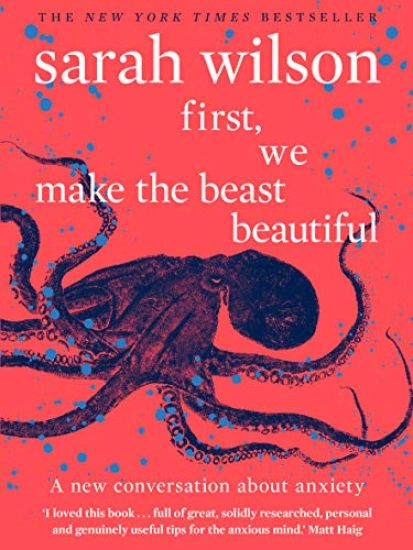
First, We Make the Beast Beautiful

First, We Make the Beast Beautiful

Sarah Wilson

Random House UK
2019
pokkari
I Quit Sugar founder and New York Times bestselling author Sarah Wilson has lived through high anxiety - including bipolar, OCD and several suicide attempts - her whole life. Perhaps like you, she grew tired of seeing anxiety as a disease that must be medicated into submission. Could anxiety be re-sewn, she asked, into a thing of beauty?So began a seven-year journey to find a more meaningful and helpful take on anxiety. Living out of two suitcases, Sarah travelled the world, meeting with His Holiness The Dalai Lama, with Oprah's life coach, with major mental health organizations and hundreds of others in a quest to unravel the knotted ball of wool that is the anxious condition. She emerged with the very best philosophy, science and hacks for thriving with the beast.First, We Make the Beast Beautiful is a book with a big heart, paving the way for richer, kinder and wiser conversations about anxiety.
The I Quit Sugar Cookbook: 306 Recipes for a Clean, Healthy Life
From New York Times bestselling author of I Quit Sugar, comes a cookbook with more than 300 satisfying recipes that make giving up sugar simple, sustainable, and delicious. Sarah Wilson's sugar-free promise is more than just a way of eating. The benefits to overall wellbeing--fewer mood swings, improved sleep patterns, and maintaining weight control--have transformed the idea into a way of life. With her new cookbook filled with one-pan wonders, grain-free breakfasts, leftover makeovers, smoothie bowls, and more, Sarah shows us that eliminating sugar is not only doable, but is also so delicious. Recipes include: Bacon 'N' Egg Quinoa Oatmeal, Caramelized Leek, Apple and Rosemary Socca, Two-Minute Desk Noodles, Red Velvet Crunch Bowl, and Chocolate Peanut Butter Crackles.
I Eat the Stars: How to Live Fully and Beautifully in a Collapsing World
From New York Times bestselling author Sarah Wilson comes a deeply moving, wise guide to finding joy and meaning in a world that seems to be falling apart It's hard to escape the feeling that something is deeply wrong . . . that life has become precariously off-balance. We are hit hourly with headlines about catastrophic wildfires, unprecedented flooding, record heat waves, collapsing democracies, AI and nuclear threat, rising economic inequality, widespread unrest, and more. In I Eat the Stars, Sarah Wilson argues we are undergoing what every complex civilization before us has--systemic collapse. So how do we continue to live as sensitive humans amidst such a tumultuous shift? What does life look like when the systems we rely on deteriorate? Should we be having kids? How do we make financial decisions? Should we be prepping? And, most importantly, how do we avoid succumbing to doom and despair? In I Eat the Stars, Sarah Wilson delves into these pressing questions. Drawing on many years of research and wisdom gained from more than 200 conversations with philosophers, poets, game theorists, and spiritual leaders, Wilson takes readers on an intimate journey as she lays out a path for living fully, meaningfully, and beautifully through these troubled times. Our predicament, she argues, is ultimately an urgent call to us all to relish what is valuable to us--to eat the stars--and to return to our humanity once again. I Eat the Stars empowers readers to move beyond panic, doom, and despair. With her warm, incisively intelligent, wise, and down-to-earth voice, Wilson creates a space for readers to confront their fears and anxieties about an uncertain future, guiding them toward one rooted in truth, hope, justice, creativity, community, and to step up as "warriors" and meet the moment. We are in what we were warned about for decades. But from a crisis comes stunning possibility.
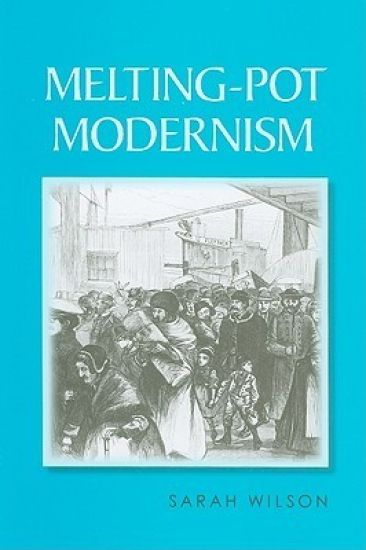
Melting-Pot Modernism

Melting-Pot Modernism

Sarah Wilson

Cornell University Press
2010
sidottu
Between 1891 and 1920 more than 18 million immigrants entered the United States. While many Americans responded to this influx by proposing immigration restriction or large-scale "Americanization" campaigns, a few others, figures such as Jane Addams and John Dewey, adopted the image of the melting pot to oppose such measures. These Progressives imagined assimilation as a multidirectional process, in which both native-born and immigrants contributed their cultural gifts to a communal fund. Melting-Pot Modernism reveals the richly aesthetic nature of assimilation at the turn of the twentieth century, focusing on questions of the individual's relation to culture, the protection of vulnerable populations, the sharing of cultural heritages, and the far-reaching effects of free-market thinking. By tracing the melting-pot impulse toward merging and cross-fertilization through the writings of Henry James, James Weldon Johnson, Willa Cather, and Gertrude Stein, as well as through the autobiography, sociology, and social commentary of their era, Sarah Wilson makes a new connection between the ideological ferment of the Progressive era and the literary experimentation of modernism. Wilson puts literary analysis at the service of intellectual history, showing that literary modes of thought and expression both shaped and were shaped by debates over cultural assimilation. Exploring the depth and nuance of an earlier moment's commitment to cultural inclusiveness, Melting-Pot Modernism gives new meaning to American struggles to imaginatively encompass difference—and to the central place of literary interpretation in understanding such struggles.
Melting-Pot Modernism

Melting-Pot Modernism

Sarah Wilson

CORNELL UNIVERSITY PRESS
2011
muu
"An intelligent and beautifully written examination of the 'melting pot' as taken up in the work of four modernist writers: Henry James, James Weldon Johnson, Willa Cather, and Gertrude Stein."-Christopher Douglas, University of Victoria
Melting-Pot Modernism

Melting-Pot Modernism

Sarah Wilson

CORNELL UNIVERSITY PRESS
2011
muu
"An intelligent and beautifully written examination of the 'melting pot' as taken up in the work of four modernist writers: Henry James, James Weldon Johnson, Willa Cather, and Gertrude Stein."-Christopher Douglas, University of Victoria
I Quit Sugar: Your Complete 8-Week Detox Program and Cookbook
NEW YORK TIMES BESTSELLER - A week-by-week guide to quitting sugar to lose weight, boost energy, and improve your mood and overall health, with 108 sugarfree recipes. "Life without sugar is much sweeter than I ever imagined it would be."--Shauna Ahern, Gluten-Free Girl Sarah Wilson thought of herself as a relatively healthy eater. She didn't realize how much sugar was hidden in her diet, or how much it was affecting her well-being. When she learned that her sugar consumption could be the source of a lifetime of mood swings, fluctuating weight, sleep problems, and thyroid disease, she knew she had to make a change. What started as an experiment to eliminate sugar--both the obvious and the hidden kinds--soon became a way of life, and now Sarah shows you how you can quit sugar too: - Follow a flexible and very doable 8-week plan.- Overcome cravings.- Make food you're excited to eat with these 108 recipes for detox meals, savory snacks, and sweet treats from Sarah Wilson and contributors including Gwyneth Paltrow, Curtis Stone, Dr. Robert Lustig (The Fat Chance Cookbook), Sarma Melngailis (Raw Food/Real World), Joe "the Juicer" Cross, and Angela Liddon (Oh She Glows). I Quit Sugar makes it easy to kick the habit for good, lose weight, and feel better than ever before. When you are nourished with delicious meals and treats, you won't miss the sugar for an instant.
The Origins of Modern Financial Crime
The recent global financial crisis has been characterised as a turning point in the way we respond to financial crime. Focusing on this change and ‘crime in the commercial sphere’, this text considers the legal and economic dimensions of financial crime and its significance in societal consciousness in twenty-first century Britain. Considering how strongly criminal enforcement specifically features in identifying the post-crisis years as a ‘turning point’, it argues that nineteenth-century encounters with financial crime were transformative for contemporary British societal perceptions of ‘crime’ and its perpetrators, and have lasting resonance for legal responses and societal reactions today. The analysis in this text focuses primarily on how Victorian society perceived and responded to crime and its perpetrators, with its reactions to financial crime specifically couched within this. It is proposed that examining how financial misconduct became recognised as crime during Victorian times makes this an important contribution to nineteenth-century history. Beyond this, the analysis underlines that a historical perspective is essential for comprehending current issues raised by the ‘fight’ against financial crime, represented and analysed in law and criminology as matters of enormous intellectual and practical significance, even helping to illuminate the benefits and potential pitfalls which can be encountered in current moves for extending the reach of criminal liability for financial misconduct. Sarah Wilson’s text on this highly topical issue will be essential reading for criminologists, legal scholars and historians alike. It will also be of great interest to the general reader.The Origins of Modern Financial Crime was short-listed for the Wadsworth Prize 2015.
Coffee Dates with God: 100 Devos for Young Women
Coffee date: a time to go out for coffee (or other beverage) to spend some one-on-one time with a close friend. We all have those friends - the ones we can't get enough of & love spending time with. What if we viewed our time with God just like that? What if we got as excited to learn about Him as we do about going out for a coffee date? This was my mindset as I wrote this devotional. I've been there - I know how hard it is to actually crack down & take time for God. I've written this book the same way I would talk to any friend - a little bit blunt, but also with care. If you are a female, and are a teen (or lead a girls' small group), I hope this book will be beneficial for you. I hope that you will take the time to look through it, and see what grabs your attention. I hope that you'll have the necessary courage to take the next step, to go deeper in your relationship with God - whatever stage you may be at. It only takes a moment to start making a difference...~ Sarah