Kirjojen hintavertailu. Mukana 12 459 402 kirjaa ja 12 kauppaa.

Kirjahaku

Etsi kirjoja tekijän nimen, kirjan nimen tai ISBN:n perusteella.

2 kirjaa tekijältä Scott Creighton, Laird Scranton

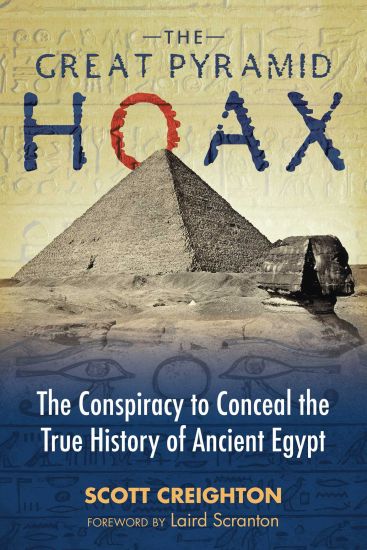
The Great Pyramid Hoax

The Great Pyramid Hoax

Scott Creighton; Laird Scranton

Bear Company
2017
pokkari
Despite millennia of fame, the origins of the Great Pyramid of Giza are shrouded in mystery. Believed to be the tomb of an Egyptian king, even though no remains have ever been found, its construction date of roughly 2550 BCE is tied to only one piece of evidence: the crudely painted marks within the pyramid’s hidden chambers that refer to the 4th Dynasty king Khufu, discovered in 1837 by Colonel Howard Vyse and his team.Using evidence from the time of the discovery of these “quarry marks” - including surveys, facsimile drawings and Vyse’s private field notes - along with high definition photos of the actual marks, Scott Creighton reveals how and why the marks were faked. Analyzing Vyse’s private diary, he reveals Vyse’s forgery instructions to his two assistants, Raven and Hill, and what the anachronistic sign should have been. He examines recent chemical analysis of the marks along with the eye-witness testimony of Humphries Brewer, who worked with Vyse at Giza in 1837 and saw forgery take place. Exploring Vyse’s background, including his electoral fraud to become a member of the British Parliament, he explains why he was driven to perpetrate a fraud inside the Great Pyramid. Creighton’s study strikes down one of the most fundamental assertions of orthodox Egyptologists and reopens long-standing questions about the Great Pyramid’s true age, who really built it, and why.
The Great Pyramid Void Enigma

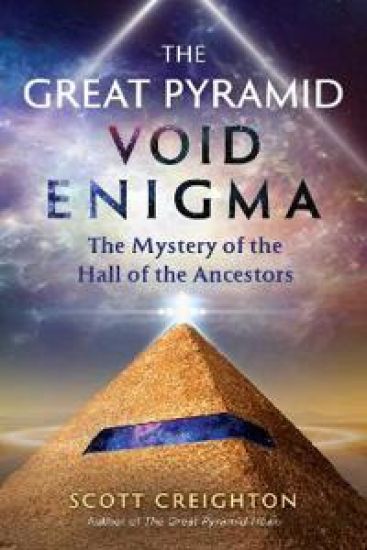
The Great Pyramid Void Enigma

Scott Creighton

Bear Company
2021
pokkari
Reveals the extraordinary purpose of the newly discovered “Big Void” within the Great Pyramid of Giza• Analyzes ancient Coptic-Egyptian texts and evidence from astronomy and archaeology to show how the Big Void may be a grand “Hall of Ancestors” • Explores the controversy surrounding the discovery of the Big Void and debunks many of the theories regarding the purpose of this massive new “chamber” • Reveals how the Great Pyramid was built by Khufu as an indestructible “recovery vault” to help Egyptian civilization rebuild after an anticipated cataclysm In November 2017, an international team of more than 30 scientists published the results of their two-year-long Great Pyramid research project in the journal Nature. Using an advanced imaging technique known as muon radiography, three groups working independently from each other discovered a massive, previously unknown space within the Great Pyramid of Giza. Mainstream Egyptologists suggest that the “Big Void” is simply a stress-relieving device for the Grand Gallery. But, as Scott Creighton reveals, ancient Coptic-Egyptian texts describe exactly what the Big Void is. Exploring the controversy surrounding the Big Void, Creighton artfully debunks many of the theories about the purpose of this massive chamber as well as other long-held Egyptology beliefs. Analyzing the Coptic-Egyptian texts and evidence from astronomy, archaeology, and other sources, the author reveals how the Great Pyramid was built by Khufu as an indestructible recovery vault to help Egyptian civilization rebuild after a cataclysmic natural disaster--a rapid pole shift and subsequent deluge--predicted by his astronomer-priests. And the key component of the recovery vault would have been the Hall of the Ancestors, a sealed safe haven containing the mummified remains of the Osiris Kings, deceased pharaohs who would seek the benevolence of the gods to ensure Egypt’s recovery from the disaster.