Kirjojen hintavertailu. Mukana 11 627 067 kirjaa ja 12 kauppaa.

Kirjahaku

Etsi kirjoja tekijän nimen, kirjan nimen tai ISBN:n perusteella.

7 kirjaa tekijältä Scott Hamilton

An Analog Electronics Companion

An Analog Electronics Companion

Scott Hamilton

Cambridge University Press
2007
pokkari
Engineers and scientists frequently find themselves having to get involved in electronic circuit design even though this may not be their specialty. This book is specifically designed for these situations, and has two major advantages for the inexperienced designer: it assumes little prior knowledge of electronics and it takes a modular approach, so you can find just what you need without working through a whole chapter. The first three parts of the book start by refreshing the basic mathematics and physics needed to understand circuit design. Part four discusses individual components (resistors, capacitors etc.), while the final and largest section describes commonly encountered circuit elements such as differentiators, oscillators, filters and couplers. A major bonus and learning aid is the inclusion of a CD-ROM with the student edition of the PSpice simulation software, together with models of most of the circuits described in the book.

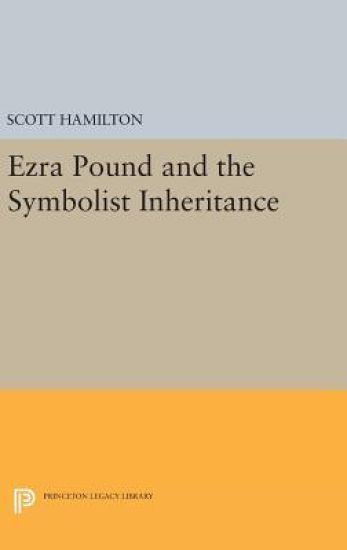
Ezra Pound and the Symbolist Inheritance

Ezra Pound and the Symbolist Inheritance

Scott Hamilton

Princeton University Press
2014
pokkari
In this revisionary study of Ezra Pound's poetics, Scott Hamilton exposes the extent of the modernist poet's debt to the French romantic and symbolist traditions. Whereas previous critics have focused on a single influence, Hamilton explores a broad spectrum of French poets, including Thophile Gautier, Tristan Corbire, Jules Laforgue, Remy de Gourmont, Henri de Rgnier, Jules Romains, Laurent Tailhade, Paul Verlaine, and Stphane Mallarm. This exploration of Pound's canon demonstrates his logic in borrowing from the French tradition as well as a paradoxical circularity to his poetic development. Hamilton begins by explaining how Pound read Gautier's poetry as an example of Parnassianism and of the "satirical realism" of Flaubert and the modern novelistic tradition. He reveals, however, a crucial blind spot in Pound's poetic vision that facilitated his return to precisely those romantic and proto-symbolist elements in Gautier that were celebrated by Baudelaire and Mallarm, and that Pound, as a modern poet, felt obliged to repress. Arguing that Pound's response to symbolism was not specifically modernist, Hamilton shows how his dual attraction to the lyric and prose traditions, to symbolism and realism, and to the visionary and the historical helps us better to understand our own post-modern sensibility. Originally published in 1992. The Princeton Legacy Library uses the latest print-on-demand technology to again make available previously out-of-print books from the distinguished backlist of Princeton University Press. These editions preserve the original texts of these important books while presenting them in durable paperback and hardcover editions. The goal of the Princeton Legacy Library is to vastly increase access to the rich scholarly heritage found in the thousands of books published by Princeton University Press since its founding in 1905.
Ezra Pound and the Symbolist Inheritance

Ezra Pound and the Symbolist Inheritance

Scott Hamilton

Princeton University Press
2016
sidottu
In this revisionary study of Ezra Pound's poetics, Scott Hamilton exposes the extent of the modernist poet's debt to the French romantic and symbolist traditions. Whereas previous critics have focused on a single influence, Hamilton explores a broad spectrum of French poets, including Thophile Gautier, Tristan Corbire, Jules Laforgue, Remy de Gourmont, Henri de Rgnier, Jules Romains, Laurent Tailhade, Paul Verlaine, and Stphane Mallarm. This exploration of Pound's canon demonstrates his logic in borrowing from the French tradition as well as a paradoxical circularity to his poetic development. Hamilton begins by explaining how Pound read Gautier's poetry as an example of Parnassianism and of the "satirical realism" of Flaubert and the modern novelistic tradition. He reveals, however, a crucial blind spot in Pound's poetic vision that facilitated his return to precisely those romantic and proto-symbolist elements in Gautier that were celebrated by Baudelaire and Mallarm, and that Pound, as a modern poet, felt obliged to repress. Arguing that Pound's response to symbolism was not specifically modernist, Hamilton shows how his dual attraction to the lyric and prose traditions, to symbolism and realism, and to the visionary and the historical helps us better to understand our own post-modern sensibility. Originally published in 1992. The Princeton Legacy Library uses the latest print-on-demand technology to again make available previously out-of-print books from the distinguished backlist of Princeton University Press. These editions preserve the original texts of these important books while presenting them in durable paperback and hardcover editions. The goal of the Princeton Legacy Library is to vastly increase access to the rich scholarly heritage found in the thousands of books published by Princeton University Press since its founding in 1905.
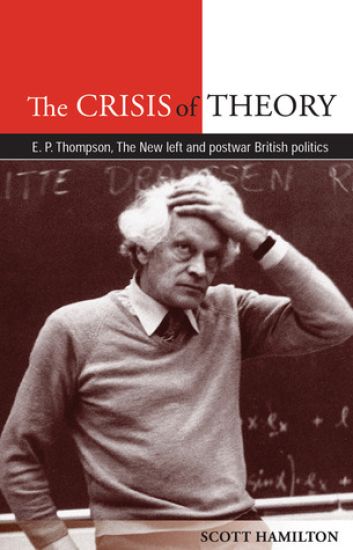
The Crisis of Theory

The Crisis of Theory

Scott Hamilton

Manchester University Press
2011
sidottu
The crisis of theory tells the story of the political and intellectual adventures of E. P. Thompson, one of Britain's foremost twentieth-century thinkers. Drawing on extraordinary new unpublished documents, Scott Hamilton shows that all of Thompson's work, from his acclaimed histories to his voluminous political writings to his little-noticed poetry, was inspired by the same passionate and idiosyncratic vision of the world. Hamilton shows the connection between Thompson's famously ferocious attack on the 'Stalinism in theory' of Louis Althusser and his assaults on positivist social science in books like The making of the English working class, and he produces previously unseen evidence to show that Thompson's hostility to both left and right-wing forms of authoritarianism was rooted in first-hand experience of violent political repression. This book will appeal to scholars and general readers with an interest in left-wing politics and theory, British society, twentieth-century history, modernist poetry, and the philosophy of history.
The Crisis of Theory

The Crisis of Theory

Scott Hamilton

Manchester University Press
2012
nidottu
The Crisis of Theory, available in paperback for the first time, tells the story of the political and intellectual adventures of E. P. Thompson, one of Britain's foremost twentieth-century thinkers. Drawing on extraordinary new unpublished documents, Scott Hamilton shows that all of Thompson's work, from his acclaimed histories to his voluminous political writings to his little-noticed poetry, was inspired by the same passionate and idiosyncratic vision of the world. Hamilton shows the connection between Thompson's famously ferocious attack on the 'Stalinism in theory' of Louis Althusser and his assaults on positivist social science in books like The making of the English working class, and he produces previously unseen evidence to show that Thompson's hostility to both left and right-wing forms of authoritarianism was rooted in first-hand experience of violent political repression. This book will appeal to scholars and general readers with an interest in left-wing politics and theory, British society, twentieth-century history, modernist poetry, and the philosophy of history.
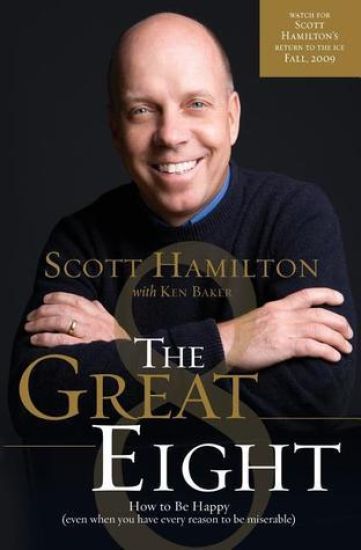
The Great Eight

The Great Eight

Scott Hamilton

Thomas Nelson Publishers
2009
nidottu
Beloved Olympic skater shares his secrets to happiness on and off the ice.Scott Hamilton has experienced the heights of accomplishment and the depths of disease, from winning the Gold to becoming a cancer and brain tumor survivor. But through his successes, struggles, and setbacks, Hamilton has never lost his trademark humor and honesty. More important, he has never lost his faith and optimism. How does he keep smiling?In The Great Eight, Scott uses stories from his international career and personal life to describe the eight secrets that — through commitment and repetition — have helped him “clear the ice,” get back up, and “smile like Kristi Yamaguchi.”“Scott Hamilton . . . lives his life as a champion. Everyone needs the positive message of this greatly inspiring book.”~Kristi Yamaguchi, Olympic Gold Medalist “I know and love Scotty Hamilton. You will, too, after you read this book.”~William Shatner “The Great Eight is an inspiration to us all.”~Donald J. Trump “It’s like my bud Scott says: ‘You can’t just skate through life and expect to be happy!’”~Kevin Nealon, actor, comedian, Saturday Night Live alum
Fritzy Finds a Hat

Fritzy Finds a Hat

Scott Hamilton

Forefront Books
2020
sidottu
Fritzy's mom has cancer, which is pretty scary. But Fritzy is on a mission to find his mom the perfect hat she can wear to her treatments. What will he find? "It's the softest place for a child to land on this topic. Something that will cushion your mind, your body and your spirit." Larry Flick, SiriusXM In this charming children's book, Olympic gold medal-winning figure skater and bestselling author Scott Hamilton teams up with country music superstar Brad Paisley to share a story that will help parents talk with their children about cancer. The story centers around an ice-skating little boy named Fritzy who learns his mom has cancer. Each new page has him searching for a different hat for his mom to wear as she undergoes cancer treatments. The delightful illustrations by Brad Paisley lend an air of whimsy and thoughtfulness while the gentle storyline by cancer survivor Scott Hamilton teaches children a powerful message of how their love and support can sometimes be the best medicine. Fritzy Finds a Hat can be read to younger children or given to older children to read themselves. Proceeds from the book will benefit vital cancer research through the Scott Hamilton CARES Foundation and at Moffitt Cancer Center as well as Moffitt's Families First Program.