Kirjojen hintavertailu. Mukana 11 627 373 kirjaa ja 12 kauppaa.

Kirjahaku

Etsi kirjoja tekijän nimen, kirjan nimen tai ISBN:n perusteella.

13 kirjaa tekijältä Scott Herring

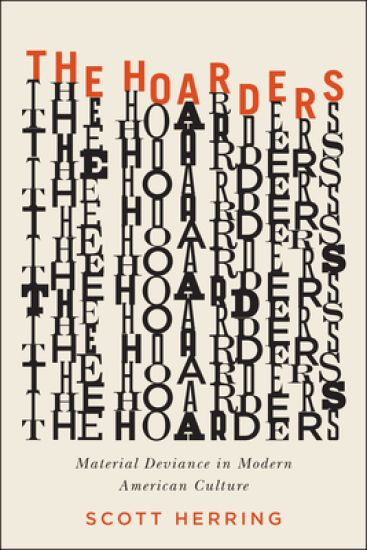
The Hoarders

The Hoarders

Scott Herring

University of Chicago Press
2014
sidottu
The verb "declutter" has not yet made it into the Oxford English Dictionary, but its ever-increasing usage suggests that it's only a matter of time. Articles containing tips and tricks on how to get organized cover magazine pages and pop up in TV programs and commercials, while clutter professionals and specialists referred to as "clutterologists" are just a phone call away. Everywhere the sentiment is the same: clutter is bad. In The Hoarders, Scott Herring provides an in-depth examination of how modern hoarders came into being, from their onset in the late 1930s to the present day. He finds that both the idea of organization and the role of the clutterologist are deeply ingrained in our culture, and that there is a fine line between clutter and deviance in America. Herring introduces us to Jill, whose countertops are piled high with decaying food and whose cabinets are overrun with purchases, while the fly strips hanging from her ceiling are arguably more fly than strip. When Jill spots a decomposing pumpkin about to be jettisoned, she stops, seeing in the rotting, squalid vegetable a special treasure. "I've never seen one quite like this before," she says, and looks to see if any seeds remain. It is from moments like these that Herring builds his questions: What counts as an acceptable material life - and who decides? Is hoarding some sort of inherent deviation of the mind, or a recent historical phenomenon grounded in changing material cultures? Herring opts for the latter, explaining that hoarders attract attention not because they are mentally ill but because they challenge normal modes of material relations. Piled high with detailed and, at times, disturbing descriptions of uncleanliness, The Hoarders delivers a sweeping and fascinating history of hoarding that will cause us all to reconsider how we view these accumulators of clutter.
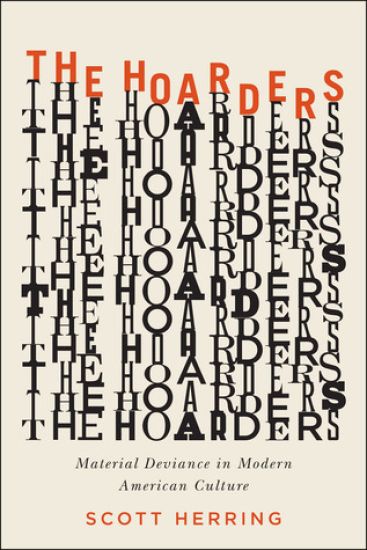
The Hoarders

The Hoarders

Scott Herring

University of Chicago Press
2014
nidottu
The verb "declutter" has not yet made it into the Oxford English Dictionary, but its ever-increasing usage suggests that it's only a matter of time. Articles containing tips and tricks on how to get organized cover magazine pages and pop up in TV programs and commercials, while clutter professionals and specialists referred to as "clutterologists" are just a phone call away. Everywhere the sentiment is the same: clutter is bad. In The Hoarders, Scott Herring provides an in-depth examination of how modern hoarders came into being, from their onset in the late 1930s to the present day. He finds that both the idea of organization and the role of the clutterologist are deeply ingrained in our culture, and that there is a fine line between clutter and deviance in America. Herring introduces us to Jill, whose countertops are piled high with decaying food and whose cabinets are overrun with purchases, while the fly strips hanging from her ceiling are arguably more fly than strip. When Jill spots a decomposing pumpkin about to be jettisoned, she stops, seeing in the rotting, squalid vegetable a special treasure. "I've never seen one quite like this before," she says, and looks to see if any seeds remain. It is from moments like these that Herring builds his questions: What counts as an acceptable material life - and who decides? Is hoarding some sort of inherent deviation of the mind, or a recent historical phenomenon grounded in changing material cultures? Herring opts for the latter, explaining that hoarders attract attention not because they are mentally ill but because they challenge normal modes of material relations. Piled high with detailed and, at times, disturbing descriptions of uncleanliness, The Hoarders delivers a sweeping and fascinating history of hoarding that will cause us all to reconsider how we view these accumulators of clutter.
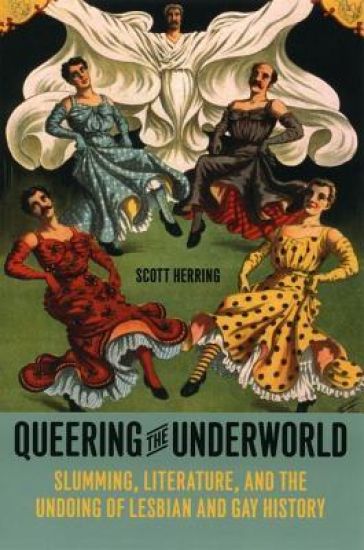
Queering the Underworld

Queering the Underworld

Scott Herring

University of Chicago Press
2007
sidottu
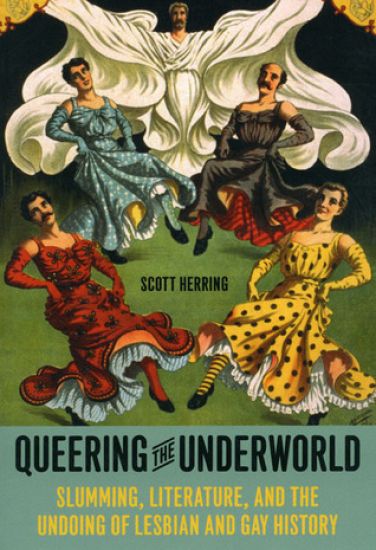
At the start of the twentieth century, tales of "how the other half lives" experienced a surge in popularity. People looking to go slumming without leaving home turned to these narratives for spectacular revelations of the underworld and sordid details about the deviants who populated it. In this major rethinking of American literature and culture, Scott Herring explores how a key group of authors manipulated this genre to paradoxically evade the confines of sexual identification. "Queering the Underworld" examines a range of writers, from Jane Addams and Willa Cather to Carl Van Vechten and Djuna Barnes, revealing how they fulfilled the conventions of slumming literature but undermined its goals and in the process queered the genre itself. Their work frustrated the reader's desire for sexual knowledge, restored the inscrutability of sexual identity, and cast doubt on the value of a homosexual subculture made visible and therefore subject to official control. Herring is persuasive and polemical in connecting these writers to ongoing debates about lesbian and gay history and politics, and "Queering the Underworld" will be widely read by students and scholars of literature, history, and sexuality.
Queering the Underworld

Queering the Underworld

Scott Herring

University of Chicago Press
2007
nidottu
At the start of the twentieth century, tales of "how the other half lives" experienced a surge in popularity. People looking to go slumming without leaving home turned to these narratives for spectacular revelations of the underworld and sordid details about the deviants who populated it. In this major rethinking of American literature and culture, Scott Herring explores how a key group of authors manipulated this genre to paradoxically evade the confines of sexual identification. Queering the Underworld examines a range of writers, from Jane Addams and Willa Cather to Carl Van Vechten and Djuna Barnes, revealing how they fulfilled the conventions of slumming literature but undermined its goals and in the process queered the genre itself. Their work frustrated the reader's desire for sexual knowledge, restored the inscrutability of sexual identity, and cast doubt on the value of a homosexual subculture made visible and therefore subject to official control. Herring is persuasive and polemical in connecting these writers to ongoing debates about lesbian and gay history and politics, and "Queering the Underworld" will be widely read by students and scholars of literature, history, and sexuality.
Aging Moderns

Aging Moderns

Scott Herring

Columbia University Press
2022
sidottu
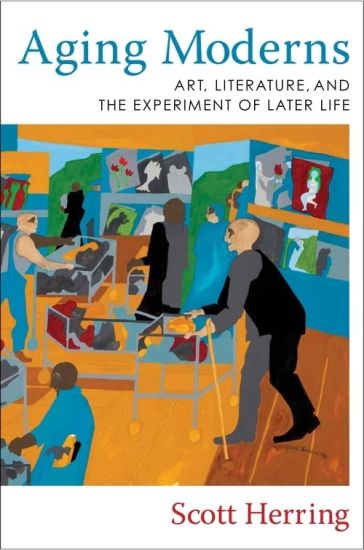
What happens when the avant-garde grows old? Examining a group of writers and artists who continued the modernist experiment into later life, Scott Herring reveals how their radical artistic principles set out a new path for creative aging.Aging Moderns provides portraits of writers and artists who sought out or employed unconventional methods and collaborations up until the early twenty-first century. Herring finds Djuna Barnes performing the principles of high modernism not only in poetry but also in pharmacy orders and grocery lists. In mystery novels featuring Gertrude Stein and Alice B. Toklas along with modernist souvenir collections, the gay writer Samuel Steward elaborated a queer theory of aging and challenged gay male ageism. The Harlem Renaissance dancer Mabel Hampton dispelled stereotypes about aging through her queer of color performances at the Lesbian Herstory Archives. Herring explores Ivan Albright’s magic realist portraits of elders, Tillie Olsen’s writings on the aging female worker, and the surrealistic works made by Charles Henri Ford and his caregiver Indra Bahadur Tamang at the Dakota apartment building in New York City.Showcasing previously unpublished experimental art and writing, this deeply interdisciplinary book unites new modernist studies, American studies, disability studies, and critical age studies. Aging Moderns rethinks assumptions about literary creativity, the depiction of old age, and the boundaries of modernism.
Aging Moderns

Aging Moderns

Scott Herring

Columbia University Press
2022
pokkari
What happens when the avant-garde grows old? Examining a group of writers and artists who continued the modernist experiment into later life, Scott Herring reveals how their radical artistic principles set out a new path for creative aging.Aging Moderns provides portraits of writers and artists who sought out or employed unconventional methods and collaborations up until the early twenty-first century. Herring finds Djuna Barnes performing the principles of high modernism not only in poetry but also in pharmacy orders and grocery lists. In mystery novels featuring Gertrude Stein and Alice B. Toklas along with modernist souvenir collections, the gay writer Samuel Steward elaborated a queer theory of aging and challenged gay male ageism. The Harlem Renaissance dancer Mabel Hampton dispelled stereotypes about aging through her queer of color performances at the Lesbian Herstory Archives. Herring explores Ivan Albright’s magic realist portraits of elders, Tillie Olsen’s writings on the aging female worker, and the surrealistic works made by Charles Henri Ford and his caregiver Indra Bahadur Tamang at the Dakota apartment building in New York City.Showcasing previously unpublished experimental art and writing, this deeply interdisciplinary book unites new modernist studies, American studies, disability studies, and critical age studies. Aging Moderns rethinks assumptions about literary creativity, the depiction of old age, and the boundaries of modernism.
Lines on the Land

Lines on the Land

Scott Herring

University of Virginia Press
2004
sidottu
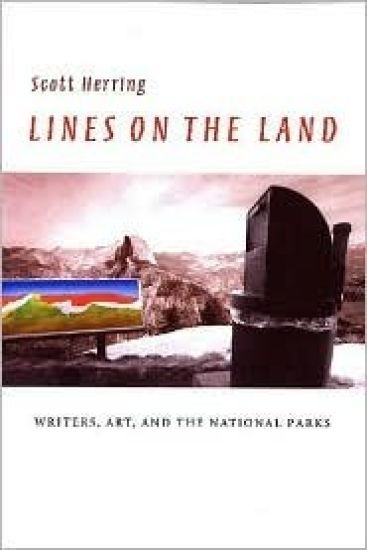
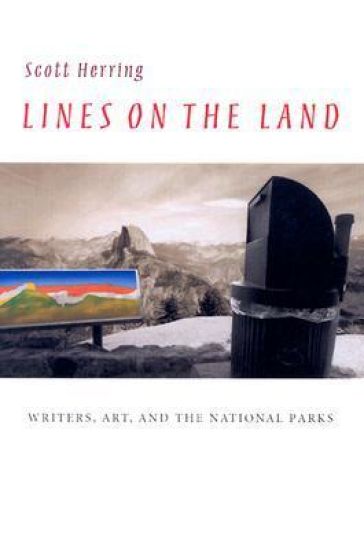
The nineteenth-century photographer William Henry Jackson once complained of the skepticism with which early descriptions of Yellowstone were met: the place was too wondrous to be believed. The public demanded proof, and a host of artists and writers obliged. These early explorers possessed a vigorous devotion to the young nation's wilderness - the naturalist John Muir famously toured the land from Wisconsin to Florida on foot - and through their work established aesthetic categories that exist to this day. In Lines on the Land, Scott Herring contends that these writers and artists were canon makers, recognizing the national parks as naturally occurring works of art and conferring upon them a cultural prestige: the parks were the splendid focal points of the American landscape. These early, canonizing works are homages to a vast, untouched wilderness. This praise would gradually give way, however, to a distinctly American anger - what Herring calls ""outraged idealism."" Later generations were faced with a changing culture that had imperfectly absorbed, and even misrepresented, the national-park aesthetic. The postwar park was overrun by cars and tourists who could not possibly match the pioneering naturalists' profound commitment to and appreclation for their surroundings. The collective tone of the parks' chroniclers, as a result, evolved from celebration of awesome beauty to indignation over the perceived corruption of the parks, both as an ideal and as actual physical settings. Herring traces this shift through the work of a wide spectrum of creative minds, from early figures such as Muir and Thomas Moran to later observers of the parks such as Ansel Adams, Sylvia Plath, Edward Abbey, and Rick Bass. The text is punctuated by autobiographical ""interchapters"" in which Herring relates the book's chief themes to his own experiences in Yellowstone National Park.
Lines on the Land

Lines on the Land

Scott Herring

University of Virginia Press
2004
nidottu
The nineteenth-century photographer William Henry Jackson once complained of the skepticism with which early descriptions of Yellowstone were met: the place was too wondrous to be believed. The public demanded proof, and a host of artists and writers obliged. These early explorers possessed a vigorous devotion to the young nation's wilderness - the naturalist John Muir famously toured the land from Wisconsin to Florida on foot - and through their work established aesthetic categories that exist to this day. In Lines on the Land, Scott Herring contends that these writers and artists were canon makers, recognizing the national parks as naturally occurring works of art and conferring upon them a cultural prestige: the parks were the splendid focal points of the American landscape. These early, canonizing works are homages to a vast, untouched wilderness. This praise would gradually give way, however, to a distinctly American anger - what Herring calls ""outraged idealism."" Later generations were faced with a changing culture that had imperfectly absorbed, and even misrepresented, the national-park aesthetic. The postwar park was overrun by cars and tourists who could not possibly match the pioneering naturalists' profound commitment to and appreclation for their surroundings. The collective tone of the parks' chroniclers, as a result, evolved from celebration of awesome beauty to indignation over the perceived corruption of the parks, both as an ideal and as actual physical settings. Herring traces this shift through the work of a wide spectrum of creative minds, from early figures such as Muir and Thomas Moran to later observers of the parks such as Ansel Adams, Sylvia Plath, Edward Abbey, and Rick Bass. The text is punctuated by autobiographical ""interchapters"" in which Herring relates the book's chief themes to his own experiences in Yellowstone National Park.
Another Country

Another Country

Scott Herring

New York University Press
2010
sidottu
The metropolis has been the near exclusive focus of queer scholars and queer cultures in America. Asking us to look beyond the cities on the coasts, Scott Herring draws a new map, tracking how rural queers have responded to this myopic mindset. Interweaving a wide range of disciplines—art, media, literature, performance, and fashion studies—he develops an extended critique of how metronormativity saturates LGBTQ politics, artwork, and criticism. To counter this ideal, he offers a vibrant theory of queer anti-urbanism that refuses to dismiss the rural as a cultural backwater. Impassioned and provocative, Another Country expands the possibilities of queer studies beyond its city limits. Herring leads his readers from faeries in the rural Midwest to photographs of white supremacists in the deep South, from Roland Barthes's obsession with Parisian fashion to a graphic memoir by Alison Bechdel set in the Appalachian Mountains, and from cubist paintings in Lancaster County to lesbian separatist communes on the northern California coast. The result is an entirely original account of how queer studies can—and should—get to another country.
Another Country

Another Country

Scott Herring

New York University Press
2010
pokkari
The metropolis has been the near exclusive focus of queer scholars and queer cultures in America. Asking us to look beyond the cities on the coasts, Scott Herring draws a new map, tracking how rural queers have responded to this myopic mindset. Interweaving a wide range of disciplines—art, media, literature, performance, and fashion studies—he develops an extended critique of how metronormativity saturates LGBTQ politics, artwork, and criticism. To counter this ideal, he offers a vibrant theory of queer anti-urbanism that refuses to dismiss the rural as a cultural backwater. Impassioned and provocative, Another Country expands the possibilities of queer studies beyond its city limits. Herring leads his readers from faeries in the rural Midwest to photographs of white supremacists in the deep South, from Roland Barthes's obsession with Parisian fashion to a graphic memoir by Alison Bechdel set in the Appalachian Mountains, and from cubist paintings in Lancaster County to lesbian separatist communes on the northern California coast. The result is an entirely original account of how queer studies can—and should—get to another country.
Yellowstone's Lost Legend

Yellowstone's Lost Legend

Scott Herring

Riverbend Publishing
2020
nidottu
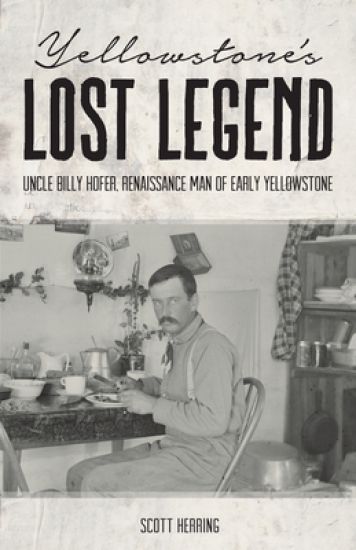
In the late 1800s, Thomas Elwood "Billy" Hofer became nearly as much a fixture of Yellowstone National Park as Old Faithful Geyser. As a wilderness guide, wildlife census taker, explorer, and expert skier, tracker, and naturalist, Hofer acquired a vast and intimate knowledge of all things Yellowstone. He became the go-to expert for presidents and politicians, park service professionals and intrepid reporters. Through numerous articles in Forest and Stream Magazine he told the country about Yellowstone and advocated for its protection. He even captured wildlife alive for the Smithsonian National Zoological Park in Washington, D.C., and visited President Theodore Roosevelt in the White House. Yet Billy Hofer, as important as he was to the park's early history, became a "lost legend"--until now.After extensive research, Professor Scott Herring (Rough Trip Through Yellowstone) has written the only biography of this fascinating character. With detailed citations that delve into the park's early history, this book is an astonishing chronicle of a man who helped make Yellowstone what it is today.
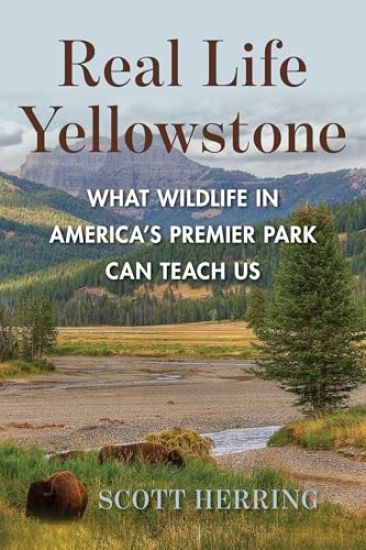
Real Life Yellowstone

Real Life Yellowstone

Scott Herring

ROWMAN LITTLEFIELD
2026
nidottu
In a place like Yellowstone the rules that humans normally live by are only one set of rules among many. When we leave the roads and villages other rules come into play, rules where creatures who are not always friendly have a say. The largest animal in NA, the bison, lives here and is often ill-tempered. The Park hosts a wide range of pathogens--viruses, bacteria, and parasites including one that gives you bubonic plague. Yellowstone has two species of poisonous snakes, almost every species of deer in North America, grazing animals, lions, wolves and bears. Some Yellowstone creatures are profoundly dangerous; they eat people. It's not surprising that a land with such astounding landscapes also has astounding lifeforms. That is what makes life in Yellowstone real and gives it quality.