Kirjojen hintavertailu. Mukana 11 342 296 kirjaa ja 12 kauppaa.

Kirjahaku

Etsi kirjoja tekijän nimen, kirjan nimen tai ISBN:n perusteella.

4 kirjaa tekijältä Scott Lyle

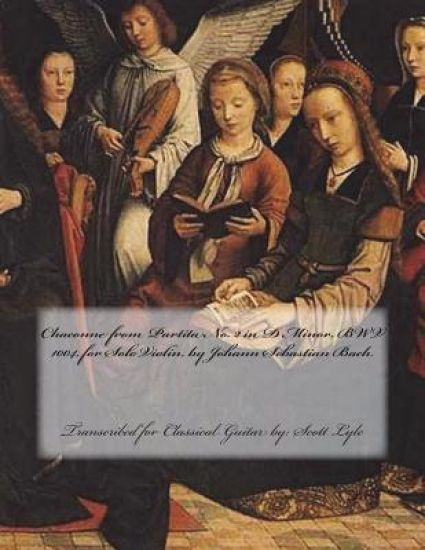
Chaconne from Partita No. 2 in D Minor, Bwv 1004, by Johann Sebastian Bach: Transcribed for Classical Guitar By: Scott Lyle
This is a Classical Guitar transcription of the Chaconne from Partita No. 2 in D Minor, BWV 1004, for Solo Violin, by Johann Sebastian Bach. It is a version designed to be as authentic as possible, as it is crafted directly from Bach's original manuscript. I believe it to be the most accurate version for the guitar manufactured to date. In this edition, there are two scores provided: one with fingerings added, and an exact duplicate that excludes any fingering indications. In this manner, personal annotations may be made more effectively by individual performers without having to adhere to suggestions by others.
Missa Pro Defunctis

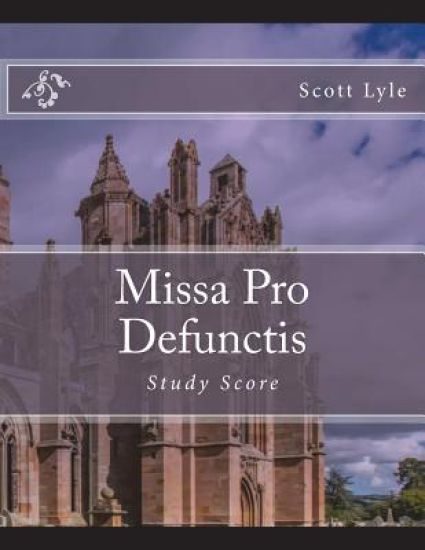
Missa Pro Defunctis

Scott Lyle

Createspace Independent Publishing Platform
2018
nidottu
Missa Pro Defunctis is a Requiem Mass set to music. It is scored for a full orchestra and chorus, and features the complete Requiem text. This is a study score, and has some fine-printed pages when the texture gets dense.
The Abbot and the Abattoir

The Abbot and the Abattoir

Scott Lyle

Createspace Independent Publishing Platform
2018
nidottu
"The Abbot and the Abattoir" was composed between the 19th and the 26th of April 2016. It is a work for solo piano and it is modeled after a dream I had some years previous. The composition is a programmatic arrangement of vignettes that depicts a story about an anonymous abbot's day, beginning with an afternoon walk coupled with pensive reflection, followed by his obligatory meditations and prayers. As the tale progresses into the evening, he grows weary and drifts into a deep sleep. He begins to dream, and the dreams quickly transform into graphic nightmares involving visions of an horrific extermination and the merciless slaughter of many in a large, ghastly gothic tower and adjoining edifice presided over by shadowy supernatural beings. The actions of the malevolent forces cause the tortured souls' screams to incessantly rent and infect the cold damp air. The abbot startlingly awakens to a beautiful morning and realizes that the previous night's distressing dreams were merely that. He gratefully proceeds into a restorative and miraculous new day. The visions however were so troublingly vivid that the abbot still harbors some trepidation involving them, but swiftly comes to the understanding that warnings and prophecies though beneficial, may or may not circumvent some imminent future events; only time will tell. He reverently acknowledges the tenet that without divine intervention and assistance, humankind left to its own devices frequently renders poor decisions, and shall inevitably inherit the fitting fruits of its labors. - Scott Lyle
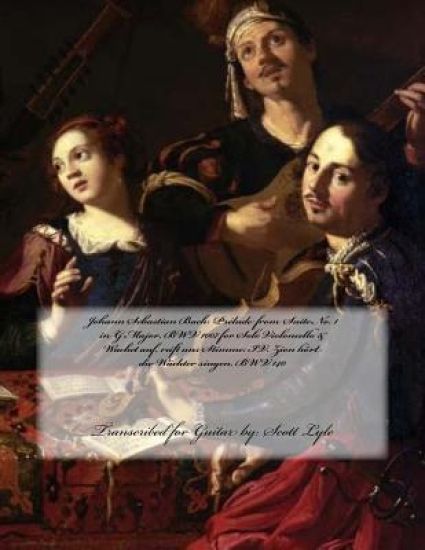
Johann Sebastian Bach: Prélude from Suite No. 1 in G Major, Bwv 1007 for Solo Violoncello & Wachet Auf, Ruft Uns Stimme: IV. Zion Hört Die Wä
The Suite No. 1 in G major, BWV 1007, for solo violoncello by Johann Sebastian Bach (1685-1750) belongs to a series of six suites written for the violoncello likely between the years 1717-1723 when he was Kapellmeister in K then. The Pr lude from the first suite is the first movement of a seven-movement work. It is very popularly performed not only on the violoncello, but has been transcribed and adapted for performance on many different instruments. This version is transcribed for the classical guitar, and rather than transposing it to another key, I left it in the original key of G major. Many guitarists transpose it to be performed in the key of D major, and tune the sixth string down to D. Although this isn't a bad option, the result is often that it changes the register of many of the notes. I believe that this transposition also detracts considerably from the lucidness and coherence fundamental to the Pr lude. There is frequently an alternating bass note in many guitar performances which is interesting and appealing, but not found in Bach's manuscript. Since it isn't original, and I don't believe it improves Bach's aim musically or otherwise, I elected not to pursue it in my transcription. Also included in this edition is a transcription of Wachet auf, ruft uns Stimme: IV. Zion h rt die W chter singen, BWV 140 by Johann Sebastian Bach. It comes from the cantata of the same name, and is originally scored in E-flat major. I transcribed it to E major for clarity and convenience, but one should tune all the strings down one-half step, and play it sounding in the original key (but appearing to be in the key of E major). For both works, I consulted Bach's original manuscripts and examined the scores from the Bach-Gesellschaft Ausgabe. In both cases, I believe these transcriptions to currently be the most faithful and accurate editions for the classical guitar with regards to Bach's scores and intentions.